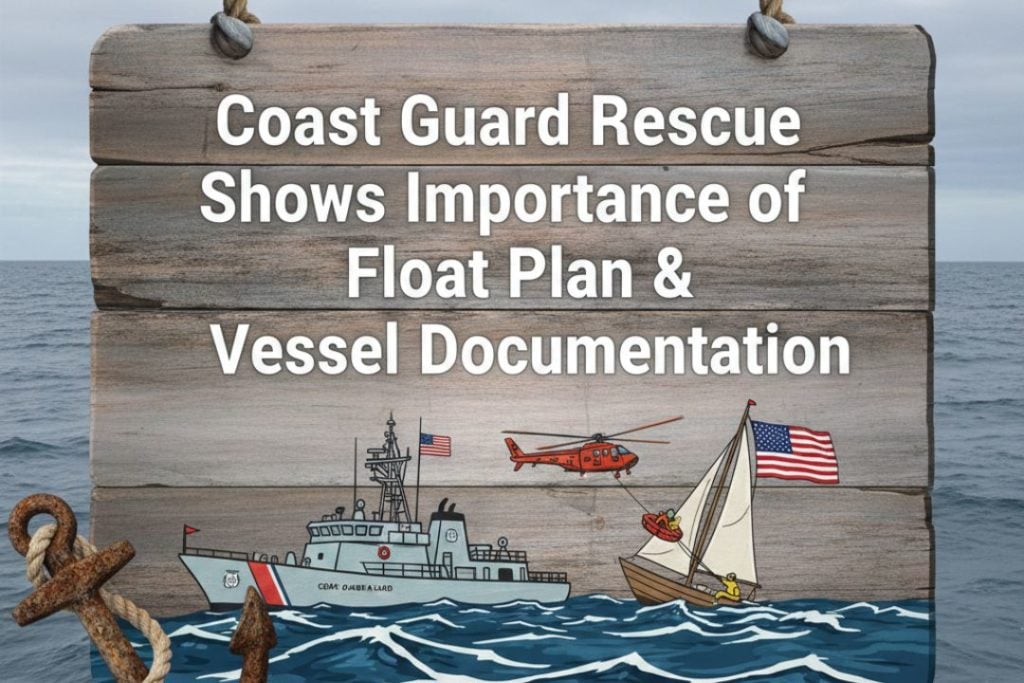
The recent Coast Guard rescue off Cape Hatteras, where two people, a cat, and a dog were saved from a disabled vessel, is a powerful reminder that preparation at sea goes far beyond weather checks and safety gear. That preparation often begins with vessel documentation that is accurate, current, and immediately accessible when a distress signal is received.
The Facts of This Heroic Coast Guard Rescue
As reported by local station WITN, the Search and Rescue Identity Phase played a decisive role in helping responders act quickly in one of the most dangerous maritime regions on the East Coast. When conditions turn hostile in the so-called “Graveyard of the Atlantic”, clarity saves time, and time saves lives.
The waters off Cape Hatteras are known for rapidly shifting shoals, converging currents, and unpredictable storms. Even experienced operators can find themselves in trouble without warning.
In emergencies, the Coast Guard relies on both situational data and administrative records to narrow the search area and identify exactly what they are looking for. Our service exists to make sure that part of the process is not left to chance.
How Vessel Documentation Supports Search and Rescue Operations
When a mayday call, EPIRB alert, or other distress signal is detected, Coast Guard units immediately begin sorting information. This stage is often referred to as the “Identity Phase” of Search and Rescue. It is not only about knowing that someone needs help, but about knowing who they are, what they are operating, and how best to reach them.
Accurate records allow responders to:
- Confirm the vessel’s official identity
- Match distress signals to registered profiles
- Eliminate confusion between similar vessels in the same region
- Deploy assets that match the vessel’s size and construction
This is where vessel documentation becomes more than an administrative requirement. It functions as a verified profile that can be accessed without delay when every minute matters.
Responders cannot afford uncertainty when visibility is low and weather windows are narrow. Clear records help them focus resources instead of searching blindly.
The Float Plan Connection and Vessel Documentation in Emergencies
A float plan tells rescuers where to start looking. It outlines intended routes, departure times, and expected arrival windows. However, a float plan alone does not tell them what they are looking for once they arrive in the search area. That gap is filled by boat documentation.
Together, these tools provide a complete picture for authorities in times of need:
- The float plan narrows the geographic scope
- Official records define the physical characteristics of the vessel
- Identification details confirm that responders have located the correct craft
In the Cape Hatteras rescue, harsh conditions demanded fast decisions. Knowing the vessel’s profile helps determine whether a helicopter hoist is feasible or if a cutter is better suited for the recovery. Without reliable documentation, those decisions become slower and riskier.
From our perspective, preparation is layered. Safety equipment protects lives on board, while accurate records protect the response itself from delay or misdirection.
Vessel Documentation Details Rescuers Rely On Most
During an active search, responders are not pulling generic information. They are reviewing specific, practical data that guides action in real time.
These details influence asset selection. A longer vessel with certain equipment may require different handling than a smaller craft. Helicopter crews, cutter operators, and command staff coordinate based on this information, often under extreme pressure.
This is also where a vessel documentation search becomes critical. When records are complete and accurate, the Coast Guard can confirm details instantly instead of relying on secondhand descriptions or outdated information.
The Registry as a Real-Time Rescue Tool
Many operators think of the vessel registry only in terms of compliance or financing. In reality, it is an operational resource often used during emergencies. When a distress signal is received, the Coast Guard immediately pulls the vessel’s profile from the documentation database to establish identity and characteristics.
That profile acts as a digital fingerprint, tying together:
- Ownership information
- Physical specifications
- Recorded equipment details
- Official identification numbers
In areas like Cape Hatteras, this access can mean the difference between a targeted response and a broad, time-consuming search. Our role is to make sure that accessing and maintaining those records is straightforward, so this information is available when it matters most.
Accurate records also support related needs, such as:
- Establishing a preferred ship mortgage
- Verifying ownership history through an abstract of title
- Maintaining compliance for federally documented vessels
Each of these elements strengthens the integrity of the registry and, by extension, the effectiveness of emergency response.
Administrative Safety Is Part of Seamanship
Preparation is often discussed in terms of gear: life jackets, radios, and flares. Administrative safety is quieter, but also important. From our standpoint:
- Preparation is not limited to onboard equipment
- Records are part of a vessel’s safety profile
- Accuracy reduces delays during the Identity Phase of SAR
By keeping your records current through our portal, you are supporting a system designed to work under pressure. This includes keeping information aligned with the vessel’s actual configuration and status.
We assist with processes related to:
- Initial Coast Guard documentation
- Updates to existing records
- Documented vessel renewal when required
These services are focused on access and accuracy, not ongoing monitoring or follow-ups. Our goal is to remove friction from the documentation process so that your records reflect reality when they are needed most.
How Vessel Documentation Accuracy Affects Response Speed
Speed in rescue operations is rarely about moving faster; it is about eliminating uncertainty. When responders know exactly what they are approaching, they can act decisively.
Accurate documentation helps by:
- Reducing verification steps during an emergency
- Preventing misidentification of similar vessels
- Supporting correct deployment of aircraft or cutters
In dangerous waters like the “Graveyard of the Atlantic,” conditions can deteriorate rapidly. Waves, wind, and currents do not pause while details are confirmed. The clearer the records, the faster the response can transition from search to recovery.
Our service is built around the understanding that documentation is not paperwork for its own sake. It is part of a larger safety framework that includes float plans, communications, and trained responders.
Why These Records Matter Before You Ever Leave the Dock
No one plans to need a rescue. Yet the Cape Hatteras incident shows how quickly routine travel can become a life-threatening situation. When that happens, the systems already in place determine how effective the response will be.
Up-to-date vessel documentation ensures that:
- Distress signals are matched correctly
- Responders know what to expect on arrival
- Resources are used efficiently in hazardous conditions
We provide a streamlined way to apply for and maintain Coast Guard documentation so that this information is available without delay. We focus on making the application and update process accessible and accurate at the time you use it.
In an emergency, there is no opportunity to correct records or clarify missing details. The Coast Guard works with what is already on file. Ensuring that those records are complete is a responsibility that directly supports safety at sea.
The rescue off Cape Hatteras underscores a simple reality: float plans guide rescuers to the right place, and vessel documentation tells them exactly what they are looking for when they get there.