Anyone who owns or plans to own a vessel, it is important to understand what is vessel documentation. Vessel documentation refers to the process by which the federal government establishes a vessel’s legal identity, ownership, and nationality. This official document is recognized by government authorities, banks, and ship-masters. Failure to have proper documentation may result in restrictions, delays, or litigation.
Many owners conflate vessel documentation with state registration. There is recognition by both but documentation provides wider recognition with specific legal rights. Larger vessels or those engaged in specific activities generally come with this term. When owners know the difference, they choose the right one.
This document describes what vessel documentation is, how it works, and why it’s important. It clarifies the purpose, requirements and benefits in a very simple manner. If you are a first-time owner or already have a boat, this post provides a good foundation for understanding vessel documentation and compliant ownership.
Understanding Vessel Documentation and Its Purpose
Vessel documentation refers to a federal program where vessels are registered nationally. It identifies a vessel’s nationality and ownership. A document authorizing vessel to operate under national authority.
Clarity is the main aim. Officials use documents to authenticate property and compliance. Enforcement of maritime laws and regulations is also supported.
Documentation offers legal certainty for owners. It draws up an official document that can be relied upon during inspections, financing and transfers. It minimizes disagreements and misunderstandings.
Ship papers moreover help in world’s recognition. Ships with a Replacement of certificate may be allowed certain privileges out of local waters. This recognition is what differentiates documentation from registration.
| Aspect | Documented Vessel | Non-Documented Vessel |
|---|---|---|
| Legal Recognition | National | Limited |
| Ownership Clarity | High | Moderate |
| Financing Acceptance | Broad | Restricted |
| Compliance Confidence | Strong | Lower |
This comparison demonstrates the reason why documentation is a system.
Key Features of Marine Documentation
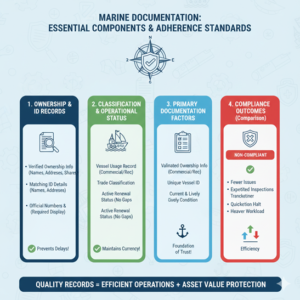
To understand vessel documentation, it is vital to know the elements of vessel documentation. They determine how officials create and maintain records.
Identifying ownership and vessels
Ownership records identify the legal owner or owners. The names and ownership shares must be true and verifiable. Mistakes can impact enforceability.
The identification of a vessel includes its official number and physical marks. These identifiers link the physical vessel to its documentation. It’s essential to display them properly to comply.
Classification and operational status
Authorities also record how the vessel is used. Recreational and commercial classifications follow different regulations. It’s important to classify accurately.
Must keep documentation status active Renewals indicate that the information is up to date. Incompleteness of documentation creates compliance gaps.
Primary documentation factors involve
- Ownership information verified.
- Identification unique des Venissieux.
- Declared operational employment.
- Present and lively condition.
Every component backs dependable figure.
Difference Between Documentation and Registration in Practice
When owners understand the differences between registration and documentation. State rules typically limit this status, and state registration offers only limited recognition. Documentation affirms federal status.
- Business owners who choose to register are typically local operators. Many choose documentation, as it requires more visibility or funding. Each of them is useful.
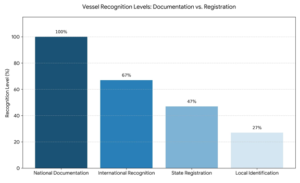
- National Documentation is the highest recognition grade ($100\%$) for ownership. Most ship owners seek this status to obtain a federally backed title that authorities recognize in every state and international waterway.
- Marine lenders and financial institutions nearly universally require documented status for financing and lending. A high-value vessel is a ship that may be fully financed through a Preferred Ship Mortgage because a Preferred Ship Mortgage can be recorded only against a nationally documented vessel, providing the highest level of security as collateral for the loan.
- International Reciprocity: State Registration is effective for local or inland waters (47% recognition) but when arriving at foreign ports does not benefit diplomatic protection, nor is there clear evidence of possessing the nationality.
Things vessel owners should consider – What Is Vessel Documentation
Documentation should always be part of planning. Grasping requirements avoids difficulties down the line Getting ready makes a difference.
Take a look at the size and use of the vessel. Eligibility is often impacted by these factors. Selecting rightly prevents rework.
Begin keeping your records as early as possible. Regularly updating your data helps prevent delays when renewing or changing policies. Keeping documentation organized aids activities.
Keep an eye on renewal deadlines. My status should be ‘active’. Delayed renewals may affect compliance.
Here are some useful tips
- Check eligibility first.
- Maintain up-to-date ownership records.
- Manage subscriptions effectively.
These steps help in managing documents effectively.
Understanding Vessel Documentation: Why It Matters
Vessel documentation is an important aspect that owners must familiarize themselves with. Supporting documentation reinforces legal identity, compliance, and transaction facilitation. Responsible vessel ownership goes hand-in-hand with good seamanship.
An understanding of paperwork enables owners to make informed decisions about registering, financing and operating. National Documentation E-Portal Precise documentation mitigates disagreements and regulatory burden.
When vessel owners understand the purpose and structure of documentation, it gives them confidence. Having the right documentation mean that you can operate legally and will not have to worry about getting into trouble in the maritime environment.