Anyone who owns a vessel, operates a vessel, or plans to transfer a vessel must understand vessel documentation requirements. These requirements determine the legal identity of the vessel and its authority to operate. Proper documentation helps establish ownership, regulatory compliance, and seamless transfers. Vessel operations can be delayed, restricted, or legally pursued without it.
Business owners do not pay much credence to documentation. Issues frequently arise during renewals, inspections, financing, or sales. Gaps or old records could foresee compliance and administrative issues. With clear documentation, these matters can be avoided and the long-term value of the vessel would be protected.
Essentially, this guide outlines what a person must document their vessel. It discusses why documentation is essential, what are the base elements, and how authorities examine records. If owners are aware of these rules, they will be able to operate their vessels with confidence and without undue hindrance. This article serves as a useful guide for compliance whether you are first-time owner or have multiple vessels.
Summary of Ship Paperwork Prerequisites
The requirements for vessel documentation refer to the official recording of the vessel. Papers establish citizenship, ownership and legal standing. It also makes determinations regarding eligibility for certain trades and also certain protections.
These requirements are applicable to specific vessel types. Regulations are usually stricter for commercial vessels. The standards for recreational vessels can vary, depending on size and operation.
Documentation makes our work more transparent. Official records are verified by authorities, lenders, and buyers. Proper documentation cuts down on conflict and increases consistency in enforcement.
Getting financing and insurance is easier with proper documentation. Most lenders require documented status to grant loans. Insurance companies evaluate documents to assess coverage terms.
| Aspect | Documented Vessel | Undocumented Vessel |
|---|---|---|
| Legal Recognition | Full | Limited |
| Ownership Clarity | High | Reduced |
| Financing Access | Strong | Restricted |
| Compliance Confidence | High | Lower |
This comparison highlights the importance of achieving documentation standards.
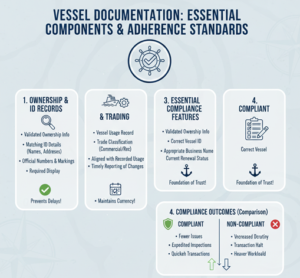
Essential Components and Adherence Standards
Keeping proper documentation pertaining to the vessel Requires Maintaining records Authorities examine these records for proper reference and the law.
Records of ownership and identification
Ownership records verify who has the title. Identification details must match these records exactly. Delays in approvals or updates can be caused by inconsistencies.
Vessels must carry official numbers and other markings. These identifiers connect the vessel to the corresponding documentation record. Necessary display is required for compliance.
Types of operations and trading
A vessel’s usage is documented by this record. The classification of trade determines the applicable regulations. If classified wrongly may result in enforcement issues.
Authorities assess if operations are in line with recorded usage. Changes in trading or structure often require record changes. Compliance gaps are prevented by currency.
Essential features for compliance include
- Ownership information validated.
- Correct ship identification.
- Appropriate business name.
- Status of renewal.
All components guarantee the integrity of documentation and enforcement.
Assessing Compliance Results Against Quality Records
Proper documentation proves its worth when comparing results. Accurate records translate to fewer administrative problems Inspections go seamlessly and renewals complete quicker.
The absence of proper documents delays vessels. Authorities may seek further verification. Records correction would halt all transactions.
Comparing efficiency of compliance
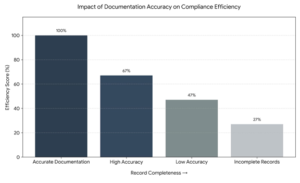
- Most efficient transaction time (100%) for Accurate Documentation score. The buyer can willingly verify the records for within a few seconds. Thus makes the sale and transfer quick.
- Incomplete bottleneck are defective records that experience a drop in efficiency of 27%. It often results in something called transactional paralysis where a transaction or operation is interrupted until the historical data gap is filled manually.
- Verification Streamlining: High-accuracy records serve as a pre-verified Identity. This avoids all the back-and-forth characteristic of administrative reviews and saves both the owner and the regulatory authority effort.
Meeting Documentation Requirements; Steps to Follow
Effective management of Initial vessel documentation requirements needs planning and consistency. Owners ought to regularly review the records on hand. To avert delays, detect issues early.
Keep orderly copies of each document. Digital records must match physical records. Having organization can help make responding to authorities faster.
Records must be updated right away after any changes. Amendments are often needed for ownership transfers, trade changes, structural changes. Compliance risk increases with delays.
Get ready for renewals. Delays in submission can disrupt documentation status. Keeping track of deadlines ensures continuous compliance.
It is useful to adopt good practices for Vessel Documentation Requirements
- Examine reports yearly.
- Always verify after you change.
- Answer authority notices without delay.
- Keep confirmation receipts.
These steps will help maintain documentation stability over time.
Closing Note on the Importance of Vessel Documentation Requirements
At National Documentation E-Portal, Vessel papers are essential for legal ownership and operation of any vessel. This brings clarity, within the law, and saves money. Maintaining accurate records minimizes disputes and facilitates smooth transactions.
By conforming to these requirements owners gain confidence and adjustability in operations. Preventing delays and enforcement issues through proactive record management. It keeps the ship worth a lot of money.
When owners adhere to a formal process and keep accurate records, they comply. With the increasing regulation of the global maritime environment, you can give yourself peace of mind.