A copy of USCG certified documentation copy is an official, verified replica of the documentation records of a vessel. Authority of Coast Guard. This document is the authoritative evidence of a vessel’s particulars, ownership, and endorsements. Many vessel owners only realize the importance of this document when they face inspections, legal reviews, or financing. At this stage, delays become expensive.
Unlike a standard copy, a certified copy carries endorsement. It is relied on by intermediaries, lenders and lawyers because it verifies facts from official records. Essential during a sale of ship, refinancing, dispute or compliance audit. Some transactions can get bottlenecked and verification may be needed without a duly certified copy.
Moreover, how does it compare to other records? This article is your guide. It also includes efficient ways to request certified copies as well as managing them efficiently. When shipowners comprehend the role, they can prepare ahead of time and avoid problems.
A USCG Certified Documentation Copy and Its Importance
A certified copy of USCG documentation is an authenticated record from the official documentation files. The presented information matches the official registry, the certificate confirms. This certificate assures that the records are true and up to date.
Usually it has vessel ID, owner info, and endorsement history details. Since it is certified, it has legal force. This form of verification is often required by courts, lenders, and regulators.
Certification is important because it builds trust. While non-certified copies may contain true information, they are not guaranteed to be true. Trusted for high stakes transactions, certified copies remove doubt.
This deed helps to establish a clear record for the owners. It lowers risk for third parties in assessing vessel status. The certified documents copy provides a dependable reference in the area.
| Feature | Certified Copy | Standard Copy |
|---|---|---|
| Official validation | Yes | No |
| Legal acceptance | High | Limited |
| Transaction use | Widely accepted | Informational |
| Record reliability | Verified | Unverified |
When and how certified copies are used
Certain situations arise to seek certified copies of documents when accuracy is crucial. Understanding these situations helps owners anticipate needs.
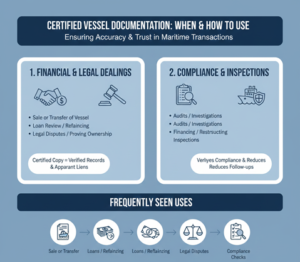
Financial and legal dealings
Certified copies are often needed during sales and transfers. To set buyers’ and lenders’ minds at ease, verification is needed that the records are true and liens are apparent. A certified copy guarantees just that.
Certified records may also be requested via legal channels. These documents can aid in a claim, defense, or proving ownership. Formal proceedings may reject uncertified copies.
Verify compliance and inspections
During audits or investigations, authorities may seek a copy of USCG certified documentation. It verifies that the records for the vessel are compliant. This is all the more important when discrepancies appear.
Certified documentation is also required for inspections involving financing or restructuring. These copies make verification easier and limit follow-ups.
Frequently seen are
- Sale or Transfer of Vessel.
- Reviewing Loans or Refinancing
- Settlement of legal disputes.
- Verification of compliance.
Evaluating Results from Certified and Uncertified Copies
It becomes easier to see certification impact through outcomes. Certified copies often make transactions happen quicker. Fewer steps to verify.
Parties may seek further evidence in the absence of a certificate. Increased administrative workload and delays, it creates. At other times, transactions may stop altogether.
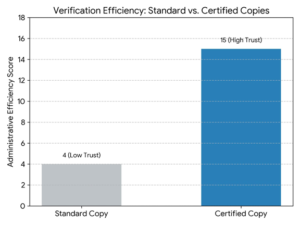
- Using a Certified Copy leads to a nearly 275% improvement in process efficiency over a copy, as it eliminates multiple dip verification layers.
- The processing of certified copies would permit High Trust immediate processing and reduce transaction friction. Standard copies referred to in the refinancing example cause Low Trust flags to be triggered and largely result in lender requests for further proof.
- A certified copy has a pre-validated status. Since it has the official stamp of the issuing agency, it is conclusive proof of the state of the record it refers to. There is no need to call the administrative office.
How to Order and Control Official Copies
A correct and effortful request for certified copy requires adequate preparation. It is the owner’s responsibility to get the vessel details right. Mistakes can postpone processing.
Give clear identifying information. This will initial vessel number and ownership. It’s vital to match official records.
Schedule requests beforehand for transactions. Delaying the moment can toss away timelines. Preparing early makes things easier.
After you receive certified copies, store away safely. The integrity should be protected by both digital and physical storage. Avoid unnecessary handling to keep in good condition.
Best practices that help are
- Ask for copies before transactions.
- Confirm everything once it arrives.
- Ensure you have extra backup.
- Monitor expiration or relevance dates.
Understanding the Importance of USCG Certified Documents
A copy of USCG certified documentation provides verified proof of a boat’s records. It conveys trustworthiness, credibility, and lawful acceptance. In many cases, it is mandatory, not optional.
When and why do certify copies matter? Understanding them helps owners prepare. Requests made proactively help to eliminate delays during sales. National Documentation E‑Portal Documents which are certified help in avoiding debates and ambiguity.
Ensuring the availability of correct and certified documentation strengthen vessel owners’ preparedness of their operations. This way, transactions will be smoother, compliance will be stronger, and ownership confidence will be long term.