You can’t just pay and take a vessel you own it. A legal proof that a boat has been transferred is made through a boat sale document. Without this document, there may be delays in registration or a dispute of ownership. To safeguard both parties, a methodical boat bill of sale process is essential, whether the vessel is state-registered or federally documented. The bill of sale confirms the cost of the boat, identifies the vessel and the date of sale. It also provides accommodation for amendments of state registration or Coast Guard documentation.
Many vessel transactions do not go smoothly due to the paperwork being incomplete or inaccurate. Reducing that risk is easier if you understand each stage in the procedure. Well-documented information prevents operational and monetary problems.
This bill of sale explains what this type of document is used for, what two transactions look like, and practical steps to safely change ownership.
Understanding the Boat Bill of Sale Process and Its Purpose
The vessel purchase agreement makes sure boat ownership transfer is legally recorded. It serves as documentation for a deal that has gone through.
A bill of sale contains more details than a mere receipt; it will have information on the actual boat and on both parties. This paperwork ensures safety for both parties.
| Document Type | Primary Purpose | Used For |
|---|---|---|
| Boat Bill of Sale | Records ownership transfer | Sale of vessel |
| Title Certificate | Official ownership proof | Registration updates |
| Purchase Agreement | Outlines terms before sale | Negotiation stage |
| Mortgage Release | Confirms lien satisfaction | Clearing financial claims |
The transfer of the bill of sale becomes part of records.
It safeguards legal and financial interests – Boat Bill of Sale Process
Following structure steps ensures smoother outcomes.
Please double check ownership and liens
Always check whether seller is competent to pass ownership before drafting papers. Check documentation for outstanding liens or mortgages.
A bill of sale must state the name and hull identification number of the vessel, and if applicable, the official documentation number.
Finish Up with the Signatures and Notarization
Certain states need it notarized. Notarized signatures may also be required for federally documented vessels.
Precise vessel identification particulars
- Purchase price and payment terms will be agreed.
- All legal names and signatures.
- Date when transaction occurred.
- Each element assures authenticity.
Registration of filings or updates
After completing the document, submit requisite papers to the authority. Could require assistance from a state agency or the coastguard.
Long-term stability involves much preparation
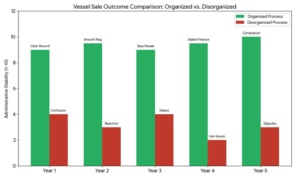
- During year 1, you will have a clear ownership record (9/10) because of an organised process, eliminating the ownership confusion that often occurs in disorganised transactions and postpones first transfers.
- Resale and financial liquidity refers to the potential to sell whatever produced in the company for cash value. By Year 3 onwards, structured documentation will be a financial asset. Vessels that are organized for history can be Easily Resold, while those with missing paperwork will face Delayed Boat Documentation that may ruin the final sale price.
- In Year 4, Lien Complications lowers the stability of the Disorganized Process ($2/10$). With an unclean paper trail, the financial institutions may not finance the vessel, freezing the asset.
Tips for Correctly Executing the Boat Bill of Sale Process
Improve efficiency with an attention to detail.
Here are useful suggestions
- Confirm seller identity and power.
- Assure there are no liens.
- Use a clear lettering format.
- After each sale, submit updates instantly.
These steps ensure seamless transitions.
The Importance of Boat Bill of Sale Process
The process of boat bill of sale provides the legal foundation of a boat title. It records the deal clearly and is good for both the buyer and seller.
Accurate and validated vessel particulars, ownership records, and filings help prevent costly and time-consuming disputes. National Documentation E-Portal helps keep records organized, making it easier to prepare a clear schedule before starting any transaction.
Creating proper documentation promotes registration updates and resale potential. Ownership disagreements could erupt without it.
When owners complete transfers systematically with proper documentation and timely submission, the process builds confidence and secures the vessel. By paying careful attention to the methods, we ensure clarity with administration and protection against cost.