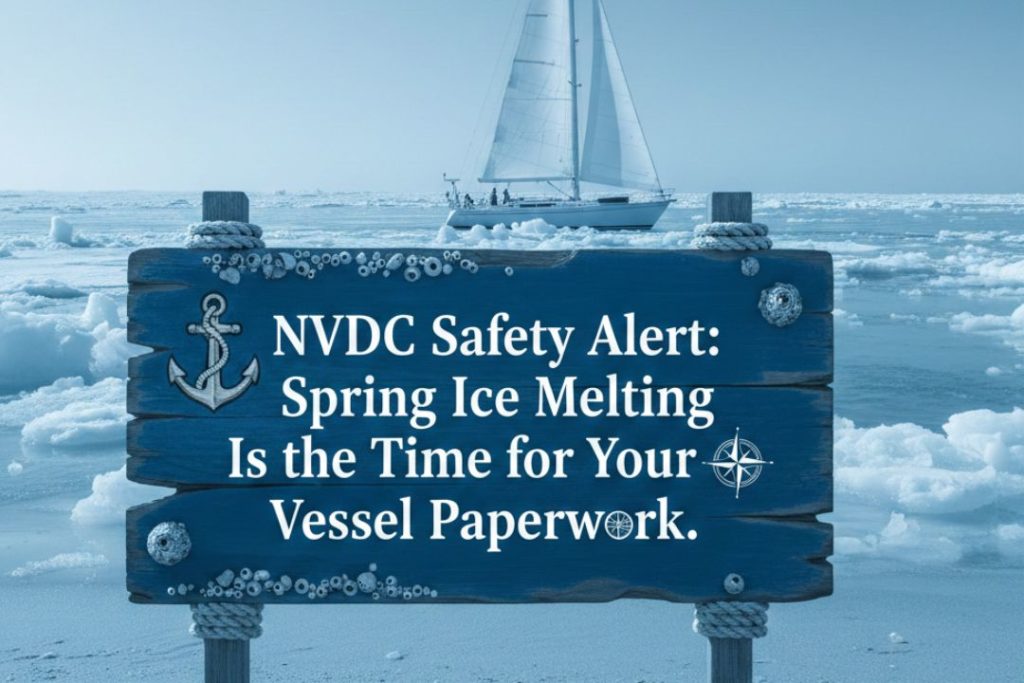
As winter lessens and waterways begin to thaw, boat owners may begin to focus on launch dates, maintenance, and safety checks. During this time, keeping your NVDC records current is as important as checking your engine or inspecting your hull.
Rising air temperatures can create a false sense of security while the water below remains dangerously cold. At the same time, ice sheets can begin losing structural integrity at a potentially alarming rate.
For documented vessel owners, early spring is more than a maintenance window. It can make a measurable difference in an emergency response.
The February 2026 Ice Crisis and What It Means for Boat Owners
According to coverage from Cleveland19 News, the U.S. Coast Guard warned that no ice should be considered safe as temperatures fluctuate. Warmer afternoons weaken surfaces that appear solid in the morning.
Beneath that thinning layer, water temperatures can still hover near freezing. If someone falls through or a vessel becomes trapped, hypothermia can set in quickly. This is not just a winter issue—it is a spring risk that affects boaters preparing to return to open water.
The February 15, 2026 news report detailed emergency responses across northern Ohio as people ventured onto ice that had rapidly deteriorated.
The U.S. Coast Guard emphasized that even if temperatures feel mild, the water beneath remains dangerously cold. Ice thickness changes unevenly, and structural stability can degrade far faster than expected.
Takeaways from the Coast Guard’s warning include:
- Air temperature does not equal water temperature
- Ice weakens from below as currents and sunlight erode its structure
- Visible cracks or pooled water signal instability
- Rescue conditions become more complex during thaw cycles
These realities affect not only recreational anglers and shoreline explorers, but also documented vessel owners storing boats near partially frozen waterways. As conditions shift, vessels can break free from moorings, drift into unstable ice fields, or become stranded in rapidly changing environments.
When rescue crews are deployed, they need precise, reliable information immediately. That is where federal vessel records matter.
The Coast Guard’s I.C.E. Protocol
In the Cleveland report, the U.S. Coast Guard reinforced its I.C.E. safety guidance:
- Information
- Clothing
- Equipment
“Information” refers to checking weather forecasts, understanding ice conditions, and informing someone of your plans. Clothing involves wearing proper cold-water survival gear, not just winter attire. Equipment includes life jackets, communication devices, and emergency signaling tools.
Each of these elements reduces risk. However, for documented vessel owners, another layer of preparedness exists: accurate federal registration. While I.C.E. focuses on immediate personal safety, official documentation strengthens the operational response if something goes wrong.
How NVDC Records Support Faster Emergency Response
During an ice-related emergency, time is measured in minutes. Cold shock can occur almost immediately, and prolonged exposure leads to hypothermia. Rescue teams must gather critical data quickly.
When your vessel is federally documented through the Coast Guard, your records are centralized. That centralized data can include:
- Vessel name and official number
- Hull material and construction details
- Tonnage and dimensions
- Propulsion information
- Owner contact data
With current NVDC documentation on file, the Coast Guard does not have to rely solely on radio descriptions or third-party reports. Accurate records reduce uncertainty at a moment when clarity is essential.
The First 60 Minutes and Accurate NVDC Documentation
In cold-water incidents, the first hour is pivotal. Search and rescue teams coordinate assets based on the vessel’s profile and known characteristics. A documented vessel linked to the NVDC system provides a verified federal record.
This means responders can quickly confirm:
- The vessel’s size and type
- Fuel capacity considerations
- Structural composition that may affect flotation
- Registered ownership information
Outdated paperwork can create confusion. If ownership changed over the winter and a Coast Guard documentation transfer was not completed, records may not reflect the correct contact information.
If your certificate expired during storage, that lapse may complicate identification. Spring is the ideal time to verify that your federal file is accurate before you return to the water.
Our online portal makes it easier to submit documentation applications electronically so your information is properly recorded with the Coast Guard.
Using the Transition Season to Review Your NVDC Status
Ice downtime is not idle time. While waterways remain partially frozen, owners can conduct a comprehensive audit of their vessel records.
Consider reviewing:
- Certificate of Documentation expiration date
- Legal owner name and address
- Vessel name spelling and hailing port
- Mortgage or lien filings
- Endorsement type (recreational, coastwise, fishery)
Many boaters discover in early spring that their vessel documentation renewal was due during the winter months. When launch season arrives, they want to head out immediately—only to realize their paperwork requires attention.
By addressing documentation before ice fully clears, you avoid last-minute delays. Our service provides a streamlined way to apply for renewals, initial documentation, and certain amendments through a digital submission process.
Avoiding Paperwork Gaps Before Launch
Spring excitement can overshadow administrative details. Yet operating a federally documented vessel with expired credentials can create unnecessary complications.
Common oversights include:
- Allowing a Certificate of Documentation to lapse
- Failing to record a change in ownership
- Not updating a vessel name change
- Overlooking recorded mortgage details
If a preferred ship mortgage is recorded against the vessel, ensuring that documentation reflects accurate ownership and lien status is critical. Federal records must align with the vessel’s legal and financial standing.
Addressing these matters before launch means you begin the season prepared—both mechanically and administratively.
Safety Equipment and Documentation Working Together
As ice recedes and open water returns, safety gear becomes a priority again. The Coast Guard continues to emphasize that all required equipment should be onboard and in working order before departure.
Essential onboard items typically include:
- Coast Guard-approved life jackets for each person
- Visual distress signals
- Sound-producing devices
- Fire extinguishers
- Navigation lights
Having proper safety equipment is fundamental. Equally important is ensuring your vessel’s federal documentation is accessible and valid.
During a vessel safety check, officials may review:
- Certificate of Documentation
- Vessel markings and official number display
- Safety equipment compliance
- Overall readiness for operation
Presenting current documentation at the outset of an inspection establishes clarity. It confirms the vessel’s legal status and aligns physical safety compliance with federal records.
The Digital Advantage of Centralized NVDC Filing
A documented vessel benefits from a single federal record maintained through the Coast Guard’s documentation system. By using our portal to submit applications and forms electronically, you simplify the process of keeping that record accurate.
Centralized documentation supports:
- Clear identification in emergencies
- Accurate ownership verification
- Proper recording of endorsements
- Updated lien and mortgage filings
In situations where ownership history matters—such as financing or sale—a Coast Guard abstract of title provides a chronological summary of recorded instruments. Ensuring your filings are properly submitted helps maintain a clean and accurate record over time.
Spring is a natural reset point. As the physical environment transitions from frozen to navigable, your paperwork should reflect the same readiness.
Preparing Now for the 2026 Boating Season
The February ice warnings serve as a reminder that seasonal change carries risk. Warmer days do not eliminate cold-water hazards overnight. Structural ice failure can happen quickly, and rescue conditions remain complex well into early spring.
Taking proactive administrative steps now supports safer operations later.
Before launch, consider:
- Confirming your Certificate of Documentation is valid
- Verifying that ownership details are current
- Ensuring endorsements match intended use
- Reviewing any recorded financial instruments
- Checking that onboard documentation is accessible
Our role is to make applying for Coast Guard documentation more efficient through an online portal designed to streamline submissions. When ice melts and waterways reopen, you should be ready to focus on navigation—not paperwork.
Accurate records, proper equipment, and awareness of changing environmental conditions form a unified approach to spring safety. As temperatures rise and the 2026 boating season begins, aligning your vessel’s federal documentation with its physical readiness helps support a smoother, safer return to the water.
If your documentation needs attention this season, submitting through our digital platform ensures your application reaches the appropriate federal channels without unnecessary delay. The thaw is coming. Make sure your records are ready before you leave port.