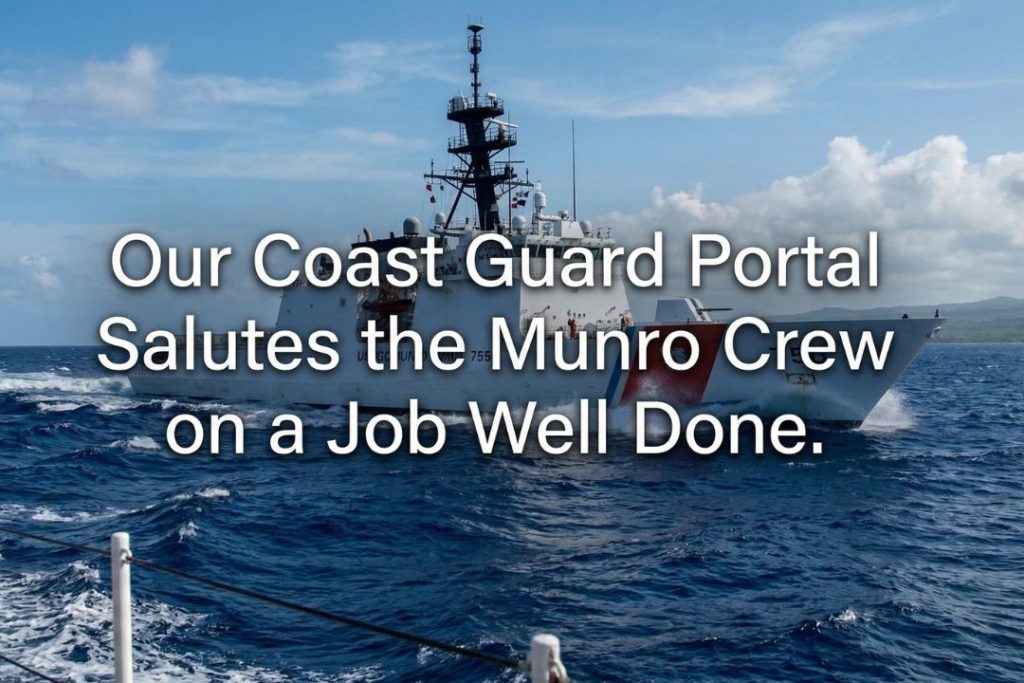
Maritime safety depends on coordination, preparation, and reliable information. The recent return of the crew of the U.S. Coast Guard Cutter Munro after a remarkable patrol highlights how critical accurate maritime records can be. At our Coast Guard portal, we recognize the dedication required to keep the waters secure.
Through vessel owners can take part in the larger maritime system that supports enforcement, security, and responsible boating across U.S. waters.
The Munro’s 119-Day Mission Across Two Oceans
During its deployment, the Coast Guard Cutter Munro conducted one of the most significant multi-mission patrols in recent memory, according to this Coast Guard press release.
Operating first in the Eastern Pacific and later transitioning to the North Atlantic, the cutter demonstrated how versatile modern Coast Guard operations must be.
During the mission, the Munro’s crew seized more than 22,000 pounds of cocaine during their operations and also interdicted the vessel Bella 1, a sanctioned oil tanker connected to a so-called “dark fleet.” These fleets often attempt to evade international monitoring systems and maritime regulations.
The scope of the mission reveals how many different tasks a single cutter can perform during an extended patrol.
The Munro deployment included:
- Counter-drug enforcement in the Eastern Pacific
- Interdiction of illicit trafficking vessels
- Identification and inspection of vessels operating without clear nationality
- Maritime security patrols in the North Atlantic
- Enforcement of international sanctions
- Boarding operations to verify vessel registration and activity
- Support for broader national security objectives
Operations like these depend on access to accurate federal vessel records. When a boarding team encounters a vessel, they rely on available documentation data to confirm identity, ownership, and eligibility to operate under U.S. authority.
Without dependable information, the process of determining whether a vessel is compliant becomes far more difficult.
How Our Coast Guard Portal Connects Boaters to Maritime Security
The missions carried out by cutters like the Munro show how important reliable vessel records are to enforcement efforts. Our Coast Guard portal exists to help vessel owners maintain those records through a straightforward digital system.
When documentation information is properly filed and maintained, it creates a dependable “data bridge” between vessel owners and federal authorities.
This system benefits both sides of the maritime community.
For the Coast Guard:
- Federal databases provide quick verification during boarding operations
- Accurate documentation helps distinguish legitimate vessels from suspicious ones
- Records assist in tracking vessel ownership and operational eligibility
- Data helps prevent identity manipulation involving vessel names or numbers
For vessel owners:
- Documentation demonstrates compliance with federal requirements
- Accurate records help confirm lawful ownership
- Federal registration provides a recognized form of vessel identification
- Updated information reduces confusion during inspections or boardings
Maintaining accurate documentation is not merely a paperwork exercise. It is a practical contribution to maritime transparency and security.
Through our portal, vessel owners can submit documentation filings in a format designed to align with Coast Guard processes.
Keeping Records Ready in the Coast Guard Portal
When the Munro crew boarded vessels during their patrol, verification of documentation would have been a critical step. The ability to confirm federal records quickly allows boarding teams to focus their attention where it matters most.
A properly maintained record in the Coast Guard portal supports that process.
When documentation is clear and active, a boarding officer reviewing federal records can identify:
- The vessel’s official number
- Ownership information
- Documentation status
- Recorded endorsements
- Any active filings affecting the vessel
These details help establish whether a vessel is operating legally under U.S. jurisdiction.
Vessel owners who maintain accurate records support a system designed to prioritize legitimate maritime activity. In many cases, the difference between a routine inspection and a prolonged investigation comes down to how easily a vessel’s identity can be verified.
Our platform allows boat owners to submit documentation filings electronically, reducing the difficulty of completing Coast Guard forms and helping maintain accurate federal records.
Identifying the “Dark Fleet” and Protecting Legitimate Boaters
One of the most notable aspects of the Munro’s deployment involved the interdiction of the Bella 1, a vessel described as part of a “dark fleet.” These ships often operate outside normal tracking systems and may obscure their ownership or nationality.
Dark fleet vessels typically attempt to avoid transparency by:
- Disabling tracking systems
- Operating without clear nationality
- Using misleading vessel identities
- Avoiding recognized registration systems
- Engaging in illicit trade or sanction evasion
For enforcement agencies, identifying these vessels is a major priority.
For legitimate boat owners, the situation highlights the importance of maintaining clear federal documentation.
When a vessel lacks verifiable registration, authorities must treat it with greater scrutiny. A properly documented vessel, however, stands apart from those attempting to conceal their identity.
Using a federal documentation system helps establish transparency in the maritime environment.
Our portal provides an accessible way for vessel owners to submit applications that establish or maintain official records within the federal documentation framework.
Supporting Compliance Through Vessel Documentation Renewal
Maintaining compliance does not end after the initial documentation filing. Vessel owners must keep their federal records current in order to remain in good standing.
One of the most important steps in maintaining compliance is vessel documentation renewal.
Renewal ensures that a vessel’s federal record remains active and accurate. If documentation expires, the vessel’s status can become unclear within federal databases.
Through our service, vessel owners can submit renewal applications electronically rather than navigating complex paperwork independently.
Keeping documentation current supports the broader maritime system by ensuring that federal records remain reliable.
When documentation remains active:
- Federal databases maintain consistent ownership records
- Boarding teams can verify vessel status quickly
- Authorities can distinguish compliant vessels from suspicious ones
- Vessel owners retain documented eligibility for their endorsements
Maintaining documentation is a simple but meaningful way to support the operational effectiveness of maritime enforcement agencies.
Establishing Ownership History Through an Abstract of Title
For many vessel owners, understanding the history of a documented vessel can be important when transferring ownership or confirming previous filings. That’s one area where the abstract of title can help.
This document provides a historical summary of filings related to a vessel’s federal documentation record.
An abstract of title may include:
- Ownership history recorded through federal filings
- Mortgages filed against the vessel
- Satisfactions of recorded mortgages
- Other official documentation actions affecting the vessel
While this document reflects historical filings, its existence also demonstrates the structured recordkeeping that supports maritime transparency.
Federal documentation systems maintain these records to ensure that vessel ownership and financing arrangements can be properly recorded.
Our portal provides access to the documentation filing process that supports this broader record system.
Maintaining Accurate Records Through Vessel Documentation Search
Access to vessel information also plays a role in maritime transparency. A vessel documentation search allows users to review publicly available federal documentation records.
These searches provide insight into the status of documented vessels and the information associated with them.
A documentation search may reveal details such as:
- Official vessel identification numbers
- Ownership information recorded in federal filings
- Vessel name and hailing port
- Documentation status
- Recorded endorsements
For the Coast Guard, having these records organized and accessible strengthens the verification process during enforcement activities.
For vessel owners, accurate filings ensure that these records reflect the vessel’s true status.
Our portal supports the documentation filing system that allows these records to remain organized and reliable.
Reinstatement and Restoring Compliance
In some situations, a vessel’s documentation may lapse or become inactive. When this occurs, reinstatement may be required to restore the vessel’s documented status.
Reinstatement allows vessel owners to correct a lapse and return the vessel to active documentation standing.
Maintaining an active federal record is important for several reasons:
- Documentation status confirms a vessel’s eligibility for certain operations
- Federal records remain consistent and verifiable
- Boarding officers can identify the vessel as compliant
- Ownership records remain clear within official databases
When documentation is reinstated properly, the vessel once again appears within the federal system as an active documented vessel.
Our service allows vessel owners to submit documentation filings electronically, helping maintain accurate records within the national maritime database.
A Coast Guard Portal That Supports the Coast Guard
The Munro crew’s 119-day deployment demonstrated the extraordinary commitment required to protect maritime commerce, enforce international law, and combat illicit activity at sea.
Their mission also highlights the importance of a cooperative maritime environment.
Every documented vessel that maintains accurate federal records contributes to the integrity of the maritime system. Reliable documentation helps enforcement agencies identify legitimate operators quickly, allowing them to focus on vessels engaged in illegal activity.
By helping vessel owners complete documentation filings through an accessible online platform, our Coast Guard portal supports the broader maritime framework that the Coast Guard relies upon during operations.