When maritime emergencies unfold in the most remote waters on Earth, the systems behind safe operations matter just as much as the vessels themselves. In moments when communication, identification, and jurisdiction are critical, USCG documentation functions as a vessel’s recognized federal identity, offering clarity and authority far beyond domestic waters.
At the National Documentation E-Portal, our service exists to make federal registration clearer and more accessible for boat owners who want their vessels properly recorded at the national level.
Operation Deep Freeze Explained
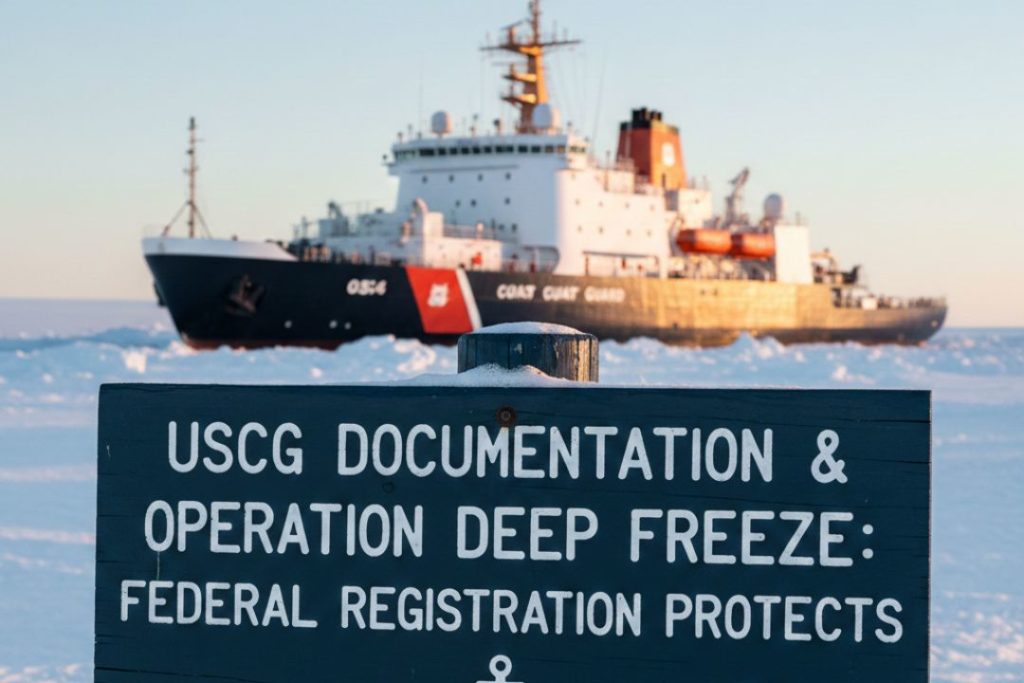
Recent events during Operation Deep Freeze highlight how standardized documentation and coordinated protocols protect lives, ships, and national interests in extreme environments. Drawing from publicly reported coverage of the U.S. Coast Guard’s Antarctic rescue efforts, including this account from KARE 11.
With that, you can clearly see how federal systems work together when conditions are unforgiving and decisions must be made without delay.
The Scenic Eclipse II Rescue: A 2026 Case Study
In January 2026, the luxury expedition cruise ship Scenic Eclipse II encountered a severe situation in the Ross Sea, Antarctica. Dense pack ice immobilized the vessel, cutting off its ability to maneuver in one of the most isolated regions on the planet.
The response came from the heavy icebreaker USCGC Polar Star, operating as part of Operation Deep Freeze 2026. Celebrating its fiftieth year of service, Polar Star executed two precise icebreaking passes, fracturing the surrounding ice and escorting the cruise ship safely into open water.
This event mattered not only because of the successful rescue, but because it demonstrated how standardized maritime systems function under pressure.
Elements of the incident included:
- A vessel operating thousands of miles from its home port
- Extreme weather and ice conditions with no margin for error
- Reliance on international communication and coordination protocols
- Immediate identification of vessel status and authority
While Scenic Eclipse II sails under an Australian flag, the communication and coordination procedures used mirror the same operational standards applied to federally registered vessels in the United States. These shared protocols form the backbone of global maritime safety.
USCG Documentation as a Federal Passport at Sea
When a vessel travels beyond familiar coastal waters, proof of nationality becomes more than a formality. Federal registration establishes a vessel’s standing in international environments where local laws, jurisdictions, and emergency responsibilities intersect.
Our service helps vessel owners apply for Coast Guard documentation so their boats carry a nationally recognized identity that is understood worldwide. This status matters most when a vessel is operating far from home or encounters an unexpected crisis.
A Certificate of Documentation functions as:
- Official proof of U.S. nationality
- A federally recognized identifier accepted by foreign authorities
- A standardized reference for maritime agencies
- A clear link between vessel ownership and federal oversight
In situations like Antarctic operations, where multiple nations may be involved, documentation ensures that communication is efficient and authoritative. It signals that a vessel is part of an organized maritime system with established protections and responsibilities.
Operation Deep Freeze and the Value of USCG documentation
Operation Deep Freeze is not solely about logistics and resupply. It represents a sustained U.S. presence in some of the harshest waters on Earth, reinforcing maritime safety, sovereignty, and readiness.
The U.S. Coast Guard’s role during this mission underscores why federally documented vessels are part of a broader safety framework. Polar Star remains the only U.S. heavy icebreaker capable of operating in these conditions, and its mission highlights the importance of being within a system the Coast Guard is mandated to protect.
For vessel owners, this connection matters because federal registration ties individual boats into a nationwide maritime structure.
Being part of the documented fleet means:
- Your vessel is recognized within Coast Guard operational systems
- Federal authorities can quickly confirm vessel status
- Emergency response coordination is streamlined
- Jurisdiction is clearly established during international incidents
Our portal exists to support access to this system by helping owners submit and manage their documentation accurately and efficiently.
Search and Rescue Efficiency and USCG Documentation Records
When emergencies unfold, seconds matter. One of the most critical advantages of federal USCG documentation is the centralized database that supports Coast Guard operations.
When a vessel is documented, essential details are recorded, including:
- Vessel length and tonnage
- Hull material and propulsion type
- Ownership information
- Official Number assigned at documentation
This information becomes immediately accessible during search and rescue operations. Instead of guessing capabilities or configuration, responders can reference verified records to make informed decisions.
In scenarios involving ice, weather extremes, or long-range operations, access to accurate vessel specifications allows authorities to determine:
- Whether icebreaking assistance is required
- If air rescue is feasible
- What resources are appropriate for the vessel’s size and construction
Our service facilitates the application process that ensures this information is properly recorded within federal systems, supporting faster and more precise responses when conditions are at their worst.
How Coast Guard Documentation Supports Global Operations
International maritime operations rely on consistency. While flags may differ, the underlying expectations around identification and authority remain largely standardized.
USCG documentation aligns U.S. vessels with these global norms, allowing smoother interactions with:
- Foreign port authorities
- International rescue coordination centers
- Maritime enforcement agencies
- Insurance and financing entities
Through our online portal, we help vessel owners navigate the federal application process so their boats carry credentials recognized across borders. This becomes especially important for owners planning extended voyages, international travel, or operations far from U.S. shores.
Documentation also supports transparency. Records such as an abstract of title provide a clear history of ownership and liens, reinforcing trust and clarity in maritime transactions tied to federally registered vessels.
Documentation, Finance, and Legal Clarity
Federal registration is not limited to emergency scenarios. It also plays a central role in vessel finance and ownership structure.
A documented vessel is eligible for a preferred ship mortgage, a federally recognized financing instrument that offers lenders increased security. This status depends entirely on proper registration and maintenance of documentation records.
Our service supports vessel owners by assisting with:
- Initial Coast Guard documentation applications
- Access to federally issued certificates
- Requests related to ownership records
Accurate documentation ensures that ownership history remains clear and enforceable under federal law, which can be critical during sales, transfers, or financing arrangements.
Maintaining Status Through Documented Vessel Renewal
Federal registration is not a one-time task. To remain valid, documentation must be kept current through periodic renewal.
A documented vessel renewal confirms that ownership and vessel details remain accurate in Coast Guard records. Allowing documentation to lapse can create complications, including delays, loss of status, or issues during inspections and transactions.
Our portal helps vessel owners submit renewal applications efficiently so their federal status remains uninterrupted. Keeping documentation active preserves access to the protections and recognition that come with being federally registered.
Operational Confidence Backed by Federal Systems
The Antarctic rescue involving Scenic Eclipse II demonstrates what happens when maritime systems work as intended. Clear identification, established protocols, and coordinated response made it possible to resolve a potentially catastrophic situation in one of the most hostile environments on Earth.
For U.S. vessel owners, USCG documentation registration offers peace of mind rooted in structure rather than speculation.
It provides:
- Recognized nationality in international waters
- Integration into Coast Guard operational databases
- Clear authority during emergencies
- Support for financing and ownership clarity
At the National Documentation E-Portal, our service focuses on simplifying access to Coast Guard documentation so vessel owners can operate with confidence, knowing their boats are properly recorded within the federal maritime framework.
Unsure which forms are right for your situation? A vessel documentation search through our portal can provide a starting point.
Whether navigating coastal waters or planning voyages far beyond them, documentation ensures that when conditions demand swift action and clear authority, your vessel is already part of the system designed to protect it.