Recreational boating remains one of the most popular activities on America’s waterways. Millions of people head out on lakes, rivers, and coastal waters every year, enjoying everything from fishing trips to offshore cruising. Yet behind that enjoyment is an important reality: safety depends on preparation, compliance, and accurate vessel identification. We provide help with Coast Guard registration and more that can help.
Recent data released by the United States Coast Guard reinforces how important these elements are for today’s boating community.
According to newly reported data, the most recent recreational boating statistics demonstrate both progress and ongoing challenges for vessel operators across the country.
The findings highlight lower fatality rates, continued property losses, and the need for reliable vessel records.
Coast Guard Registration and What the Latest Boating Statistics Reveal
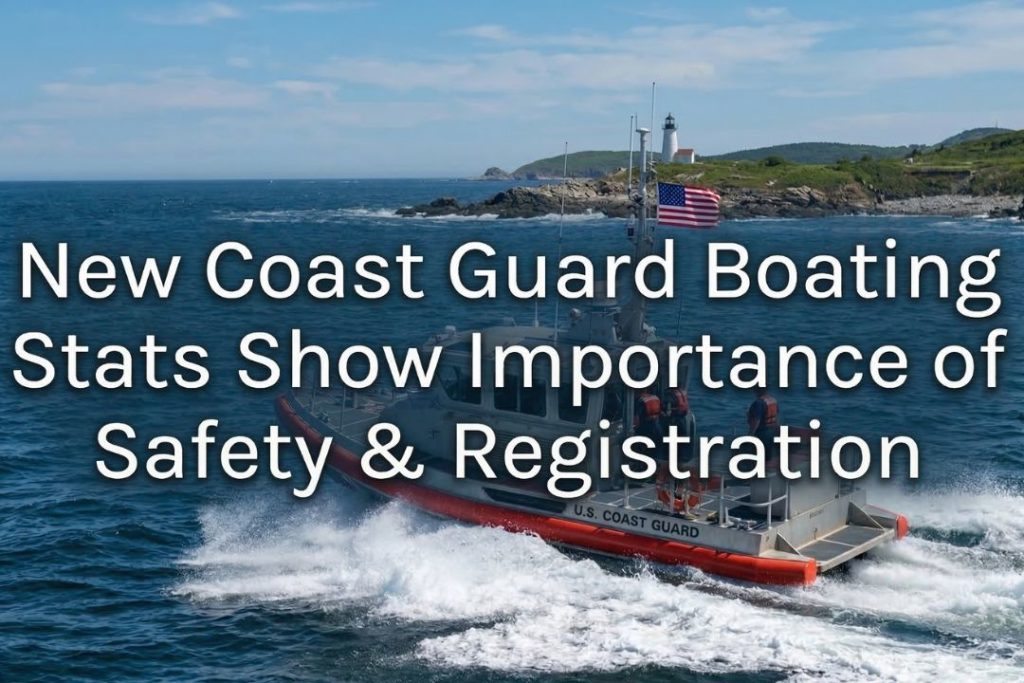
Recent reporting on recreational boating safety from Yahoo News shows a notable milestone for the industry. The latest federal data reveals that the fatality rate for boating accidents has reached its lowest level in more than half a century.
The most recent statistics show a fatality rate of 4.8 deaths per 100,000 registered vessels. This represents the lowest level recorded in over 50 years of federal tracking.
Findings from the latest safety report include:
- The lowest fatality rate recorded in more than five decades
- Continued improvements in boating safety awareness and training
- Ongoing accident investigations across the nation’s waterways
- Significant property damage costs associated with boating incidents
While these statistics show encouraging safety improvements, another detail stands out: property damage from boating accidents exceeded $88 million. This highlights the financial risks involved in maritime incidents.
Federal documentation systems help support investigations and claims in situations like these. When a vessel is documented with the federal government, it receives an official number that becomes part of the vessel’s permanent record.
This number plays a role in several situations:
- Identifying vessels involved in accidents
- Tracking ownership history
- Supporting insurance verification
- Assisting recovery efforts when vessels are lost or damaged
The ability to track a vessel through its federal record can be especially important when reviewing its ownership history through an abstract of title. This document compiles the recorded chain of ownership, liens, and other relevant filings connected to a documented vessel.
Reliable documentation helps maintain clarity in maritime transactions while supporting safety oversight across the boating community.
The Safety Value of Proper Coast Guard Registration and Identification
Vessel identification is more than a legal formality. It plays a practical role in maritime safety and search-and-rescue operations.
Federal documentation requirements establish clear identification standards for documented vessels operating in U.S. waters. These standards allow enforcement authorities and rescue teams to identify vessels quickly when necessary.
Documented vessels must display their vessel name and hailing port in letters that meet federal requirements. Typically, the markings must appear in at least four-inch lettering.
This requirement serves several practical purposes:
- Allows identification from a distance
- Helps aircraft and patrol units recognize vessels
- Supports search and rescue operations
- Confirms the vessel’s documented status
When rescue crews search large areas of water, visual identifiers help narrow down possible matches with reported vessels.
Proper documentation also connects the vessel to federal records that can be accessed by maritime authorities during emergencies.
Safety Equipment and Inspection Readiness
Boating safety also involves proper equipment and compliance with federal safety standards.
Documented vessels operating in certain conditions may undergo inspections or safety checks conducted by maritime authorities. When a vessel is part of the federal documentation system, its identifying information is easier to confirm during these inspections.
Safety equipment commonly reviewed during inspections includes:
- Life jackets for passengers and crew
- Fire extinguishers in required locations
- Emergency signaling devices
- Emergency Position Indicating Radio Beacons (EPIRBs)
- Navigation lights and sound signaling devices
Federal documentation helps ensure that vessel records correspond to the equipment and identification onboard.
By maintaining updated records through Coast Guard registration, boat owners help support consistent safety oversight across the maritime system.
Coast Guard Registration and Search and Rescue Operations
Search and rescue operations depend on accurate information about vessels operating on the water.
When an emergency call is received, rescue coordinators attempt to identify the vessel involved as quickly as possible. Documentation records can assist with that process by providing essential information tied to a vessel’s official number.
These records may contain:
- Vessel name and identifying details
- Ownership information
- Physical characteristics of the boat
- Official documentation status
When authorities can quickly confirm a vessel’s identity, response efforts may become more efficient.
Accurate documentation also helps prevent confusion between vessels with similar names operating in the same region.
A Modern Registry for a Modern Boating Community
The maritime industry continues to evolve as technology improves recordkeeping and communication systems.
The latest developments include a new federal initiative aimed at collecting updated data about boating participation in the United States.
The National Recreational Boating Safety Survey launched in March 2026 to better understand boating activity across the country. Officials estimate that more than 25.5 million boats are currently operating on U.S. waters.
The survey seeks to measure:
- The number of active recreational boats
- Patterns of boating participation
- Safety equipment usage
- Trends in boating activity nationwide
Reliable data helps agencies develop policies and safety programs that match real-world conditions on the water.
One challenge identified in these discussions is the existence of vessels that are not properly recorded or documented.
Some vessels remain inaccurately registered or recorded only at the state level. These situations can create gaps in national data and identification systems.
Federal documentation helps address these issues by placing vessels into a centralized registry that can be referenced by authorities when needed.
Through our platform, vessel owners can submit documentation applications that enter the federal system used by maritime authorities.
Maintaining accurate records also supports activities such as a vessel documentation search, which allows individuals to review information connected to federally documented vessels.
Initial Documentation as a Key Step in Responsible Ownership
For many vessel owners, the documentation process begins with determining eligibility for federal registration.
Federal law establishes several requirements for vessels seeking documentation through the United States Coast Guard.
These requirements generally include:
- The vessel must measure at least five net tons
- The vessel must be owned entirely by United States citizens
- The vessel must be used for an eligible purpose such as recreation or commerce
In practical terms, five net tons often corresponds to vessels approximately 26 feet in length for many monohull designs. However, the exact measurement depends on the vessel’s dimensions and internal volume.
When a vessel qualifies and receives Coast Guard registration, it becomes part of the federal documentation registry.
This status provides important advantages compared with state titling alone.
US Coast Guard Registry
The International Recognition of Federal Documentation
Boat owners who plan to travel beyond domestic waters may find federal documentation especially valuable.
Documentation provides official evidence of a vessel’s nationality under United States law. This status is recognized internationally when vessels enter foreign waters or operate in offshore areas.
Federal documentation may serve as:
- Proof of U.S. nationality
- Evidence of ownership
- Identification when entering international ports
- Confirmation of the vessel’s legal status
This recognition can be important for vessels traveling through offshore regions such as the Exclusive Economic Zone.
For operators planning extended cruising or offshore trips, proper documentation helps establish the vessel’s identity beyond domestic waters.
Maintaining Documentation Through Vessel Documentation Renewal
Documentation does not remain active indefinitely. Vessel owners must maintain their records through vessel documentation renewal to keep their status current in the federal registry.
Renewal ensures that a vessel’s documentation remains active and that the record continues to reflect accurate ownership information.
Keeping documentation current supports:
- Compliance with federal regulations
- Accurate vessel identification
- Updated registry records
- Continued documentation status
Maintaining current documentation helps ensure that the vessel remains properly recorded within the federal maritime system.
Restoring Lapsed Documentation
In some situations, documentation may lapse due to missed renewal deadlines or other administrative circumstances.
When this occurs, vessel owners may need to apply for reinstatement in order to restore the vessel’s documentation status.
Reinstatement applications help reestablish the vessel’s place in the federal registry and allow the owner to regain the benefits associated with documented status.
Maintaining active records helps prevent interruptions in documentation and ensures that vessels remain properly identified within maritime databases.
The Role of Coast Guard Registration in Modern Boating
The latest boating statistics demonstrate that safety improvements are possible when education, regulation, and responsible ownership work together.
Even with lower fatality rates, the high level of property damage reported each year shows that risks still exist on the water.
Federal documentation systems help address these risks by creating a structured framework for vessel identification and recordkeeping.
Through Coast Guard registration, vessels receive official recognition within the national maritime registry. This record supports maritime safety programs, accident investigations, and vessel identification efforts across the country.
For many boat owners, proper documentation is not only a regulatory requirement but also a practical step toward responsible vessel operation.
As boating participation continues to grow across the United States, maintaining accurate documentation records will remain an important part of the nation’s maritime safety infrastructure.