Every winter, the Northeast faces a challenge that is both maritime and deeply personal. When temperatures plunge, millions of homes rely on heating oil that must move efficiently through American waterways. At our service, we closely follow missions that underscore the importance of accurate Coast Guard documentation and the role it plays in keeping domestic supply chains operating without interruption.
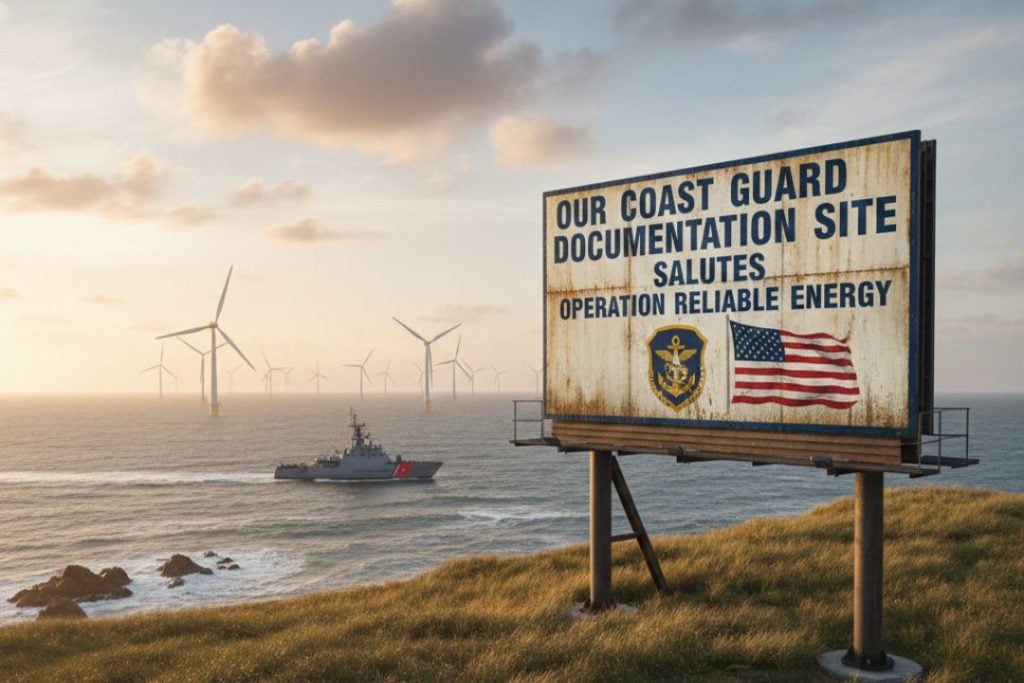
Operation Reliable Energy, led by the U.S. Coast Guard, is one of those missions, and it highlights how documented commercial vessels quietly support daily life on shore.
Coast Guard Documentation and Operation Reliable Energy
According to news site “GCaptain,” Operation Reliable Energy focuses on keeping critical waterways open during the harshest months of the year. As ice forms along the Hudson River and the coast of Maine, tankers and barges carrying heating oil depend on safe passage to reach terminals and ports.
Without that movement, communities feel the effects almost immediately.
The Coast Guard’s winter operations remind us that maritime compliance is not paperwork for its own sake; it is infrastructure. They deploy ice-capable cutters and crews to maintain navigable channels so tankers can move without delay.
The mission includes:
- Icebreaking operations along key stretches of the Hudson River
- Patrols along the Maine coast where winter ice can rapidly thicken
- Continuous monitoring of tanker traffic carrying domestic heating oil
- Readiness for emergency response in freezing conditions
Vessels such as 140-foot ice-capable cutters are assigned to this effort, clearing paths so commercial traffic can move safely. This work matters because roughly ninety percent of the heating oil used in the Northeast travels by water before reaching land-based distribution systems.
When ice blocks a channel, the consequences are immediate, extending far beyond the harbor.
For our service, this mission reinforces a core reality of the maritime industry: commercial vessels operating in domestic trade must be fully compliant to participate in these critical movements. The regulatory foundation supporting Operation Reliable Energy begins long before winter arrives.
The Documented Commercial Fleet Moving Northeast Heating Oil
The tankers and barges carrying heating oil during the winter are not casual operators. They are large, professionally crewed vessels that form what many in the industry consider a blue-chip domestic fleet. These vessels operate under strict federal requirements, including compliance with the Jones Act.
Under the Jones Act, vessels engaged in domestic trade must meet specific standards:
- Built in the United States
- Owned by U.S. citizens or qualifying entities
- Properly documented with the Coast Guard
This is where boat documentation becomes essential to lawful operation. Without current documentation, a tanker or barge cannot legally transport domestic cargo between U.S. ports. During Operation Reliable Energy, there is no margin for administrative gaps. A vessel delayed due to documentation issues is a vessel not delivering fuel when it is needed most.
At our service, we focus on making the application and maintenance process more accessible for vessel owners who depend on uninterrupted eligibility to operate. We understand that commercial operators cannot afford uncertainty when the stakes include regional energy supply.
Coast Guard Documentation: Part of the Backbone of Winter Operations
Winter navigation introduces risks that go beyond ice alone. Mechanical stress increases, visibility decreases, and response times shrink. In these conditions, accurate vessel records are not optional; they are operational necessities.
From the Coast Guard’s perspective, documented vessel data supports:
- Rapid identification during emergency calls
- Accurate assessment of vessel size and tonnage
- Confirmation of hull characteristics and markings
- Verification of authorized trade and service
In the event of an incident, such as a tug assisting a tanker becoming disabled in ice, rescue coordination depends on reliable records. When every minute counts, responders rely on documentation profiles to understand exactly what they are dealing with before arriving on scene.
This operational reality is one reason Coast Guard documentation is closely tied to search and rescue readiness during Operation Reliable Energy. Winter water temperatures reduce survival time dramatically, turning minor delays into serious risks.
Search and Rescue Readiness
Operation Reliable Energy is not limited to icebreaking. It also places Coast Guard assets in a heightened state of readiness for emergencies. Sub-zero temperatures and floating ice create some of the most demanding rescue environments anywhere in the country.
Search and rescue planning during winter operations accounts for:
- Reduced survival time for anyone entering the water
- Limited maneuverability for assisting vessels
- Rapid weather changes that can close open leads
- The need for precise vessel identification before deployment
When a distress call is received, responders do not have time to sort through incomplete or outdated records. This is another reason current Coast Guard documentation matters. Accurate records support decisive action when conditions leave no room for error.
Our service exists to help vessel owners maintain compliance so that, if the unthinkable happens, documentation is not a complicating factor. While we do not conduct research or monitoring on behalf of owners, we provide a streamlined path for submitting the required information correctly.
The Jones Act, Domestic Trade, and Energy
Operation Reliable Energy brings renewed attention to the Jones Act and its role in domestic energy transportation. While often discussed in economic or political terms, its practical impact is visible each winter in the Northeast.
The Jones Act ensures that:
- Domestic energy transport remains within a regulated U.S. fleet
- Vessels meet established safety and construction standards
- Maritime jobs supporting these operations stay domestic
For vessel owners, compliance with these requirements begins with proper documentation. A lapse can remove a vessel from eligibility at precisely the moment it is most needed. During periods of high demand and limited capacity, even one sidelined vessel can ripple through the supply chain.
Coast Guard documentation plays a central role here by establishing legal eligibility for domestic voyages. At our service, we focus on helping owners navigate this process efficiently so that compliance supports operations rather than interrupting them.
The 2026 Supply Chain Focus
Attention across the energy sector is focused on resilience. Global markets remain unpredictable, and domestic supply chains are under increasing scrutiny. In this environment, administrative readiness is not secondary; it is part of operational planning.
For the maritime sector in the Northeast, readiness includes:
- Ensuring commercial vessels maintain current documentation status
- Avoiding preventable delays tied to paperwork errors
- Supporting uninterrupted participation in domestic trade
We see firsthand how documentation supports broader economic stability. A fully compliant fleet reduces the risk of administrative bottlenecks that could contribute to fuel shortages during peak winter demand.
Our role is limited and focused. We assist with applications and submissions related to documented vessel renewal, ensuring vessel owners can meet requirements without unnecessary friction. We do not provide follow-up services or monitoring, but we do make the initial process more accessible.

Documentation Beyond Compliance
Beyond immediate operational needs, documented vessel records serve long-term purposes that matter to commercial operators. Accurate records form the official history of a vessel, supporting transactions and financing within the maritime industry.
Documentation records can include:
- Ownership history reflected in an abstract of title
- Recorded liens and financing instruments such as a preferred ship mortgage
- Official vessel particulars maintained by federal authorities
These records support transparency and certainty in commercial operations. While Operation Reliable Energy focuses on winter navigation, the same documentation infrastructure underpins vessel ownership and finance year-round.
Our service supports the submission of required forms related to these processes, helping vessel owners present accurate information to the Coast Guard. We do not conduct searches on behalf of customers, but we recognize how tools like a vessel documentation search rely on the accuracy of submitted data.
Why Winter Missions Highlight Year Round Compliance
Operation Reliable Energy is seasonal, but the lessons it offers apply throughout the year. Compliance achieved in calm conditions is what enables safe operation when conditions deteriorate. Documentation completed well before winter is what allows vessels to respond when demand spikes.
From our perspective, this mission underscores several realities:
- Documentation is operational infrastructure, not administrative overhead
- Winter magnifies the consequences of noncompliance
- Accurate records support safety, commerce, and energy security
Coast Guard documentation remains a foundational requirement for commercial vessels participating in domestic trade. During Operation Reliable Energy, that foundation supports not only maritime operators, but also households relying on warmth during the coldest months.
Our service is built around that understanding. By simplifying access to Coast Guard documentation applications, we support vessel owners who play a role in missions like Operation Reliable Energy, even when they never see the icebreakers clearing the way ahead.