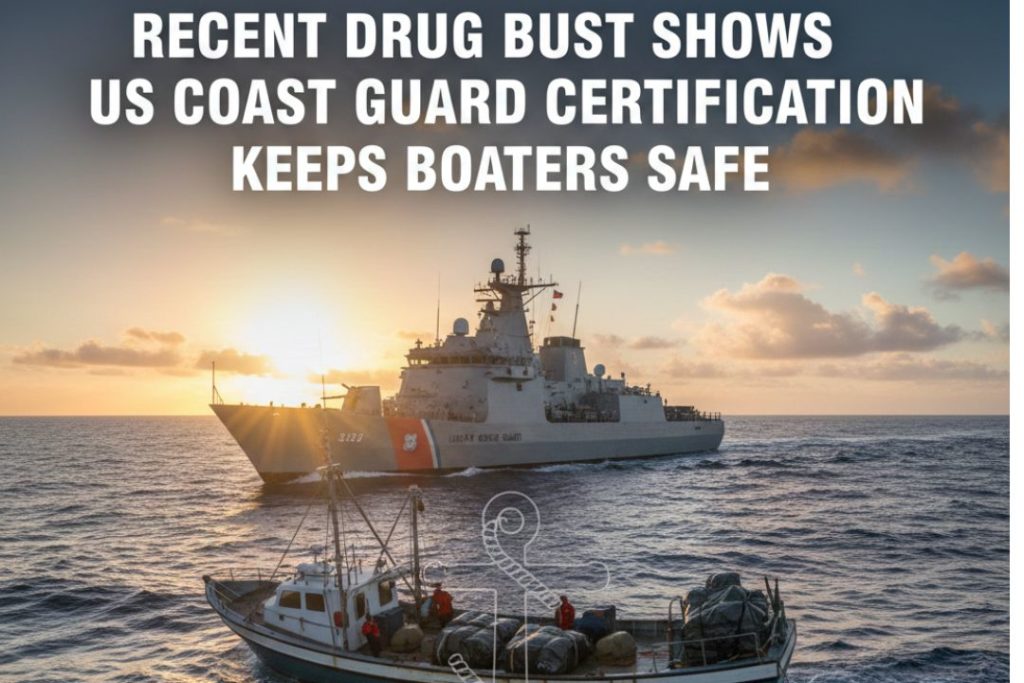
In San Juan Harbor, Coast Guard officers discovered a stowaway hiding aboard a barge, along with an astonishing 789 pounds of cocaine. While headlines focused on the drugs, the incident quietly underscored something equally important: US Coast Guard certification plays a key role in keeping America’s waterways safer.
The bust highlighted seamless “interoperability” between the US Coast Guard and Customs and Border Protection, working side by side to secure the port and stop illegal activity before it moved further inland.
The Drug Bust
According to the CBS report, the discovery occurred during routine maritime security operations in Puerto Rico, an area where tugboats, barges, terminals, and commercial traffic move constantly through busy waters. The successful interception was not luck.
It was the result of layered inspections, active monitoring, and documented vessels operating within a known maritime framework.
What often gets lost in coverage like this is how frequently the Coast Guard conducts inspections that never make the news. The cocaine seizure was dramatic, but the process behind it happens daily.
Active Inspections Reveal the Importance of US Coast Guard Certification
The San Juan Harbor incident is a reminder that the Coast Guard is constantly present in commercial and recreational maritime spaces. Barges, tugboats, terminals, and support vessels are regularly inspected as part of normal security operations.
These inspections are not random or reactive. They are structured, documented, and built around identifying vessels that are part of the known maritime community.
From our perspective, this matters because documented vessels stand out in the right way. When a vessel is properly certified, officers already have a baseline understanding of its ownership, purpose, and compliance history.
During active inspections, officers may focus on:
- Vessel identity and documentation status
- Compliance with federal maritime requirements
- Crew credentials and lawful presence
- Cargo declarations and routing
- Overall safety and seaworthiness
When a vessel is properly documented, these checks move more efficiently. The San Juan case demonstrates how quickly authorities can act when systems are already in place and communication between agencies is seamless.
This is where US Coast Guard certification becomes more than paperwork. It becomes part of a broader safety and security network that protects ports, waterways, and legitimate boaters.
What US Coast Guard Certification Involves for Vessel Owners
For both commercial operators and recreational boaters, US Coast Guard certification establishes a vessel’s official standing at the federal level. It confirms ownership, nationality, and eligibility to operate under U.S. laws. While the exact requirements vary based on vessel type and use, the purpose remains the same: clarity and accountability on the water.
Certification generally applies to vessels that meet federal eligibility standards and are owned by U.S. citizens. Once documented, a vessel becomes part of a centralized system that law enforcement agencies can reference during inspections or boardings.
From our side, we focus on making this process accessible through an online portal designed to simplify submission and filing. We assist boat owners by helping them apply correctly and efficiently, without unnecessary friction.
Common elements associated with certification include:
- Federal recognition of vessel ownership
- Assignment of a documentation number
- Eligibility for certain trades and operations
- Inclusion in Coast Guard records
For many owners, certification is also tied to transactions. A Coast Guard documentation transfer is required when ownership changes hands, ensuring records remain accurate and current.
How US Coast Guard Certification Shapes Everyday Safety
Safety is not just about emergency response. It is also about predictability and trust. Certified vessels are part of a known group, which reduces uncertainty during law enforcement encounters. When officers board a vessel, the presence of valid documentation helps establish legitimacy right away.
This contributes to smoother interactions in several ways:
- Reduced delays during routine boardings
- Clear ownership records available to officers
- Faster verification through federal systems
- Lower risk of misunderstandings or escalations
In high-traffic areas like San Juan Harbor, these factors matter. The faster authorities can confirm what a vessel is and who owns it, the more attention they can devote to identifying genuine threats, such as hidden contraband or unauthorized individuals.
Documentation also plays a role over time. A vessel documentation renewal ensures that records remain current, which is critical when ownership, usage, or vessel details change. Outdated paperwork can raise questions during inspections, even when no wrongdoing exists.
Legal Clarity Begins with Proper Documentation
During a boarding, one of the first things an officer checks is whether a vessel is properly documented. This is not arbitrary. Documentation provides the legal foundation for everything else that follows, from safety checks to cargo verification.
When documentation is missing, expired, or inconsistent, it can trigger deeper scrutiny. In contrast, vessels that are properly documented signal compliance from the start. This is especially relevant in environments where agencies like the Coast Guard and Customs and Border Protection work together, as they did in Puerto Rico.
Legal clarity benefits vessel owners by:
- Establishing federal compliance immediately
- Reducing the likelihood of extended inspections
- Supporting lawful operation in U.S. waters
- Protecting ownership interests
For vessels subject to financing, documentation supports instruments like a preferred ship mortgage, which relies on accurate federal records.
These elements may not make headlines, but they are part of the same system that enabled authorities to act decisively in the San Juan case.
How Our Service Supports Compliance and Security
As an online portal focused on federal vessel documentation, our role is to help boat owners navigate these requirements efficiently. We provide a streamlined way to submit the necessary information and filings correctly.
Our service is built around accessibility and clarity. By centralizing the application process online, we help owners engage with federal documentation requirements without unnecessary complexity.
Documentation also intersects with financing and ownership security. Records such as a Coast Guard abstract of title provide a clear history of ownership and encumbrances, which is essential for transparency.
We assist with services that include:
- Initial applications for US Coast Guard certification
- Ownership-related filings and transfers
- Ongoing documentation maintenance
- Access to federally required forms
By helping vessel owners complete documentation accurately, we support the broader goal of maritime safety. Every properly documented vessel contributes to a clearer picture of activity on U.S. waters.
The cocaine bust in San Juan Harbor was an extreme example, but it reflected everyday realities. The Coast Guard is active, inspections are ongoing, and documentation matters. Vessels that are properly certified are easier to identify, easier to verify, and easier to distinguish from those engaged in unlawful activity.
From our perspective, helping boaters complete US Coast Guard certification is not just about compliance. It is about supporting a safer, more transparent maritime environment where legitimate operators can move confidently and authorities can focus on real threats.