First-time vessel documentation is important when new vessel owners want to have assurance of their legal ownership and use of the vessel. It’s not just a simple formality. Endorsement provides a vessel with official status and links it to nationals. If there’s no appropriate documentation, limits may be placed on owners’ operations, finance or transfer.
The process overwhelms many first-time owners. The procedures might appear tricky and details often get overlooked causing delays. If you understand the basics early on, you can avoid mistakes that can cause frustration later on. Things are likely to be manageable if you prepare well.
Vessel documentation for first time users made easy through this guide. It highlights the importance of documentation, the type of information needed and the analysis by the authorities. This article provides a framework for documenting a recreational vessel or preparing for commercial use. You’ll learn what to expect and how to proceed with certainty by the end of the course.
Overview of First-Time Vessel Documentation
The first-time vessel documentation gives the vessel a legal entity status. It keeps track of ownership, nationality, and operational status of vessels. This document is recognized by authorities for legal operations.
The documentation is different from state registration. Registration often for local use; documentation affords wider recognition Certain vessel sizes or their use for trade purposes may necessitate it.
The documentation is important for clarity. Authorities refer to official documents for confirmation of ownership compliance. Although also used by insurers, lenders and buyers for transactions.
For new owners, first-time vessel documentation is a solid first step. It guarantees that records are accurate from the start. This minimizes revisions and administrative problems later.
| Aspect | Documented Vessel | Undocumented Vessel |
|---|---|---|
| Legal Recognition | National: Recognized by the federal government and internationally. | Limited: Generally recognized only at the state or local level. |
| Ownership Clarity | High: Centralized federal record provides a clear, unassailable “chain of title.” | Moderate: Reliance on state-level titles which may vary in detail and rigor. |
| Financing Options | Broader: Most lenders require federal documentation to secure preferred marine mortgages. | Restricted: Many banks are hesitant to finance significant loans without federal backing. |
| Transfer Readiness | Smooth: Federal transcripts make the sale and transfer process transparent and fast. | Delayed: Sales can be slowed by title searches across different state jurisdictions. |
Prerequisites and Evaluation Procedure
The review process follows a formal construction. Authorities review applications to confirm accuracy and compliance.
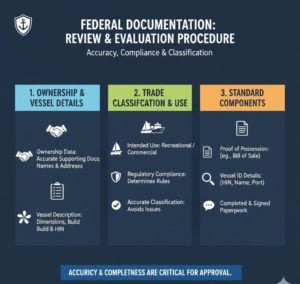
Details of Ownership and Vessel
The ownership data must be accurate and verifiable. Matching supporting documentation with names, addresses and ownership percentages Snafus often cause delays.
Description vessel this includes the dimension, build information, thread information. These particulars link the physical craft to its documentary record.
Classification of trade as well as operations
First-time vessel documentation shows intended use. Authorities will assess whether the boat will be used for recreational or commercial operation. This classification determines the regulations that apply.
Being accurate is important. Wrong classification may cause compliance issues. Classification should reflect customers’ operational activities.
Components that are standard include
- Proof for possession.
- Vessel Identifications Details
- Description about Intended Use
- Filled out and signed paperwork.
Every part contributes to a seamless review process.
Assessing The Primacy Of First Document
Recognizing new information versus updates can help owners plan accordingly. Documentation done for the first time is the baseline record. All the upcoming changes build upon it.
Mistakes made at the start can complicate changes later. Revisions often need more review and time. Accurate initial submission reduces long-term efforts.
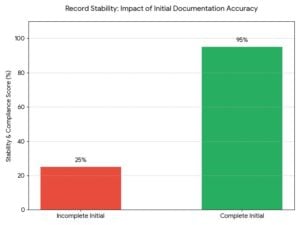
- Foundation of Integrity: The high score of 95% for the Integrity Foundation through accurate first-time documentation creates a legally permanent document that facilitates every future administrative act.
- Prevention of Compound Errors: Starting with the initial record which is incomplete (25% stability), will result in a compound error effect such that one single error on a vessel’s measurement or hull IDs will create a conflict at a later renewal or sale.
- Audit Efficiency: If there are vessel inspections on your fleet or unreported international entry, the higher stability of your record will make it unlikely for your data to be challenged. Thus, if your data is transparent and unassailable, you are less likely to be selected for secondary review.
- Ownership Clarity: The first thing that is important to note is the accurate initial filings gives clean chain of title. A clean chain of title is very important for market value of the vessel. Lenders and Buyers will significantly engage with a filing that shows 95% stability over time.
Demonstrates greater stability when first-time recordings are accurate. Although simple, it accurately reflects real-life administrative results.
Real-world instance
The new owner submitted incomplete documents. Correcting a sale delay the transfer later. Another owner provides accurate initial documentation and carries out subsequent transactions smoothly.
The comparison clearly indicates how important it is to do it right from the start.
Instructions for First-time Applicants
The First Step For Successful Vessel Documentation Is Preparation The owners should first people records that are correct. Check the information before submitting.
Carefully check vessel measurement and ownership details. Always be consistent to prevent rejection. Tiny deviations can lead to delays.
Have extra time for submissions It takes time to process during busy times. Submitting early lowers stress.
Monitor the application’s status and reply to queries promptly. Consistently following up helps keep the process going.
Some tips to prepare
- Always check your entries before submission.
- Retain well organized copies of documents.
- Respond promptly to requests of authority
- Look into the approval details on receipt.
These steps help create documentation efficiently and successfully.
Initial First-Time Vessel Documentation
First-time vessel documentation helps with lawful ownership and operations. It maintains transparent records that assist in compliance, funding, and transfers. New owners get the best success when they approach the process prepared and detailed.
Grasping requirements and avoiding common mistakes can save time. National Documentation E-Portal initial records will reduce the need for correction. This strategy helps to maintain the value of the vessel.
New migrants can leverage digital technology when faced with blocked access to public services and funds. A strong start ensures you’ll never lose clarity or peace of mind down the line.