The process of removing a vessel from federal documentation records is called deletion. Vessel owners have this issue when selling, exporting, or permanently changing the vessel’s status. Deletion from USCG Materials is not a punishment; it is an administrative procedure for record updating. When and why deletion takes place – gives owners the chance to reset.
Federal papers show proof of nationality and ownership. When a vessel’s federal documentation no longer qualifies or is no longer needed, deletion is necessary. This process guarantees that the records reflect the present situation of the vessel. Not deleting it when required can cause confusion in future transactions or registrations.
This guide explains Deletion from USCG Documentation in details. It outlines the justification for removal, the process involved, and the contrast with alternative documentation actions. Vessel owners will find practical tips to assist them with deletion in confidence. At the end, you’ll understand how effective deletion prevents harm to owners and official records.
Understanding Deletion from USCG Documentation and Its Purpose
Deletion from USCG Documentation is the formal act of removing a vessel from the federal documentation system. A vessel that has been deleted no longer retains the status of being documented. This operation updates the national records so that they reflect the change correctly.
Deletion is frequently necessary when a vessel changes ownership to a foreign owner. Besides that, it can be the case that a vessel is withdrawn from service permanently. Therefore, the continuation of federal documentation in these situations is not correct.
The deletion process safeguards the integrity of the records. Officials depend on documentation records for compliance and verification purposes. If old records are left to be active, then the risk of confusion or disputes arises. Deletion guarantees transparency.
| Situation | Deletion Required |
|---|---|
| Sale to foreign buyer | Yes |
| Vessel permanently destroyed | Yes |
| Export outside U.S. jurisdiction | Yes |
| Annual renewal missed | No |
Knowing why a vessel is deleted can help the owner to make the right decision and act responsibly. It is very important that the records are trustworthy and as accurate as possible, hence it is necessary to keep them current.
When and How Deletion Is Required
USCG Documentation withdrawals are only allowed under very narrow situations. It will be cleared to you from this article what are the situations in which withdrawal is needed. Thus you will be able to avoid making unnecessary withdrawals. The cases requiring withdrawal are explained here.
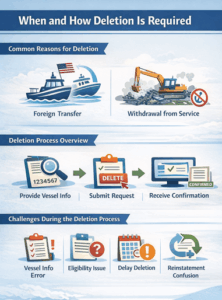
Common Reasons for Deletion
One reason for a foreign transfer is when the USCG decided to remove the boat from the register. The Federal documentation program is in place for only those vessels which meet the set standards. If a vessel ceases to meet the standards, it is required to be withdrawn from the record.
Another reason for permanent withdrawal is that the vessel is no longer used. This can be the case when the vessel is dismantled or scrapped. The records of a vessel, which has been deleted correctly, have been closed properly and their history is finished.
Deletion Process Overview
To delete a vessel, submit a deletion request with the vessel’s accurate details. Owners should explicitly state the reason for deletion. Reliable information guarantees speed.
Depending on the coping mechanism, supporting details may help. After being processed, the ship officially removed from documentation. It is suggested to keep an affirmation.
Challenges during the Deletion Process
- Submitting incorrect vessel information
- Misunderstanding eligibility requirements
- Delaying deletion after qualifying event
- Confusing deletion with reinstatement
Overcoming these challenges results in unbroken processing. It’s essential to be well-prepared and clear all through.
Deletion Compared to Other Documentation Actions
Confusion with other USCG documentation administrative actions causes deletion. Nonetheless, each has a unique purpose. Filing the wrong document is avoided.
Deletion means the removal of records and no documentation left. Reinstating an expired document restores it while this results in the document being a vessel again. Replacement is the issuance of a new certificate copy which will document the vessel and keep the records and logs current. Through each action, the documentation status of the vessel is appropriately maintained or updated as required.
Deleting a documented status erases it permanently. Reinstate brings back. Only replacement fixes certificate availability issue. Making the Right Choice Saves Time.
Documentation Status Comparison Graph
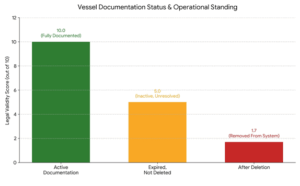
- Fully Documented: Active Documentation remains the only condition that has a $10.0$ score, hence providing a “Fully Documented” status, which is the main requirement for vessels trading along the coast or engaging in fisheries.
- Privileges Suspended: The Expired, Not Deleted condition ($5.0$ score) serves as a legal “purgatory.” Thus, the vessel’s record is there, but its operational rights are frozen, hence commercial use or international transit remain illegal until the issue with status is solved.
- Complete Removal from the System: The After Deletion condition ($1.7$ score) is a vessel that has been officially removed from the federal registry. Generally, it is a permanent situation unless the owner decides to do a very demanding and expensive re documentation process.
- Possible Loss of Activity: The huge disparity between “Active” and “Expired” stresses that the filing of documentation is not only a regulatory requirement but also a condition for the validity of insurance and the legality of preferred ship mortgages.
- Time Limit for Reinstatement: The “Inactive, Unresolved” condition may be considered as a vital period of warning; therefore, the owners should take the necessary steps to restore documentation prior to the vessel getting a more involved deletion or cancellation status.
This is a good illustration of the significance of taking the right steps. Deletion acts as a final step when a documentation is no longer valid.
Practical Tips for Handling Deletion Correctly
Make sure that the deletion is really necessary before going ahead with it. Check the eligibility and ownership status thoroughly. Unjustified deletion may lead to problems when more documents are needed later on.
Get ready with correct identification details of the vessel. It is very important that the information is consistent in all the records. Even minor mistakes might result in the processing getting delayed.
After the occurrence of a qualifying event, send the deletion request without unnecessary delay. When you delay, you may end up with discrepancies in the records. It is also essential to keep the confirmation documents.
Best Practices to Follow
- Verify deletion eligibility carefully
- Submit accurate and complete information
- Retain deletion confirmation records
- Update related registrations if required
Following these practices ensures responsible record management. Proper deletion protects owners from future confusion.
Finalizing Vessel Records through Deletion
When a vessel no longer qualifies for federal documentation, deletion from USCG Documentation is a significant administrative step. National Documentation E‑Portal makes sure that official documents stay correct and up to date. An understanding of the process ensures no errors or delays.
The guide explained what is delete, why we need it and how it is different. There were helpful tips to ensure smooth processing. It is only knowledge that empowers vessel owners to do the right thing.
When owners properly complete Deletion from USCG Documentation, they responsibly finish their vessel’s papers. Clear documentation assists in checks and balances. With proactive management you can relax and gain confidence.