In the maritime sector, precise documentation serves as the bedrock for legal ownership and compliance. Proof of ownership and identification is one of the most vital aspects of this process. They verify who owns a vessel and also verify the vessel’s identity according to regulations.
Proper documentation regarding your registration of a vessel, replacement of a certificate and transfer of ownership is essential. Vessel owners may face delays, litigation, or application rejections without legitimate documents. Authorities depend on these records to guarantee transparency and deter fraud.
Essential for financial transactions, proof of ownership and identity serves its part. Vessel details are verified by lenders, insurers and buyers to facilitate the transaction. It guarantees the assurance that every transaction is secured by law.
This guide will shed light on the importance of proof of ownership, the documents needed, and their management for seamless maritime operations.
Grasping Proof of Ownership and Identification in a Maritime Context
Official documents that confirm a vessel’s lawful owner and unique identity are proof of ownership and identification. These records are necessary for registration, documentation modifications, and adherence to maritime regulations.
Proof of ownership establishes title to the vessel. Identification documents authenticate the particulars of the vessel relating to the registration number and specifications. Authorities can rely on a complete record created by them.
Including the correct vessel and owner address also helps maintain accurate records and reduces confusion regarding vessel ownership.
| Document Type | Description | Purpose |
| Bill of Sale | Record of vessel purchase | Confirms ownership transfer |
| Certificate of Documentation | Official registration certificate | Establishes legal status |
| Hull Identification Number | Unique vessel identifier | Verifies vessel identity |
| Previous Ownership Records | Historical ownership documents | Ensures transparency |
Each of the documents serves a specific purpose in authentication. In unison, they create a perfect documentation package.
Following, a key attribute is conformity. Authorities require detailed documentation to verify that vessels are up to regulatory standards. When records are managed properly delays and penalties can be avoided.
How proof of ownership works in practical terms
Managing proof of ownership and identification proof involves many steps. With each step, we make sure that the records of the vessel are true.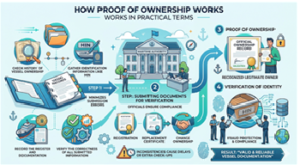
Essential Paperwork Compilation
The first step is gathering all required documents. The records are to include ownership, identification and evidence.
- Check history of vessel ownership.
- Gather identification information like HIN.
- Record the register and documentation.
- Verify the correctness of all submitted information.
When the preparation is adequate, errors during submission are less.
Submitting Documents for Verification
After documents get ready, they need filing with the concerned authority. If you want to register or replace your certificate or to change ownership, follow this step.
Officials check the documents to ensure they comply. Inconsistencies could lead to hold-ups or extra check-up measures.
Proof of Ownership
According to the officials, the ownership records are up to the mark. So that the legitimate owner is recognized.
Verification of Identity
Authorities identify the boat by referencing its Hull Identification Number or HIN. It protects against fraud and guarantees compliance.
When carried out properly, these measures would render the vessel’s documentation valid and reliable.
Comparison Between Verified Documentation and Incomplete Records
When you know the difference between complete and incomplete documentation, you realize its importance.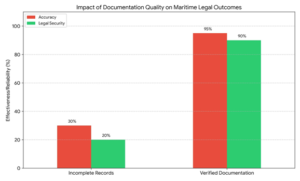
- The more accurate the documentation, the greater the legal security; this increases the likelihood of ownership recognition by authorities.
- Application refusals or litigation are frequent outcomes of incomplete reporting which leads to serious uncertainty.
- When the proof of ownership does not match or is not provided, even a simple task like getting a duplicate certificate is delayed.
Ensuring Compliance through Proper Paperwork
Identifying and proving ownership is crucial to vessel management. It is necessary for the registration of the vessel in the official registry.
These documents are vital to registering an assigned use and even transferring ownership for various compliance matters. By properly managing documentation, the risks are reduced and operations run smoothly.
The National Documentation E-Portal supports vessel owners by simplifying documentation, record management, and registration processes efficiently.
The maritime industry’s trust and compliance rely on documentation, often shipping documents. To ensure your vessel is protected, compliant, and up to date, it is vital to follow best practices and keep records.