Initiating the registration process of a boat is difficult if you’re a beginner Establishing the official ownership of the vessel is done through an Initial Vessel Documentation process and creating its identity. Without adequate documentation, a ship cannot conduct any commercial or regulated activities legally.
The submission of information about the particulars of the ship, the owner and the use of the ship. It ensures the vessel also meets the eligibility criteria proposed by the authorities. Being well-versed in how to go about this can save many owners time and spare delays that can be very expensive.
The initial documentation is more than just for registering. It serves as the basis for future operations including financing endorsement transfer and endorsement. Using accurate records will ensure ownership and help in operations.
In this guide, we discuss the initial vessel documentation basics, the step-by-step process, and give practical tips that can help you successfully complete one yourself.
Understanding Initial Vessel Documentation and Its Importance
The Initial Vessel Documentation refers to the first-time registration of a vessel with the competent authority. The vessel’s official designation makes it a federally sanctioned vessel and legal for operation.
This document proves and identifies ownership and conformity. Furthermore, it allows ships to undertake commercial trading or international trading activities. Vessel owners may face restrictions or legal complications without documentation.
Legal clarity is one of the prime benefits of initial documentation. It guarantees that ownership is properly recorded and recognized by authorities. This is very important for transactions involving sale or financing.
| Component | Description | Benefit |
| Ownership Information | Details of the vessel owner | Legal recognition |
| Vessel Specifications | Size, type, and construction details | Accurate identification |
| Application Submission | Filing required forms and documents | Compliance assurance |
| Certificate Issuance | Official documentation approval | Operational eligibility |
Every component helps in ensuring the ship adheres to the regulation standard and meets them.
Monitoring compliance is another important component . Accurate documentation enables authorities to verify vessels are maintained as per regulations All maritime activities depend on the initial documentation as a beginning step.
A Guide to Initial Vessel Documentation
The Initial Vessel Documentation process requires careful preparation and attention to detail. Regulatory guidelines must be followed at each step for approval.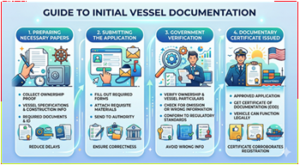
Preparing the Necessary Papers
Collect information and documents you need to get started. Ownership proof, specifications for the vessel and other documents.
Confirm ownership information and qualifications
Gather information on the specifications and construction of a vessel.
- Get ready documents and ID.
- Make sure you have documentation requirements.
- Proper preparation can reduce delays on submission.
- The Application Submitted.
After the documents are prepared, the application has to be submitted to the authority. This step consists of form filling and attachment of all requisite materials.
Government agencies verify the application for correctness. Omission or wrong information can lead to delays.
Check the Information
At this stage, officials confirm ownership and vessel particulars. They ensure the entire details conform to regulatory standards.
Documentary Certificate Issued
Once approved, a Certificate of Documentation is issued. This document corroborates the vessel’s registration. The ship can then function legally under its assigned category.
Comparison between the Initial Documents and State Registration
Realising how initial documentation and state registration differ, helps vessel owners make informed choices.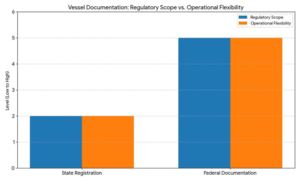
- Federal documentation provides a high regulatory scope that grants federal recognition which enables boats to trade in more contexts like international trade.
- Operational limitations state registration is essentially marked by lower regulatory scope and limited local operational levels, which fails to actively accommodate an economic cross-regionality.
- A state registration will suffice if you’re using your vessel only for pleasure. However, if your boat is involved in any commercial activity, it must have a federal documentation.
Careful documentation can build a strong foundation
The Initial Vessel Documentation is key to a vessel’s legal and operational status determination. It offers the basis for compliance, ownership verification, and upcoming deals.
Throughout the process of documentation and approval, we exercise caution. Using proper handling will create smooth processing and lowers the risk.
Knowing the difference between documentation or other registration accepts making vessel owners choices. It also ensures that the ship satisfies its intended operational demands.
Vessel owners can complete the process efficiently and operate with confidence by following best practices through the National Documentation E-Portal.