
All documented vessel owners who finance, refinance, buy, or sell a boat must understand active and satisfied mortgages. Mortgage records significantly aid in demonstrating financial capability and enhancing transparency regarding ownership within the federal documentation system for vessels. Before consenting to a transaction or affirming ownership rights, buyers, lenders, insurers and lawyers closely examine these records.
If a mortgage is active, it means a lender has an ongoing financial interest in the vessel. A satisfied mortgage indicates that a debt has been completely paid off and removed from federal record. While this difference sounds simple, it can have a massive impact on financing approvals, vessel sales, and ownership transfers. Numerous owners assume that when they repay the loan, the mortgage record gets cleared. But the satisfaction filing is still required.
Federal vessel documentation systems track mortgage information to protect lenders and provide public ownership transparency. During refinancing, disputes, and trades the records grow in importance. Proper knowledge of mortgage status avoids delay in transaction and ownership confusion.
This guide explains how satisfied and active mortgages work; why they matter; how they affect your ownership and financing of vessels; and practical steps owners can take to keep organized documentation records.
Understanding Active and Satisfied Ship Mortgages
A vessel mortgage is a financial interest secured by a documented vessel. When a lender finances a vessel purchase, they usually register a mortgage in the federal documentation. The lender is safeguarded for the duration of the loan.
The obligation to pay the loan continues to exist. The lender retains legal rights to the ship until the borrower’s repayment is complete and the mortgage is released.
| Mortgage Status | Meaning | Ownership Impact |
| Active Mortgage | Loan remains unpaid | Lender claim exists |
| Satisfied Mortgage | Debt fully resolved | Claim released |
| Pending Satisfaction | Loan paid but not updated | Possible confusion |
| Refined Mortgage | New lender replaces old loan | Updated records needed |
Several scenarios generally involve reviewing mortgage records.
- Boat sales.
- Refinancement marin.
- Take Over
- Assessments for legal or insurance purposes.
When a mortgage is satisfactory it brings clarity to ownership and strengthens buyer confidence. Active mortgage purchasers may ask for further backup.
Commercial operators rely on precise mortgage records due to the frequent review of financing status by lenders, insurers, and regulators during operational evaluations.
Boat owners must understand that mortgage status impacts resale ability. A mortgage still in force will interfere with a transfer of ownership, pending a release.
If owners keep their financing records organized, they can reduce delays while improving transparency in the long run.
What Mortgage Status Means in Vessel Transactions
Mortgage records affect almost every aspect of ship ownership and financing. Buyers, lenders, and insurers depend on accurate records to assess financial risk and ownership legitimacy.
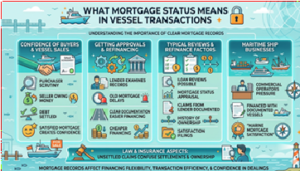
Confidence of buyers and vessel sales
During a sale, purchasers often scrutinize the mortgage documents with care. A mortgage on a vessel can mean the seller may still have money owing. Typically, buyers expect the debt to be settled prior to the change in ownership
In a satisfied mortgage, the lender no longer has a legal financial interest. Strong confidence is created during the negotiating and closing.
The phrase preferred ship mortgage comes up often during marine financing discussions because it refers to a federally documented mortgage with special legal status.
Getting approvals and refinancing
When refinancing a documented vessel, lenders typically examine previous mortgage records. If the old mortgage appears to still be live, the lender may delay giving approval until the issue is resolved.
Typical review factors related to Refinance.
- Loan reviews possible.
- Mortgage status appraisal.
- Claims from lender documented.
- History of ownership.
- Satisfaction Fillings
Clear documentation makes refinancing easier and financing cheaper.
Maritime Ship Businesses
Commercial operators experience even more pressure to organize mortgage records. Passenger services, fishing activities and transport businesses are usually financed with documented vessels.
The term “marine mortgage satisfaction” frequently arises in refinancing and commercial financing examinations since lenders are largely dependent on up-to-date federal records.
Law and Insurance Aspects
During claims or disputes examination of mortgage status is done by insurers and attorneys. Unsettled lender claims can confuse settlements/ownership.
Hence, the distinction between active and satisfied mortgages affects a lot more than loan status. It determines the flexibility of financing, efficiency of transactions and confidence in dealings.
Contrasting Active & Satisfied Mortgage Scenarios
When boat owners understand the operational differences between active mortgages and satisfied mortgages, they can finance vessel more effective. Despite appearing in federal records, the two statuses create very different ownership conditions.
An active mortgage indicates a financial dispute not yet resolved. A satisfied mortgage recognizes the lender’s claim has ended.
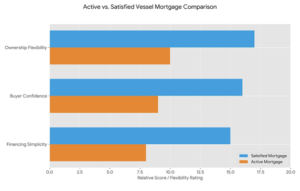
- When the mortgage on a yacht is satisfied (paid off), the owner has maximum flexibility to operate the vessel with various options for selling and refinancing, without having to deal with any adverse effects of unresolved claims from lenders or restrictions from lien holders.
- Streamlined Transactions: The buyer’s confidence is substantially enhanced when the mortgage is expressly satisfied, minimizing the requirement for complex closing agreements or protective legal escrow structures.
- Financing Simplicity: Clean, satisfied federal records set the stage for future financing, as subsequent lenders like ships with entirely unencumbered documentation history.
Closing Thoughts on the status of vessel mortgages
When vessel owners know active and satisfied mortgages they protect the flexibility of financing operations, ownership transparency and transaction efficiency. Reliable information on mortgages from owners, lenders, insurers and counsel all depends on accurate mortgage records in Federal vessel documentation systems.
An active mortgage means a lender has an outstanding claim to the vessel. A satisfaction of mortgage shows that the loan has been paid off. This difference has a big effect on refinancing, ownership transfers, and buyers.
Commercial operators especially benefit from organized mortgage records since financing agreements, inspection reports and insurance reviews require confirmation of federal documents. Recreational owners get better resale opportunities and ownership protection through proper records.
The system of federal vessel documentation continues providing transparency in the marine industry. When conducting due diligence on documented boats, buyers and lenders typically weigh these records heavily.
When a mortgage history is clear, owners can avoid facing legal problems, funding delays. By organizing records, filing satisfactions in a timely manner and reviewing documents carefully, we can make vessel ownership management smoother.
Owners can more effectively protect their investment and gain stronger operational confidence throughout the ownership lifecycle by understanding how mortgage status affects vessel transactions through the resources available at National Documentation E-Portal.