Every documented boat owner must keep vessel records up to date. If the renewal is not done on time, it can create legal hassles, issue of inspection and imposition of unnecessary penalties. The USCG Certificate Renewal process allows vessel owners to keep their federal documentation active for uninterrupted vessel operation. Most owners wait until the last notice before renewing, creating unnecessary stress around renewals.
Federal documentation of a vessel proves ownership and nationality for commercial and recreational use. Renewal promotes compliance with Coast Guard documentation and maintains the legal documentation of your vessel. Boat owners sailing on international waters particularly benefit from up-to-date documentation, as customs and port authorities often require valid certificates.
In recent years, it has become easier to renew. Thanks to digital applications, quicker processing, and simpler verification systems, owners can complete renewals easily. Neverthless, it is important to understand what forms are needed and the timeframes and documentation needed for the specific application. Not having all the information could delay the approval and could incur additional costs.
This guide details USCG Certificate Renewal processes, deadlines, mistakes, and tips. (16 words) You can also compare renewal methods and see how vessel owners can avoid complications during submission.
Getting Familiar with the USCG Certificate Renewal Process
The federal documentation needs to be renewed for documented vessels of US Coast Guard. Vessel owners should keep proper records of ownership and make sure the certificate is valid at the time of operating the vessel or boat. The process is applicable to recreational and commercial vessels fulfilling the documentation requirements.
Federal documentation carries a number of important functions. It verifies ownership rights, permits world-wide travel, and backs finance agreements for documented vessels. Many lenders require Coast Guard documentation before approving a marine loan.
| Feature | USCG Documentation | State Registration |
| National Recognition | Yes | Limited |
| International Travel | Accepted | Not always accepted |
| Ownership Verification | Strong federal proof | State-level proof |
| Renewal Requirement | Annual | Varies by state |
State registration and federal documentation are often confused by many owners. They operate completely different systems. Several vessels make use of both, depending on where they operate and how they are used.
In most cases, before the expiry of the USCG Certificate Renewal occurs. Vessel owners are often sent renewal reminders through the mail, but even without such reminders, owners are still responsible. If you ignore expirations dates, no vessel status will be active.
A vessel can be made to be “converted” with minor modifications. Yachts over a certain size often qualify for documentation. Federal certification may also be required for commercial vessels operating in fisheries or coastwise trade.
Owners usually renew paperwork due to the following reasons.
- Operation of the Vessel is Continued
- Essentials for International Trips
- Funding or loan agreement.
- Property safety and validation.
Renewal requests often seek updated ownership details, mailing addresses and vessel info. Because errors may delay approval, accuracy matters. Some owners also update obsolete vessel records during the renewal period.
If submissions are not completed, Coast Guard can deny them Delays are often caused by missing signatures, incorrect owners and unpaid fees. Review the information carefully before submission.
Steps to Renew USCG Certificate: the Process
While renewing may seem easy, many owners cause unnecessary delays. Following through with all the steps helps you stay compliant and get the approval faster. Vessel owners need to prepare a few weeks ahead of expiration dates.
Documentation Preparation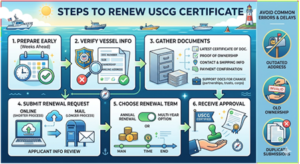
First verify the information of the vessel. The documentation number, vessel size, ownership and mailing address must be correct. Records not matching will cause conflicts during renewal processing.
You may need several Documents for renewal.
- Latest Certificate of Documentation.
- Proof of ownership information.
- Contact and shipping information.
- Confirmation of renewal payment.
The Coast Guard may ask for more records if ownership structures changed during the last certification period. Support documentation often required for partnerships, trusts or corporations.
Submit the Renewal Request
Owners can fill out their applications through mail or online submission systems. Online applications typically have shorter processing times owing to digital records passing through stages more quickly.
The application is seeking information on the ship, ownership confirmation, and renewal option. Owners must examine each section closely before entry. Minor spelling errors may lead to further review.
The length of processing varies during the year. At peak boating season, application volume increases, lengthening approval period. Submitting early is always the safest option.
Cost and wait time of renewal
The fees are determined by the renewal term chosen by the vessel owner. Some owners may prefer the annual renewal; where possible, others select a multiyear document option. Renewals over multiple years might take away some work.
Several factors often influence processing speed.
- Correctness of the information supplied.
- Volume of application (seasonal)
- Complexity of ownership structure.
- Verification of your payment timeliness.
Mail Applications Take Longer to Review Than Electronic Applications. Pet owners who are planning trips can allow for extra processing time to avoid delays in travelling.
Frequently Made Errors during Renewal
Mistakes lead to delays in processing renewals. Often forget to update address after moving. Outdated ownership records are submitted by others after transferring.
Another frequent problem is duplicate submissions. Some owners send applications after they have filled forms. Records that are duplicates can confuse processing systems.
Reviewing the document before submission speeds up approval. The owners must verify that information matches exactly with previous records.
Many renewal notices and flyers reference Coast Guard documentation renewal and similar verbiage. Although the wording is different, the process is aimed at keeping a vessel active at the federal level.
Renewal methods and documentation options comparison
Boat owners can choose between renewal methods. Depending on the urgency, convenience, and the owner’s preference. When owners understand these differences, they make informed decisions.
Traditional mail renewal is becoming ever more common among long-time owners of vessels. A lot of owners prefer to keep paper records during submission. Delivery of mail is delayed in some cases which delays processing.
Online renewal systems are gaining ground because they facilitate tracking their document. Electronic systems often cut down manual entry mistakes and quicken contact between applicants and processors.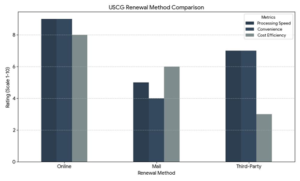
- When it comes to processing time and convenience, Online Renewal is the leader and the best option for most owners.
- Mail Submission usually costs less than a third party; however, it takes much longer to process.
- Third-Party Services are in the middle speed & convenience but they cost the most as you pay professionals for the service.
Easy Ways for Smooth Renewal Experience
A well-organized renewal process defines delays and frustration. Most vessel owners face problems because they wait too long to start preparations. Organizing in advance leads to ease.
Owners ought to establish a vessel documentation file. Storing ownership records, prior certificates, and payment proofs together aids future renewals. Having back-up copies helps prevent missing paperwork.
Keeping track of expiration dates is very important. Countless owners solely trust the reminder notice to arrive on time in the mail. However, mail doesn’t always get delivered speedily. Reminders embedded in the calendar help prevent accidental expiration.
The following strategies enable better efficiency for renewal.
- It is advised to submit applications several weeks prior to expiration.
- Reconfirm vessel details prior to Submission
- Make sure you keep a copy of your delivered forms.
- Keep track of application confirmation notices.
In renewal talks, the use of “boat documentation renewal” often comes up by recreational owners. Different ways of wording is not the issue here.
Owners must ensure to verify mailing address. When the address is wrong the updated certificates are not delivered. It is especially useful for commercial operators to have up-to-date records because inspections often demand immediate access to documents.
Another practical strategy is to conduct annual ownership structure reviews. Submissions may be necessary for trust, corporation or partnership changes. Practicing renewal season often complicates the matter.
Many owners believe expired paperwork just impacts federal status. However, active documentation may also be required by lenders and insurers, and marina operators. Thus, expiration may cause wider operational issues.
Professional assistance may facilitate owners of complex ownership arrangements. Documentation specialists generally find errors before submission to avoid corrections.
You can also sleep peacefully before the start of boating season when you renew early. Most owners prefer to organized paperwork for off season rather than busier periods.
Final thoughts on keeping active vessel documentation
The process of renewing USCG certificates is essential to ensure vessel ownership and operational compliance. Active documentation enables financing, international travel, and federal ownership acknowledgment. When certificates are allowed to expire, it creates legal and administrative problems that could easily be avoided.
If owners understand the renewal process, they can avoid mistakes. Accurate record-keeping, submission and good filing help quick processing. Prepare ahead of time whether you are doing anything online, using the mail, or hiring a service.
Long-term ownership records also strengthened through federal vessel documentation. It is often a good sign for buyers, insurers and lenders if the documentation is continuous. Certified people are better protected operationally and financially.
Owners must take renewal due dates seriously and prepare early. Delays are often due to lack of information rather than backlogs. When your documents are carefully reviewed, and timely filing is done, many issues can be averted.
National Documentation E-Portal helps vessel owners stay on track with renewal filings, documentation access, and record management support.