The Small Vessel Waiver Application is a critical part of the process for owners who want to operate certain foreign-built vessels in the U.S. Many buyers purchase boats built outside the country but may not know that federal laws might limit commercial activities involving those boats. A waiver application allows qualifying vessels to conduct operations under conditions outlined in a specific approval.
Federal commercial maritime laws strictly regulate the activity of commercial vessels to protect both domestic shipping and vessel construction. The documentation and building requirements are often obligatory for commercial vessels which operate in coastwise trade. Small vessel waivers create limited exceptions permitting eligible foreign-built vessels to engage in specifically approved passenger-related activities.
Many commercial charter operators, tourism businesses and recreational service providers rely on waiver approvals to operate legally. If an appropriate authorization is not granted, vessel owners may suffer operational denial, penalty or licensing complications.
Learning the small vessel waiver application process will help owners stay clear of compliance issues and have all necessary information to make informed decisions. This guide explains how waivers work, who is eligible, how they operate, how to file one, and their long-term reasons why waivers matter.
Understanding What a Small Vessel Waiver Application Is
Apparently, federal maritime regulations restrict certain commercial operations that involve foreign built vessels. Coastwise trade laws require many commercial vessels that operate domestically to be built in the United States. An exception is created for smaller passenger vessels via a waiver.
A waiver doesn’t eliminate all federal regulations. Instead, it provides limited operational powers under specified commercial conditions. Vessel owners still have to meet safety standards, licensing rules, and documentation requirements.
| Feature | Waiver Approved Vessel | Non-Waiver Vessel |
| Foreign-Built Eligibility | Allowed for limited use | Restricted commercially |
| Passenger Operations | Permitted with approval | Limited without waiver |
| Commercial Use | Conditional approval | Restricted |
| Federal Compliance | Still required | Still required |
The MARAD vessel waiver term often comes up when talking about commerce on foreign built boats. The Maritime Administration and Waiver Approval process is called “Marad”.
Numerous vessel operators are often seeking waivers.
- Operators of charter boats.
- Tourism-related enterprises.
- Services for passenger recreation.
- Companies organizing coastal excursions.
The Small Vessel Waiver Application enables certain owners to enter commercial markets that would otherwise be restricted due to vessel construction.
Waivers are especially valuable for commercial passenger services because so many foreign-built recreational vessels are suitable for tourist operations. With the proper approval vessels can be transitioned to business use by owners.
The approval of a waiver for one activity doesn’t give you the right to do another. There are trade operations that will still be restricted.
The waiver applications submitted are reviewed by federal authorities for maritime law compliance. Vessel particulars and operational descriptions are therefore very important in your filings.
Who can apply and how?
Not every ship qualifies for a waiver approval. Owners must satisfy certain eligibility criteria before the federal authorities will review the application.
Eligibility Standards of Vessels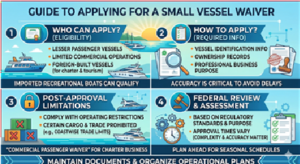
Waivers generally apply to lesser passenger vessels carrying limited commercial operations. Decisions regarding eligibility are influenced by vessel size, operational purpose and build origin.
Often times foreign built vessels will need waivers because United States coastwise trading laws give preference to United States built vessels for many commercial purposes. This category generally applies to recreational boats imported from overseas.
Discussions about operational planning sometimes involve the foreign-built vessel waiver because imported boats are still very popular within the charter and tourism industries.
Application’s Information Requirements
It is important to ensure that the information is accurate. Delays in approval or administrative complications may arise.
Details for common application:
- Oftentimes, programs needs.
- Information for vessel identification.
- Records of ownership.
- Describing professional business purpose.
Federal reviews carefully scrutinize these records to assess whether the vessel qualifies for limited commercial authorization.
Operational Limitations Subsequent To Approval
The holders of waivers must comply with operating restrictions notwithstanding the approval, which is the meaning of this sentence. Certain cargo operations and coastwise trade activities still do not have waiver.
The term “commercial passenger vessel waiver” comes up often in conversations related to the charter business. Passenger-wrapping efforts are one of the most common waivers.
Assessment and review by the federal government
Waiver requests are judged by federal agencies on regulatory standards and purposes. Approval times may vary depending on the complexity of your application and the accuracy of your supporting documentation.
Business operators should submit their applications with care as the operational delays will impact the seasonal business schedule or charter plans.
For owners who organize vessel documentation and operational plans ahead of time, the Small Vessel Waiver Application process becomes much easier.
Examining Waiver Operations and Commercial Documentation
Most vessel owners comparison waiver operations to a fully qualified commercial vessel with a coastwise. Even though both may run passenger services, they have very different legal operating authority.
Commercial vessels built in the United States are typically afforded wider operating rights under coastwise trade law. Vessels that have a waiver are limited to a structure of authorization which targets passengers.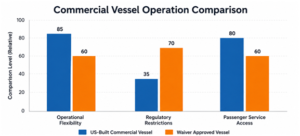
- A ship that is built in the USA offers more flexibility for coastwise operation.
- Vessels with waivers may face greater restrictions based on the type of service and location.
- Although both vessels have the capacity to provide passenger service, waiver vessels won’t be able to do so unless otherwise indicated in the contract.
- Ships built in America to have better resale value and future growth.
- Getting a waiver doesn’t mean that you don’t need a license, inspection, insurance and safety requirements.
Suggestions for Completion of Waivers at Disposal
Systematic preparation raises the efficiency and lower paperwork delays. Issues with waiver arise due to inaccurate operational descriptions or ownership details.
Before preparing the application, owners should check the vessel’s eligibility for a waiver. Knowing your operational limits can prevent unrealistic expectations later.
The following strategies help simplify the process.
- Ensure thorough verification of the vessel identification records.
- Come up with Descriptions that are Operationally Detailed
- Organize ownership documentation
- Check compliance criteria continually.
We usually refer to the operational approval structure to which waiver programs are linked as passenger vessel authorization. Document organization boosts administrative efficiency.
Boat owners should also communicate clearly on what they plan to do. Depending on how they’re organized, charter services, sightseeing tours and leisure excursions are regulated differently.
Document professionals help owners manage complex ownership structures or commercial transfers sometimes. Charter operators find great benefit from the expertise of experienced guidance as marine laws can get very technical.
Reassessment of insurance needs is done early on. Commercial passenger operations normally require special marine cover beyond a recreational policy.
The timing is very important. Businesses that operate seasonal charters should initiate waiver applications long ahead of the start of their operating periods. Delays might cause disruptions in marketing schedules or reservation planning.
Commercial operators must keep accurate records following approval. It is useful for organized documentation to be reviewed with some frequency by federal authorities for compliance with operational standards.
When owners view it as a component of long-term business planning, rather than just a standalone administration requirement, the Small Vessel Waiver Application process becomes easier.
Final thoughts On Small Vessel Waiver Applications
The Small Vessel Waiver Application offers valuable prospects to owners of foreign-built vessels wanting limited commercial passenger operations in the US. Waiver system creates specific operational exceptions targeting tourism-related businesses, charter operators and recreational passenger services.
The waiver process assists vessel owners in making commercial decisions with compliance-related issues. The efficiency of the approval process and long-term stable business operations increase significantly through proper application, record keeping, and realistic operational planning.
The safety and regulatory standards for domestic maritime trade drives heavy regulatory oversight of commercial vessel operations under federal law. Genuine vessel documentation and waiver records are vital for buyers, insurers, lenders and the regulatory authorities.
Commercial operators in particular can benefit from maintaining organized operational records because waiver verification is often part of licensing reviews, inspections and insurance evaluations.
The marine tourism sector sees growth due to greater investment risk of operators in charter services and passenger excursions. Owners who have a solid understanding of what the waivers require generally position themselves for success.
National Documentation E-Portal provides helpful support for managing waiver applications, vessel records, and related documentation requirements.