The Replacement Vessel Certificate Form is document that needs to be filled out by boat owners who want to get a new Certificate of Documentation (COD). The COD is issued by the United States Coast Guard. Certificates can be lots, damaged, stolen or old in time. When this occurs, vessel owners must apply for an official replacement so that documents stay valid and operational issues do not arise.
Federal documentation of a vessel is essential to verifying ownership, marine financing, and international travel. Owners of commercial and recreational vessels frequently rely on active documentation for inspections, marina requirements, and loan agreements. If the certificate onboard is not updated, the owners may encounter delays during the inspection and face problems in proving legal ownership.
Certificate replacement is not such a complex task owners assume. In reality, the process of replacement is normally an easy one when the information and back-up records are correct. When the applicant leaves the details incomplete or of an old owner .
It is significant to understand how the Replacement Vessel Certificate Form works. This helps owners maintain compliance and avoid delays. This guide will explain how to replace your certificate, reasons to file it, differences between replacement and renewal, and tips to file it successfully.
Understanding Purpose of Replacement Vessel Certificate Form
A Certificate of Documentation is official proof that a vessel is federally documented with the USCG. The vessel owners must maintain the accuracy of this certificate. A certificate becomes unusable or unavailable can make a request for replacement.
Federal documentation recognizes ownership more than many state registrations. Marine lenders, officials of customs, and operators of marine often rely on these records for status. A missing or damaged certificate could create unnecessary administrative problems.
| Situation | Replacement Needed | Reason |
| Lost Certificate | Yes | Proof of documentation unavailable |
| Damaged Certificate | Yes | Unreadable or incomplete document |
| Expired Certificate | No | Renewal required instead |
| Ownership Transfer | Depends | May require transfer documentation |
The term replacement Coast Guard certificate often pops up when it comes to a request for replacing a certain document. The specifics of the activity may differ, but it is primarily the process of obtaining a duplicate certificate in respect of a vessel that is currently documented.
There are many situations requiring certificate replacements.
- Certificate lost while on trip.
- Water or weather damage impacting legibility.
- Stealing of boat records.
- Issue regarding printing or documentation.
The Replacement Vessel Certificate Form keeps federal information accurate and operationally useful. Keeping documentation up-to-date will avoid disruptions to inspections and verification of ownership.
Commercial ship operators rely heavily on available documentation. Federal status often needs to be proven at inspections. While staying at a marina or traveling internationally, recreational owners will have a replacement certificate on hand.
Boat owner replacement is different than a renewal. A replacement request makes another copy of the same active certificate and a renewal extends document validity for another operating term.
Boat Owners Oftentimes Request Replacement Certificates
It happens more often than one would think for vessel owners to require replacement certificates. Marine environments expose documents to moisture, storms, and physical effects that increase the chance of damage to or loss of, documents over time.
Documentation that was either lost or misplaced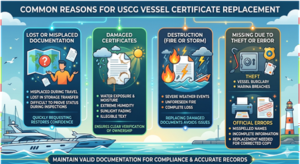
The most common replacement reason is lost paperwork. Owners of vessels often transfer records back and forth from marinas, to storage and onboard filers. Paper Work often goes missing while travelling or changing season.
When a valid certificate isn’t onboard it becomes more difficult to prove documentation status during inspections. Quickly requesting a replacement helps restore operational confidence.
Vessel certificate request duplicate usually refers to this situation, as owners need a valid copy of their documentation records.
Broken Certification
Paperwork is not designed to perform in marine environments. Certificates get damaged due to exposure to water, humidity, and sunlight, especially when kept onboard not properly.
Types of Damages of Certificates:
- We tend to request for replacements quite often.
- Documents damaged by water.
- Incompleteness of any document.
- Faint Ink.
Destruction Caused by Fire or Storm
Illegible documents may cause issues in audits or financing checks. Replacing damaged documents ensures clear verification of ownership.
Boat Records Went Missing
Theft can sometimes interfere with marine documentation records whenever a vessel is burglarized or security at the marina is breached. After reporting the theft to the police, owners should request replacements.
By keeping copies of documentation numbers and vessel details safe, it makes replacement filings for losses through theft easier.
Official Errors
Sometimes, replacement requests are also helpful in fixing administrative printing. Sometimes, owners see their new certificates with misspelled names, incomplete information and damaged seals.
The term federal vessel certificate replacement usually comes up as a request for corrected or duplicate documents. Maintaining accurate records is important for compliance and ownership.
It is important to check new certificates after receiving them. Spotting mistakes early helps avoid complications in operation.
Several boat owners confuse replacement filings with renewal or transfer of documentation. Although the same paperwork is used, they are for different things.
A replacement request will reissue a copy of an active certificate. Renewal prolongs the documentation period. Ownership changes, while the status of federal documentation remains.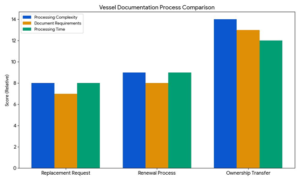
- Ownership transfers consistently require the highest level of administrative effort, document requirements and processing time compared to renewals or replacements, making them the most complex procedure.
- There is a scale among these procedures, with Replacement Requests being the least intensive, followed by Renewal Processes, and Ownership Transfers being the most intensive process.
- The more complex the processing is, the more difficult the standard of documents. Hence, owner has to prepare it with care.
How to Apply for Replacement Certificate?
They speed up replacement processing and minimize requests for correction. Lack of correct information and supporting documents is often reason.
Vessel owners should confirm vessel actively documented before filing. Renew Expires Documentation Instead of Replacing it.
The next techniques make the process easier.
- Make sure to check the official documentation number.
- Check ownership information matches federal records.
- Retain documentation of submission.
- Securely store replacement certificates after approval.
The procedure to get an alternative duplicate certificate is what the term “boat documentation replacement process” generally refers to. An organized mindset is key at all times.
Owners must also confirm mailing addresses before submission. Incorrect addresses often causes a delay in delivering the certificate, and this leads to administrative issues as well.
Professional documentation services can assist owners with complex ownership structures. Sometimes, replacement filings need further scrutiny of vessels owned by partnerships, corporations and trusts.
Another useful tip is to create a digital backup of the records of the vessel. If paperwork is lost or becomes damaged once more, owners can retrieve the information effortlessly using electronic copies.
When to time an international trip. Requests to replace personnel must commence in advance to ensure documentation is in order before departure dates. During inspections, customs officials and marina operators may request proof of active documentation.
Commercial operators should maintain onboard filing systems as well. If the certificate is protected from moisture as well as sunlight, then its replacement in the future can be avoided to a large extent.
By regularly reviewing documentation records, boat owners usually prevent an urgent replacement. Preventive organization is one of the most effective long-term methods.
The concluding remarks on accurate boat documentation
The Replacement Vessel Certificate Form provides vessel owners with he ability to restore their valid documentation records after loss, damage, or theft. When certificates are up-to-date and accessible, they help verify ownership remain active and verify inspections and travel internationally.
If the owners understand their replacement process, they won’t run into additional administrative difficulties. Well-organized documents and ownership records, along with proper filing preparation, can boost processing efficiency. Essential Documentation Practices on Fishing Vessels, Recreational Yachts and Cargo Vessels.
Federal vessel documentation remains significant in the world of the marine industry. Buyers, lenders, insurers, and regulatory agencies all depend on accurate ownership records and documentation status being active.
Having your certificates up-to-date also helps in transactions inspections Well organized owners often do not face any operational disturbances or operational delays.
Boat owners concerned about proper documentation management can avoid issues related to lost, damaged, or unavailable federal records. National Documentation E-Portal helps streamline documentation management by providing convenient access to vessel records and related filing resources.