The Vessel Transfer Exchange Form is essential for the federal documentation of a vessel’s ownership to be transferred. When a boat is sold, given as a gift, inherited or traded out between parties, the transfer process ensures the United States Coast Guard records reflect the ownership change. Many vessel owners do not give enough importance to the transfer documentation until financing delays, legal disputes, or registration issues arise later on.
Boats that are documented obtain federal vessel documentation for legal recognition and financing transparency. Ship transfer records enable the government authorities, insurers, buyers, and lenders to verify who owns the vessel. If ownership changes are not properly recorded, things might get complicated in the future.
The transfer process also safeguards buyers and sellers alike. Sellers obtain proof that their ownership responsibilities have come to an end while buyers obtain federal verification for the vessel. Accurate documentation is especially important for commercial operators because ownership records often have to be current for inspections.
The vessel transfer exchange form avoids vessel owners’ administrative complications and legal uncertainties when you understand it. This guide explains the ownership transfer processes, common exchange scenarios, operations comparison, practical filing steps, and the long-term benefits of accurate vessel transfers records.
Acknowledging the Importance of Vessel Transfer Exchange Form
A legally documented vessel identifies its owner through federal vessel documentation records. When there is a change in owner, the records must be updated officially.
A transfer exchange form creates a record of the change of ownership of the vessel between the parties while NOTE the vessel is federally documented. This process ensures the Coast Guard acknowledges the new owner and correctly updates the vessel’s documentation history.
| Transfer Situation | Documentation Update Needed | Purpose |
| Vessel Sale | Yes | Ownership transfer |
| Family Gift | Yes | Legal ownership update |
| Inheritance | Yes | Estate ownership transfer |
| Business Exchange | Yes | Corporate ownership revision |
The term “federal vessel ownership transfer” appears often in marine transactions because proper documentation is essential for legal ownership recognition.
There are many situations requiring transfer documentation.
- Offering Vessels For Sale
- Goods transfer between owners.
- Corporate control change.
- Wealth passed to relatives.
The Vessel Transfer Exchange Form keeps an accurate record of the federal ownership history of the vessel and will help to protect the parties to the transaction.
Commercial operators benefit of organized transfer records because lenders, insurers and regulators often check ownership history prior to the approval of financing or operational licenses.
Sellers are typically required to furnish the buyer with accurate transfer documentation to confirm the seller owned the boat. This verification significantly reduces fraud risk and ownership disputes.
It is essential for owners to realize that transfer filings are not address changes or document renewals. A transfer alters the legal ownership structure itself and is not merely a change of contact details or an extension of documentation validity.
From the perspective of the buyers, yachts with authentically maintained ownership records tend to have a higher resale value.
Circumstances that Require a Change of Ownership of a Vessel
Boat ownership changes happen for a multitude of personal and commercial reasons. When owners get an idea about these situations, they prepare transfer documents accurately before the transfer proceeds.
Sale of a federally documented vessel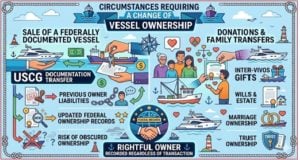
Filing a transfer form is most commonly done to sell a vessel. Buyers who buy documented boats need federal ownership records formally updated after close of the transaction.
Previous owners could remain linked to operational liabilities or financial obligations related to that vessel if transfer filings are not made. If the old records do not change, the buyers will also risk obscured ownership.
During the sale of a yacht or commercial vessel, the term “USCG documentation transfer” pops up because the status of federal documentation must be correct throughout the sale process.
Donations and Family Transfers
Ownership of a vessel can pass within families by gift, inheritance or estate. Even if money does not change hands, such situations still need documentation updates.
Common Situations of Family Transfers
Ownership updates could entail.
- Inter-vivo gifts.
- Wills and Estate
- Changes in marriage ownership.
- Trust ownership changes.
The rightful owner will be recorded on Federal records, regardless of the transaction.
Transfer of ownership of commercial establishments
Marine operators sometimes relocate boats from one operator to the other. The filing of ownership exchange occurs when corporate restructuring, mergers, change in fleet management, etc.
The business world often uses documented vessel exchange process as the ownership structures in commercial sales can get more complicated than in recreational sales.
Mortgage & financing aspects
Transfer approval processes can be affected by vessel mortgages. Financing records often receive careful scrutiny from buyers and lenders before ownership exchanges are finalized.
The purpose of the Vessel Transfer Exchange Form process is to provide transparency in vessel ownership rights and financial obligations.
Vessel transfers are compared with documentation processes
Boat owners aren’t aware the transfer filings they submit are often confused with documentation renewals or reinstatement requests. While they are both federal records, the legal purposes of these records are different.
Legal ownership is updated by transfers. Renewals extend active documentation validity. Reinstatement restores inactive documentation status after expiration or administrative interruption.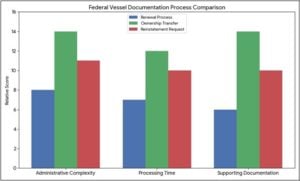
- The filing process dealing with Ownership transfers would be the most complex and require the most amount of administrative effort and paper work.
- It is legally essential that up-to-date records reflecting ownership (of the title) of the collateral be created in the most proper and official manner.
- Liability Management: Sellers should duly complete transfer documentation to avoid association with future operational incidents concerning the vessel.
Vessel Transfer Success: Tips to Get it Right
Most transaction delays are the result of incomplete records or wrong ownership information.
Before starting the transfer process, owners should carefully check the vessel’s federal documentation number and ownership records. Good information helps to avoid processing issues later.
Simplifying ownership transfers is possible through these.
- Verify vessel document numbers precisely.
- Examine mortgage documents prior to transfer.
- Save duplicates of every transfer document.
- Confirm ownership details thoroughly.
The term “documented vessel ownership exchange” is often used to refer to the process of transferring federal vessel records.
Vessel owners should verify the status of a vessel mortgage before closing. Before an ownership transfer can be completed, the approval of any funder may be required for outstanding financing claims or a mortgage satisfaction.
The owners handling complex transactions are assisted by professional documentation services and maritime attorneys. Commercial fleet transfers, inherited vessels and partnership ownership structures benefit especially from an experienced review.
Go over your insurance coverage during transfer is another recommendation. The new owner and ownership structure may often require the policies to be updated.
The timing is critical in commercial transactions. Charter operations, fishing operations, and passenger service providers should make early transfer filings to avoid an interruption of service.
After transfer approval, commercial owners must maintain organized records of transactions. A precise ownership history develops future financing and simplifies vessel sales.
The Vessel Transfer Exchange Form process is much smoother when the parties involved have their paperwork organized and communication clear.
An opinion on transfer of ownership of vessels
The Vessel Transfer Exchange Form is important to keep the federal records of vessel ownership accurate. The creation of proper transfer documentation protects the buyer, seller, lender, insurer, and regulatory agencies by ensuring that federal records are current.
When vessel owners are equipped with basic knowledge on ownership transfer process, legal disputes and/or administrative delay in financing could be avoided. Having organized paperwork with records will prepare the filing for efficiency and clear ownership.
Federal vessel documentation is the marine industry’s leading ownership verification system. Accurate transfer information is especially relied upon by buyers and lenders before deeds and loans.
Commercial operators rely heavily on accurate ownership history as current federal records are often needed for inspections, approvals, and operational assessments. Organizing documentations provides recreational owners with easier resale and better protection of ownership.
The maritime industry persists in calling for transparent documentation as transactions and financing structures become more complicated. Owners focused on accurate transfer filings often better position themselves for future operating success.
Boat owners who maintain accurate records are better positioned for long-term compliance and peace of mind. National Documentation E-Portal supports vessel owners in handling transfer documentation efficiently and accurately.