Vessel owners can have a federally recognized record of ownership, documentation status and certain financial filings. Many buyers, lenders, insurers, and commercial operators find the record provides greater transparency than basic state registration only. The resources can assist with marine financing, ownership transfer, international travel and long-term vessel management.
A USCG-Documented Boats system registers vessels with the U.S. Coast Guard rather than the state, benefiting larger recreational and commercial boats. Using USCG-Documented Boats provides a formal chain of ownership, useful for sales, refinancing, and legal verification of marine assets.
Most owners only become acquainted with paperwork during the purchase of a boat or a marine loan. Others find this out when they require an abstract, certified, or ownership search. When owners understand how documentation works, they will not encounter delays and can make better decisions.
This guide walks boat owners through the importance of federal documentation, how those records are used, what documented vessels have over state registered boats, and how owners can better manage documentation.
What Distinguishes USCG-Documented Boats?
A documented vessel is entered into a federal documentation system. This document identifies the ship, and its owner, by an official number, a name, and other related document detail The requested records may include mortgage filings or ownership changes as per request.
Federal documentation is distinct from merely registering with the state. State registration is generally concerned with local boating compliance, taxes, and decals. Federal documentation refers to the acknowledgement of ownership and national recordkeeping.
| Feature | Documented Vessel | State-Registered Vessel |
| Record Level | Federal documentation record | State-level registration |
| Ownership Verification | Strong official record | Varies by state |
| Mortgage Recording | Commonly supported | Limited or separate |
| International Recognition | Often stronger | Usually limited |
A search for federal vessel documentation may verify basic vessel information. It is capable of supporting buyers who want to check a boat out pre-purchase. Owners can also use it to verify records before a refinance or transfer.
For larger marine loans, documented vessels are preferred by many lenders. A documented vessel might have a preferred ship mortgage filed against it, offering stronger protection to lenders. This could make the documentation handy during a high-value transaction.
Commercial operators may also rely on documentation for endorsements. Endorsements can designate approved uses of the vessel for recreational, coastwise, registry, or fishery. Accurate endorsement ensures records correspond with actual vessel activity.
State documentation isn’t always used to cancel requirements. Certain states might still impose tax compliance, local registration procedures, or display requirements. As the article points out, owners must know what federal and state obligations apply before assuming one system covers all.
Importance of Documentation for Ownership and Financing
Federal documentation creates an organized record that can help clarify ownership. This is key when a boat is sold, refinanced, inherited, or transferred into a business entity. By ensuring clear records, you will reduce confusion at all major points.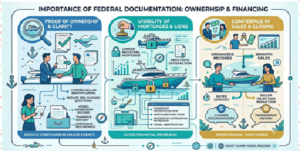
Proof of Ownership
Understanding ownership is one of the major benefits of documentation. Purchasers have the opportunity to utilize official documents to confirm whether the seller is listed as connected to the vessel in question. Before any money is exchanged this step reduces uncertainty.
A record of vessel ownership has previously filed documents. Depending on what record they request, a buyer may learn of transfers, mortgage recordings, or other important documentation events. These details provide insight into pre-closing questions.
Visibility of mortgage and lien
Financing documentation is another crucial reason. A lender may register a preferred mortgage against a documented vessel. That deed is important until the mortgage is satisfied and released.
- Ownership Information Now.
- Mortgage Filing state.
- Records of Satisfaction or Release
- Information to identify vessel.
The information helps lenders and buyers to avoid financial problems.
Confidence in Sales and Closing
Organized records make vessel sales go more smoothly. When ownership and mortgage history appear transparent buyers feel comfortable. Sellers benefit too; cleaner documentation means less objections during negotiations.
Professionally rephrased text: The phrase “Coast Guard vessel records” often comes up in connection with the sale and financing of vessels.
When the parties involved require official information, this document can provide critical assistance.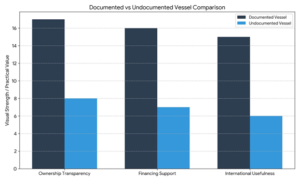
- Vessels that are documented offer much better practical value for serious vessel management. It can be seen across all three categories of ownership transparency, financing support and international usefulness that documented vessels have a much better foundation.
- Lenders favor documented vessels since the process of recording the mortgage is structured and thus reliable. This helps further transactions involving a marine loan.
- As presented in the graph, every nation in the world recognizes a documented vessel as international, as such, the paper boat gets easy access to foreign country waters without any lengthy processes.
Useful Tips for Managing Vessel Documents
Effective documentation management allows owners to avoid delays, notice misses and transaction issues. Many problems occur due to old records or scattered paperwork.
It is necessary for owners to retain copies of certificates, bills of sale, mortgage releases, renewals, and address updates. Digitally backed up copies can make accessing these records easier while traveling, selling, or refinancing.
A documentation vessel search can be helpful before major decisions. Prior to listing a vessel for sale, applying for a loan or transferring ownership, owners may check records. Reviewing early gives us more time to fix problems.
Documentation practices include useful.
- Keep a close eye on renewal deadlines.
- Update mailing addresses after moving.
- Retain mortgage discharges after payoff.
- Examine records prior to selling.
Verify that the name, official number, and owner details of the vessel are correct. Small differences can lead to confusion during processing. When a lender, broker or agency reviews the record, consistency matters.
Commercial operators might require more regular assessments. Charter companies, fishing firms and transport operators often rely on documentation to stay compliant and maintain financing. An overlooked renewal can impede operations more adversely.
Getting professional documentation assistance may be good for complex cases. Business ownership, trusts, estate transfers, and mortgage filings can require additional details. A regular people review can reduce errors.
Final thoughts on federal documentation of vessels
Many owners benefit from USCG documentation for their boats for transparency, financing and administrative purposes. Federal records provide buyers, lenders, insurers, and commercial operators greater confidence in verifying important information about vessels.
Documentation is especially beneficial for larger recreational vessels, financed ships and commercial operations. It will facilitate transfer of ownership, filing of preferred mortgage, international recognition, and law long term record-keeping.
At the same time, we must pay attention to documentation. Owners need to renew in a timely manner, update records when information changes and keep important documents. Good management prevents inactive records and unnecessary delay.
Organizing vessel records through the National Documentation E-Portal provides clarity for buyers, builds trust, and ensures compliance.