The Notice of Claim of Lien form is a legal document used to file a financial claim against a documented vessel. Liens may be filed by lenders, repair facilities, suppliers, marinas, and service providers for unpaid vessel debts. Creditors are safeguarded by these claims because they publicly tie up the ship with ownership and financial history.
Owners of a lot of vessels spend considerable time and resources on documentation renewals and ownership transfers. However, they neglect to consider the way liens affect vessel transactions. An outstanding lien can slow down sales, approvals for financing, refinancing and planning operations. Lien records frequently examine by buyers, lenders, and insurers to approve transactions or write policies.
The system of federal boat documentation keeps a record of some claims against documented boats. This process protects entities that provide services or financing and allows buyers to identify unpaid debts prior to purchase.
By knowing how the Notice of Claim of Lien works, owners can prevent disputes and keep the documents cleaner. This guide divulges all details about lien filings, common claim scenarios, the difference between a lien and a mortgage, how to manage them practically, and why it is important to have organized financial records of the vessel throughout ownership.
A notice of claim of lien form serves three main purposes
A lien is the legal right to seize a vessel because of unpaid debt or due to obligations attached to your boat. When a creditor files a lien notice, they officially register their claim in federal documentation records.
A recorded lien is not like an ordinary invoice or payment dispute; it is part of the boat’s record. The claim may later be uncovered by a buyer’s, lender’s, or insurer’s review.
| Claim Type | Purpose | Potential Impact |
| Mortgage Claim | Secured vessel financing | Affects refinancing and sale |
| Repair Lien | Unpaid maintenance or repairs | May delay transfer |
| Marina Claim | Outstanding storage or dock fees | Can affect ownership review |
| Supply Claim | Unpaid equipment or fuel costs | Creates financial uncertainty |
Vessel financing and litigation discussions frequently use the phrase ‘maritime lien filing’ because the recording of claims serves a large purpose in ownership.
Multiple parties may file claims concerning vessels.
- Companies that repair marine vessels.
- Yacht Brokers.
- Suppliers of equipment.
- Lenders at sea.
The Notice of Claim of Lien form is utilized by creditors to safeguard their monetary interests and informs future purchasers and bankers of outstanding obligations against the vessel.
Charter operations, fishing operators and passenger service operators use documented vessels subject to financing and operational approvals. As such, commercial operators must keep a close eye on these lien records.
Those who own a boat should also know that liens differ from your run-of-the-mill debt in that it attaches to the boat itself. Claims may remain against the boat on its documentation history even after ownership transfers.
Keeping organized records of your finances helps you avoid problems like disputes and unexpected liens later on.
Vessel liens commonly incurred: a guide
Various unpaid obligations related to ownership or operation may give rise to vessel liens. By comprehending these scenarios, owners can avoid disputes and administrative problems related to money.
A frequent cause of maritime liens associated with unpaid repairs. Shipyard, mechanic, and repairer lien (UCC §9-310): If you own a vessel, its equipment, or its inventory, you may file a claim against them if the owner does not pay for labor or other materials you provide.
Repairing a boat can cost a lot, especially if it is a commercial boat or a luxury yacht. To protect themselves financially repair providers may file a lien when a dispute over payment.
The term “vessel repair lien” comes up often in marine disputes because repair services often create substantial unpaid bills.
Disagreements Over Marina and Storage Fees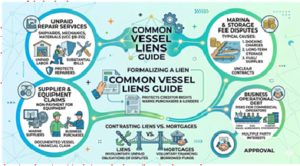
Marinas and storage facilities can also make claims against vessels with unpaid docking or storage fees. Long-term unpaid balances can eventually give rise to liens on title records.
Typically Causes of Marina Liens.
- Claims might include.
- Outstanding docking charges.
- Balances for the long-term storage.
- Fuel or supply bills.
Disputes involving contracts
A record of accurate payments helps owners avoid confusion involving marina charges and service contracts.
Supplier and Equipment Claims
Sometimes Marine suppliers file a claim when the owner of the vessel does not pay for equipment. Operators who conduct any type of business purchases are especially at risk.
The term “documented vessel financial claim” often appears in legal and financial reviews because liens impact the transparency of transactions.
Business Operational Debt
Commercial operators face lien risks arising from crew wages, fuel agreements, and charter service disagreements. In such cases, multiple parties may assert financial interests at the same time making it complex.
Accordingly, the Notice of Claim of Lien form protects creditors’ rights and warns future purchasers and lenders of outstanding claims against the property in question.
Contrasting liens and vessel mortgages
Due to the financial claim aspect of both mortgage and liens, many owners confuse the two. However, these claims exist for different legal and operational purposes.
A mortgage is typically a voluntary financing in which the owner borrows. A lien often arises when there is an unpaid obligation or a service, repair or operating dispute.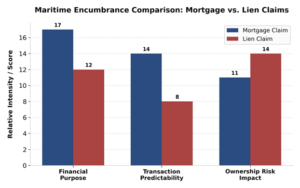
- While mortgage claims are planned and paid-up financing vehicle with structural financial purpose (17 vs 12), lien is an enforcement mechanism that reacts to the debt default. The debt is operational (fuel, repairs, dockage etc.) and the enforcement is reactionary.
- The Predictability Gap: Mortgage claims off much higher transaction predictability (14 compared to 8) as they happen in an organized fashion as per negotiated contractual agreements, but lien claims emerge suddenly out of the blue due to billing disputes or outstanding operational balances.
- Despite scoring 11, mortgage claims have a lower ownership risk impact than lien claims, which score 14. The statutory maritime lien attaches to the vessel itself, which can silently cloud the title and halt pending sales or refinancing applications upon documentation review.
Vessels Lien and Financial Claims
The Claim of Lien Notice form is an important part of the systems of documenting federal vessels that aims at protecting creditor rights. During ownership checks and financing choices, the accuracy of lien records is crucial for buyers, lenders, insurers, and legal professionals.
If vessel owners understand how liens work, it will help them avoid legal problems. Keeping good records, staying on schedule with payments and doing your homework will keep you stable and getting paid.
Commercial operators, especially charter businesses, fishing companies, and transport operators with high operational and borrowing costs, need to closely monitor lien records.
The documentation systems for federal vessels are still maintaining transparency in the marine sector. These systems assist in the documentation process for new vessels which involve the recording of vital ownership and monetary details of the documented boats. When assessing a transaction’s risk, buyers and lenders rely greatly on these records.
Keeping accurate records and resolving disputes quickly protects the owner’s resale opportunity, financing flexibility and long-term ownership credibility. Being proactive with your finances is one of the best ways to avoid lien issues.
National Documentation E-Portal helps owners manage vessel documentation steps more clearly and efficiently.