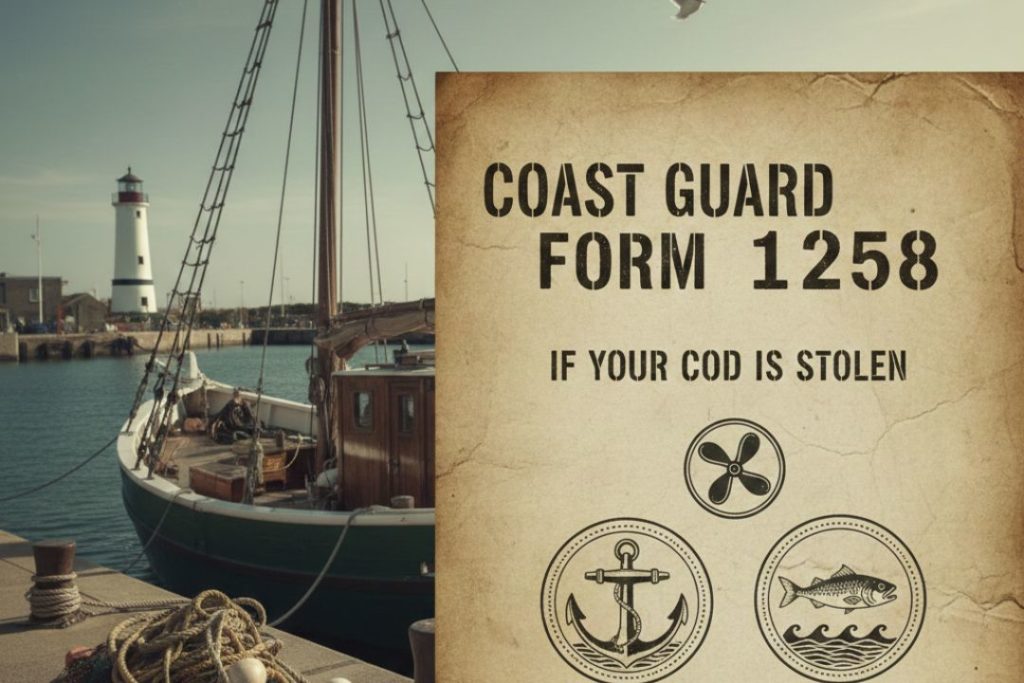
If your Certificate of Documentation is stolen, immediate and accurate action is required to protect your ownership rights and keep your vessel’s federal status intact. This guide explains what to do, how our service supports the process, and how Coast Guard form 1258 is used to request a lawful replacement so your documented vessel remains properly recorded with the National Vessel Documentation Center.
What does it mean when a Certificate of Documentation is Stolen?
A stolen Certificate of Documentation is more than a missing onboard paper. It is evidence of federal registration and ownership status, and when it is taken, the risk extends beyond inconvenience.
- A Certificate of Documentation represents federally recognized vessel ownership
- It can be misused to attempt unauthorized transfers
- It may be presented to third parties as proof of authority over a vessel
- It exposes the owner to fraud involving recorded interests
Our service exists to help vessel owners navigate the documentation process clearly and correctly after a theft, without unnecessary delays or errors.
What is the 2026 fraud alert protocol and why does it matter?
In 2026, heightened attention to maritime fraud has made fast reporting essential. The fraud alert protocol reflects how documentation authorities treat a stolen Certificate of Documentation as a time-sensitive legal issue.
- A stolen certificate creates an opportunity for fraudulent filings
- Delays increase the risk of unauthorized record changes
- Early reporting helps preserve the accuracy of the vessel record
Our role is to help you understand what filings are required and how to submit them properly through an online portal built for documentation accuracy.
What immediate steps should be taken after discovering the theft?
Once you confirm that your Certificate of Documentation is stolen, specific actions are expected before submitting any replacement request.
- Contact local law enforcement to report the theft
- Obtain a copy of the police report
- Keep the report available for submission with federal paperwork
This report establishes a formal timeline and creates an official record that the document was taken without authorization.
Why is notifying the NVDC an essential part of the process?
Notifying the National Vessel Documentation Center helps protect the vessel record during the period between theft and replacement.
- A notation can be placed on the vessel record
- It reduces the risk of unauthorized ownership transfers
- It helps prevent fraudulent filings involving a ship mortgage
Our portal explains how owners submit documentation-related filings so that the vessel record reflects the correct status.
How is Coast Guard Form 1258 used to replace a stolen certificate?
The primary form used to request a replacement Certificate of Documentation is Coast Guard form 1258. While often associated with other documentation actions, it also applies when a certificate is stolen.
- The form allows owners to request a replacement document
- It formally notifies the NVDC of the reason for issuance
- It ties the replacement request to the existing vessel record
Our service provides access to the correct filing pathway so the form is used properly for replacement purposes.
Which selection matters most on Coast Guard Form 1258?
When completing this form, the correct selection is critical. A stolen certificate is not treated as an initial filing.
- The replacement or exchange option must be selected
- Incorrect selections can delay processing
- The reason for replacement should match the circumstances
Our portal separates filing types to reduce confusion and help owners submit accurate information.
What vessel details are required on the replacement filing?
Accuracy matters, especially when the original document is unavailable.
- Vessel name as recorded with the NVDC
- Official number assigned to the vessel
- Hull identification number if applicable
- Managing owner information as it appears in federal records
These details ensure the replacement is tied to the correct vessel and ownership record.
How does vessel identity theft occur with stolen documentation?
A stolen Certificate of Documentation can be used for fraudulent purposes beyond simple impersonation.
- Documents may be copied to create cloned vessels
- Unsuspecting buyers may be misled
- False ownership claims may be presented to lenders
Understanding these risks explains why replacement filings should not be delayed.
Why are documented vessels attractive targets in 2026?
Higher vessel values have increased the importance of documentation records.
- High-value vessels rely on clean federal records
- Paper documentation can be exploited for financial gain
- Documentation misuse may support unauthorized transactions
Our service focuses on helping owners maintain accurate records through proper filings.

What is the legal requirement for carrying the original certificate?
Federal regulations require that the original Certificate of Documentation be kept aboard the vessel.
- Copies do not satisfy onboard carriage requirements
- The regulation applies regardless of vessel size
- Enforcement may occur during routine boardings
This requirement explains why prompt replacement filing is important after a theft.
What information is useful to retain when the original is missing?
Although only the original satisfies carriage rules, certain information is commonly needed when filing Coast Guard form 1258.
- Official number
- Vessel name
- Owner details as recorded
Having access to this information helps ensure accurate submission even when the original certificate is unavailable.
What happens during a boarding while a replacement is pending?
While a replacement request is processing, owners often wonder how boardings are handled.
- Officers may review the vessel’s documentation status
- Pending filings can be verified through federal records
- Good-faith documentation can help explain the situation
Keeping submission records available supports transparency during this period.

How does pending status affect vessel operations?
A pending replacement does not cancel existing documentation.
- The vessel remains documented while processing occurs
- Ownership status remains unchanged
- Compliance depends on accurate filing
Our service explains how documentation submissions are made so owners understand what status applies.
What is an abstract of title and why is it relevant after theft?
An abstract of title provides a chronological summary of federally recorded actions for a vessel.
- It lists ownership changes
- It shows recorded liens or encumbrances
- It reflects filing history
After a theft, reviewing an abstract of title helps confirm that no unauthorized changes occurred during the gap period.

How does this relate to documentation accuracy?
Maintaining accurate records is essential after a stolen certificate incident.
- It confirms no improper filings were recorded
- It supports confidence in the vessel’s documented history
- It provides clarity for future transactions
Our portal supports documentation-related filings but does not perform record research on behalf of owners.
How does our service support documentation replacement filings?
We provide a centralized portal designed to help owners submit federal documentation forms correctly.
- Access to the appropriate filing type
- Clear separation of replacement submissions
- Guidance on required information
We focus solely on helping with documentation filings, including vessel documentation renewal and replacement requests.
How does this process connect with other documentation needs?
A stolen certificate often highlights the importance of accurate records across all filings.
- Replacement filings must match existing records
- Future renewals rely on accurate prior submissions
- Errors can create delays or rejections
Our service supports documentation filings, including replacements and renewals, through a streamlined online process.

How does this differ from a USCG documentation search?
A USCG documentation search is used to review existing records, while replacement filings are used to correct or reissue documents.
- Searches review information already on file
- Replacement filings update issued documents
- Each serves a different purpose
Understanding the distinction helps owners choose the correct action.
Why does accuracy on Coast Guard Form 1258 matter long term?
Errors on Coast Guard form 1258 can affect more than the immediate replacement.
- Inconsistent data may delay processing
- Incorrect ownership details can create future issues
- Accurate filings support clean records
Our portal is structured to reduce common filing mistakes.
How do we help owners move forward after a theft?
We help vessel owners submit the correct documentation filings through an online portal focused on clarity and accuracy.
- Access to replacement filing pathways
- Clear presentation of required information
- Support for properly submitted forms
By helping owners file Coast Guard form 1258 correctly, we assist in restoring documented status efficiently while keeping the vessel record aligned with federal requirements.