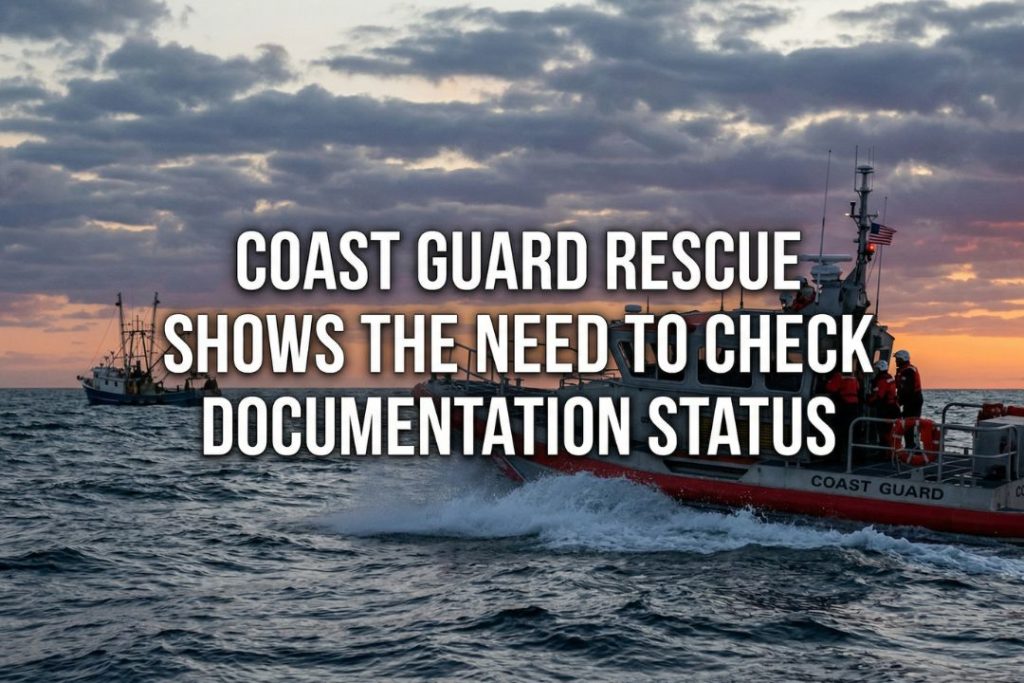
A recent rescue operation highlighted by the United States Coast Guard serves as a powerful reminder that preparedness on the water extends beyond safety equipment and navigation skills. Incidents like this underscore how critical it is to check documentation status before heading out, ensuring that your vessel meets all federal requirements and avoids complications during emergencies.

According to an official report from the Coast Guard, multiple individuals—including federal agents and boaters—required emergency assistance after becoming stranded offshore.
What the Rescue Incident Reveals About Preparedness
The Coast Guard rescue off Puerto Rico involved coordinated air and sea response teams working under pressure to recover individuals from a potentially dangerous situation. You can read the full report here: U.S. Coast Guard News.
While the immediate concern in such rescues is safety, documentation plays a role that is often overlooked until it becomes urgent. Vessel records help authorities:
- Confirm ownership quickly
- Identify the vessel involved
- Coordinate with proper agencies
- Ensure compliance with maritime regulations
When documentation is incomplete, expired, or inaccurate, delays can occur at precisely the wrong time. That is why it is essential to check documentation status regularly, not just when a renewal deadline approaches.
How Documentation Status Affects Emergency Response
When authorities respond to a maritime emergency, time is critical. Proper vessel documentation ensures that agencies can act without unnecessary barriers.
Why Authorities Need Accurate Records
Accurate documentation allows responders to:
- Match a vessel to its registered owner without confusion
- Verify that the vessel is authorized to operate
- Access identifying details quickly
- Coordinate across jurisdictions if needed
Failing to check documentation status can lead to complications that extend response times. Even small discrepancies can require additional verification steps.
The Role of Federal Documentation in Identification
Federal documentation provides a standardized record recognized across U.S. waters. It offers a consistent system that supports enforcement, rescue, and communication efforts.
Maintaining this documentation through our service ensures that your records remain accessible and properly filed, reducing the risk of complications when it matters most.
When to Check Documentation Status Before Heading Out
Many vessel owners assume that documentation only matters during registration or renewal periods. However, it is best practice to verify your status regularly.
Times to Review Your Documentation
You should check documentation status:
- Before the start of a boating season
- After purchasing or transferring ownership
- Prior to long-distance or offshore trips
- When updating vessel details
- If you have not reviewed your records in the past year
By staying proactive, you reduce the likelihood of encountering issues during inspections or emergencies.
Avoiding Lapses in Compliance
Lapses in documentation can occur more easily than expected. Missed deadlines or outdated information can lead to:
- Penalties or fines
- Delays in operations
- Complications during inspections
- Increased scrutiny from authorities
Our service simplifies the process so that you can complete vessel documentation renewal efficiently and maintain compliance without unnecessary obstacles.
The Importance of Proper Ownership Records
Ownership records are a foundational part of vessel documentation. They establish legal responsibility and confirm who has authority over the vessel.
The Abstract of Title
An abstract of title provides a historical record of ownership and liens associated with a vessel. It is often used to:
- Verify ownership history
- Identify any outstanding claims
- Support transactions involving the vessel
Maintaining accurate documentation ensures that this record remains consistent and reliable.
Why Ownership Clarity Matters in Emergencies
During a rescue or investigation, unclear ownership can slow down the process. Authorities may need to confirm details before taking certain actions, which can delay assistance.
By ensuring that your records are current, you help eliminate unnecessary barriers during critical moments.
Managing International and Registry Records
For vessels that operate beyond domestic waters or have international connections, documentation becomes even more complex.
When Foreign Records Are Involved
Some vessel owners may need to obtain a foreign vessel title search/transcript of registry. This type of documentation helps verify:
- Registration history in another country
- Ownership records across jurisdictions
- Compliance with international standards
Keeping these records aligned with U.S. documentation requirements is essential for smooth operations.
Maintaining Consistency Across Registries
Discrepancies between domestic and international records can create confusion. Ensuring that all documentation is accurate and consistent reduces the risk of delays or legal complications.
Our platform provides access to the forms necessary to maintain proper documentation within the U.S. system.
How to Check Documentation Status Efficiently
For many vessel owners, navigating federal documentation systems can be time-consuming and unclear. That is where our service plays a role.
Steps to Verify Your Status
To check documentation status effectively, you should:
- Gather your vessel’s identifying information
- Review your current documentation records
- Confirm expiration dates and required updates
- Submit any necessary forms
Our portal simplifies this process by providing direct access to the appropriate documentation forms without unnecessary complexity.
Common Issues That Arise
When vessel owners attempt to manage documentation independently, they often encounter:
- Difficulty locating the correct forms
- Confusion about requirements
- Missed deadlines
- Incomplete submissions
Using our service helps reduce these challenges by offering a streamlined approach to managing your documentation needs.
Keeping Your Documentation Active and Valid
Maintaining valid documentation is not a one-time task. It requires ongoing attention to ensure compliance with federal regulations.
The Role of Renewal in Compliance
Vessel documentation renewal is essential for keeping your records active. Failure to renew can result in:
- Expired documentation status
- Loss of certain operational privileges
- Additional steps to restore compliance
Regularly reviewing your status helps ensure that renewals are completed on time.
What Happens if Documentation Lapses
If documentation expires, you may need to pursue reinstatement. This process can involve:
- Submitting additional forms
- Providing updated information
- Addressing any gaps in documentation
By staying proactive and checking your status regularly, you can avoid the need for reinstatement altogether.
How Our Service Supports Vessel Owners
At our service, we focus on simplifying the documentation process for vessel owners across the United States.
What We Provide
We offer access to the necessary forms and processes to:
- Apply for initial Coast Guard documentation
- Complete renewals efficiently
- Update vessel information
- Maintain compliance with federal requirements
Our platform is designed to reduce the time and effort required to manage documentation.
A Streamlined Approach to Compliance
Instead of navigating multiple sources or unclear systems, our service centralizes the documentation process. This allows you to:
- Access forms in one place
- Submit required information efficiently
- Maintain accurate records
Lessons From Real-World Rescue Operations
The Coast Guard rescue incident demonstrates that emergencies can occur without warning. Preparation minmizes risk and ensuring a swift response.
What Vessel Owners Can Take Away
From this incident, vessel owners should recognize the importance of:
- Maintaining up-to-date documentation
- Verifying records before trips
- Ensuring compliance with federal regulations
These steps contribute to safer and more efficient operations on the water.
Making Documentation Part of Your Routine
Rather than treating documentation as a one-time task, it should be part of your regular vessel management routine.
- Review your records periodically
- Update information as needed
- Complete renewals on time
- Check documentation status before significant trips
By integrating these practices into your routine, you reduce the likelihood of complications.
Staying Prepared Through Proper Documentation
Maritime safety involves many factors, but documentation remains one of the most fundamental. It supports identification, compliance, and coordination during emergencies.
Through our service, vessel owners can access the tools needed to manage their documentation efficiently. Whether you are applying for the first time or maintaining existing records, taking the time to check documentation status is a critical step in responsible vessel ownership.
The recent rescue serves as a reminder that preparation is not optional. Ensuring that your vessel documentation is accurate and up to date helps protect not only your investment but also your safety on the water.