A Vessel Title Abstract Request is a key step in the history of a documented boat that you will need to do. This record represents ownership details, liens, mortgages and transaction history. It is relied on by buyers, lenders and vessel owners often. A buyer who does not check out an abstract may miss legal claims or unresolved ownership issues that will cause costly problems later.
Boat transactions are more than just money exchanges. The government’s documentation records have information on the ship’s registration and finances. By checking these particulars, it will ensure that a private buyer and commercial operator will not get an unexpected dispute.
The Coast Guard keeps records of federally documented vessels. A title abstract organizes records in reverse chronological order. It displays ownership transfers, registered mortgages and satisfaction filings. This information serves as a way to assess whether the vessel has a clean legal status to purchase or finance.
Everything You Need to Know About a Vessel Title Abstract Request to Save Time and Money. This guide explains how to request and review vessel title abstracts, the key benefits, important record details, and other tips.
Understanding Vessel Title Abstract Request and its Purpose
A vessel abstract of title serves as a historical record for documented vessels. This gives you a full history of the boat’s ownership changes, any mortgage filings and claims against the boat. Before completing the transaction, buyers tend to review the abstracts as there may be hidden issues that would affect their rights of ownership.
An abstract is a document that is more than a simple registration certificate. It is a particularly useful document when acquiring expensive yachts and transferring commercial vessels.
| Feature | Abstract of Title | Basic Registration Record |
| Ownership History | Detailed chronology | Current owner only |
| Mortgage Records | Included | Usually excluded |
| Lien Information | Visible | Limited visibility |
| Transaction Verification | Comprehensive | Basic information |
Owners won’t burden price with any financial charges connected to the vessel. However, undocumented vessels may have unpaid mortgages or undercharge liens. An abstract is useful to uncover those risks before sale.
The document generally contains details related to identification of the vessel such as official number, name and ownership. The order of mortgage filings coincides with ownership transfers. Past loans paid in full as per satisfaction records.
The term “boat title history report” is often used when referring to abstract requests. The phrasing may differ, but the purpose is clear. Transparency on owner’s legal and financial background being sought by buyers.
Vessel title abstracts are commonly requested by various groups.
- Potential ship purchasers.
- Banks and lenders offering maritime financing.
- Verifying records is current owners.
- Lawyers who handle ship transactions.
Government paperwork creates accountability of marine transactions. Ownership history helps reduce fraud risks by clarifying ownership. This protection is important in high-value yacht sales.
Sellers also benefit from abstract requests. Providing accurate documentation history enhances buyer confidence and accelerates deals. Inconsistent Ownership Records Makes Buyers Have Cold Feet.
Information that is Key is Seen in Boat Documentary Records
A vessel title abstract entails several important sections. The legal status and the ownership of the vessel are covered in each section. When buyers know these things, they will read the records accurately.
Transfer and registration of ownership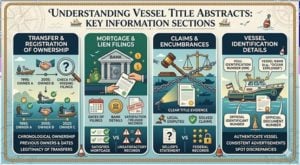
Ownership transfers show up in chronological order in the abstract. Each transaction reveals previous owner and transfer date. The series determines whether the transfer of ownership was legal.
Any unexpected ownership gap may indicate missing filings or inadequate transfers. Customers must examine these details before making purchases Lawyers usually investigate summaries for this purpose when purchasing a commercial ship.
The term “documented vessel ownership records” comes up often in maritime law. These documents assist in determining whether ownership claims exist.
Filings of Mortgage and Lien
One of the most important sections in an abstract is marine mortgages. Financial institutions take out mortgages on documents vessels to secure loans. Buyers who buy vessels without looking at these records risk taking on unresolved liabilities.
- Mortgage records generally include.
- Dates of mortgage filings.
- Bank details
- Records indicating accomplishment or relief.
Very good securing options
A satisfied mortgage means the debt was paid and released. Unsatisfactory records might need further investigation before purchase.
Authentic Claims and charges
Liens and encumbrances significantly impact ownership rights. If duly recorded, legal disputes may be found in documentation records. It is the responsibility of the buyer to ensure that the claims were solved properly.
Many buyers think sellers’ statements are enough for their protection. Ownership of federal records is more reliable more reliable because they create clear evidence of ownership.
Details of Vessel Identification
Identification information of the vessel is also in the abstract. The details help to authenticate the ship matches the ads during trades. The hull number, name of the vessel, and official document number should be constant.
Identification information errors sometimes indicate clerical errors. Nevertheless, major discrepancies may require further investigation. Disparity in official records must not be ignored.
The marine title search is more commonly a reference to the larger inquiry that accompanies any vessel documentation review. The search process begins with an abstract of title.
Differentiating Abstract Orders and Other Searches of Ship Records
How boaters confuse the abstract request with state registration search. While each serves to provide information, a federal vessel abstract will typically give a more comprehensive documentation history for documented vessels.
The local requirements are the main subject of state registration records. They often lack detailed mortgage histories, federal transaction records. Federal abstracts generally offer better legal transparency.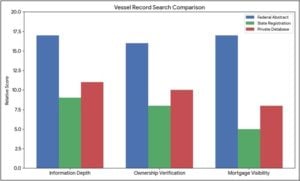
- Federal Abstracts are the best source of information regarding the depth of ownership and mortgage. And they are far superior to the state registration or any other private source.
- Lenders tend to favor federally documented records, as they provide better security for financing and transfer discussions.
- Risk mitigation means asking for an abstract before you sign a purchase agreement, which can avoid you some serious legal problems, such as discovering that you’ve bought a substantial unpaid mortgage after the sale.
Tips for requesting and reviewing vessel abstracts
When owners first collect accurate vessel information, requesting an abstract becomes easier. Vessel clearance may not be granted due to such a delay.
Before sending requests owners must check vessel details. Documentation numbers from the relevant authorities are especially important because similar names may cause confusion.
These strategies help improve the accuracy of requests.
- Confirm the official vessel documentation number.
- Check the correct spelling of vessel name.
- Examine ownership details closely.
- Retain copies of all requests submitted.
Normal vessel identification would on most occasions be performed via a federal vessel documentation search. Pertinent Information Enhances Search Reliability.
Buyers must take time to review the abstracts
Fetching records is not enough. It is important to know the status of the mortgage, whether the ownership is continuous, and the lien history.
Many buyers avail themselves of professional assistance during reviews. Often marine documentation specialists and lawyers discover issues inexperienced buyers fail to catch. Professional assessment is quite important for commercial transactions.
When buying a boat the timing can matter. Negotiators who are buyers should require abstracts early in negotiations and not at closing. When sellers get the review early, they have time to fix discrepancies and/or clarify things.
You can look at the details of your vessel and compare it with the inspection reports. It is necessary to ensure the consistency of hull numbers, vessel dimensions, and names across all records. Discrepancies may suggest documentation errors or ownership disputes.
Sellers can also benefit from a periodic review of their own records. Fixing outdated filings ahead of listing a vessel boosts buyer confidence and lessens transaction delays.
Final thoughts on Protecting Ownership with Vessel Documentation
A request for a Vessel Title Abstract provides information on the legal title and financial history of documented vessels. Essential documents that buyers, lenders, and owners rely upon to verify ownership accuracy and identify potential undermining of owners rights.
The Federal documentation records enable transparency in ownership transfers of marine vessels. All parties depend on mortgage filings, ownership histories, and lien records. If buyers ignore these records, they could end up in legal and financial trouble.
By understanding vessel abstracts, transaction-tin becomes efficient. Sellers can clarify their issues quite early while the buyers bring about clarity. This process builds confidence when negotiating and raising finances.
Accurate history of the vessel is growing in importance in the marine industry. The reliability of documentation records is especially crucial for yacht transactions and financing of commercial vessels.
Boat owners who conduct thorough documentation research can avoid issues caused by hidden or incomplete records. National Documentation E-Portal supports vessel owners in managing title and documentation processes efficiently and accurately.