The maritime industry works under regulatory frameworks that require proper documentation and compliance. Integral to this framework is the vessel endorsement process. The determination of the vessel’s authorization for proceeding under specified trades and conditions is the process.
Vessel owners must be aware of endorsement requirements Changes in trade indicators or operational status through endorsements can have a significant effect on a vessel’s operational capability. Delays and compliance issues can take place if it is not handled properly.
The process of vessel endorsement ensures that the vessel has met the requisite regulations and aligns with its intended use. It grants clear records of operational allowances to the authorities. It is particularly vital when vessels change between trade form or owners.
In this guide, we will break down the basics of vessel endorsements and the step-by-step processes involved along with tips to help you navigate requirements.
Vessel Endorsement Process and Its Significance in Maritime Profession
The vessel endorsement process is the official method by which a vessel is assigned or changed classification of operational use. It determines the vessel’s operational limits and location.
An endorsement can be issued based on type of vessel, ownership and intended use. Common endorsements are for coastwise trade and fisheries operations and registry for other than coastwise trade. Every category has requirements and limitations.
Proper endorsement guarantees conformity with maritime law It shields vessel owners from penalties and operational restrictions. In the absence of the proper endorsement, a vessel may not be able to undertake certain activities.
| Endorsement Type | Purpose | Operational Scope |
| Coastwise | Domestic trade operations | U.S. coastal transport |
| Registry | International trade | Global operations |
| Fisheries | Commercial fishing activities | Fishing zones and waters |
| Recreational | Private use | Non-commercial operations |
The limits of a vessel are specified by each type of endorsement. It is important to choose the right one.
Ensuring compliance is another vital point. Authorities routinely verify endorsements to ascertain vessels’ operations are within approved limits. So, proper documentation is a must.
Vessel Endorsement Process’ Step by Step guide
The process of vessel endorsement involves several steps. Each level guarantees compliance and eligibility of the vessel.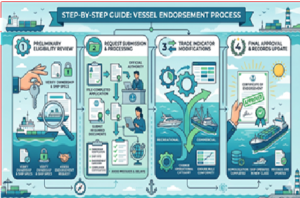
Review of Preliminary Eligibility and Documentation
We start verifying ownership and vessel’s specification. The vessel will be assessed by the authorities for the endorsement requested.
At this stage, owners’ documents and predecessors’ endorsements are reviewed. Not being accurate will lead to delays.
Submission of request and proc of endorsement
Once eligibility is verified, application is filed and submitted. This comprises all necessary forms and supporting documents.
- Documents for ownership verification.
- Info about the ship.
- Category of mentioned endorsement.
- Certifications for Approved Compliance.
Authorities check the application after submission. Mistakes may cause further orders or delays.
Comprehending Modifications in Trade Indicators
Trade indicators refer to the operational category of a vessel. Updating this indicator may be required to change an endorsement.
A vessel must change its classification from recreational to commercial when it changes its use. Ensures conformity in accordance with rules.
Approval at the End; Updates to the Records
When approved, the homologation will take place. The ship may then operate under the new class.
Proper and Improper Endorsement Handling Comparison
The significance of effective endorsement management is recognized through usage.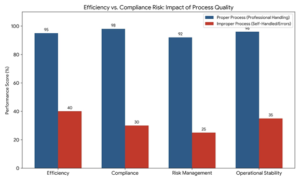
- Improper documentation procedures lead to multiple cost and lower efficiency. Correct documentation procedures help bring efficiency that is nearly double the improper one. The latter is mostly affected by costly errors and rejections.
- Handling by a professional provides near certainty of compliance (98%), whilst the improper handling leaves the owner exposed to high regulatory risks and litigation.
- When proper processes are adhered to, the risks to financials and legal positions are greatly curtailed. The lender only has a secured position plus the owner only stands to lose their investment.
Compliant through Proper Endorsement
The vessel endorsement process is vital for maritime operations. It sets out the operational capabilities of a ship and compliance with the regulations.
Every step of the process, from eligibility checks to final approval, is precise. Managing risks in supply chain can be very helpful.
Through comprehending the system and adhering to best practices, vessel owners can avoid the mistakes. They also ensure that their vessels stay compliant and operational.
Nowadays, endorsements are more than just paperwork due to evolving regulations. Operational agreements and business agreements are essential for preserving legal and operational stability, with support from National Documentation E-Portal.