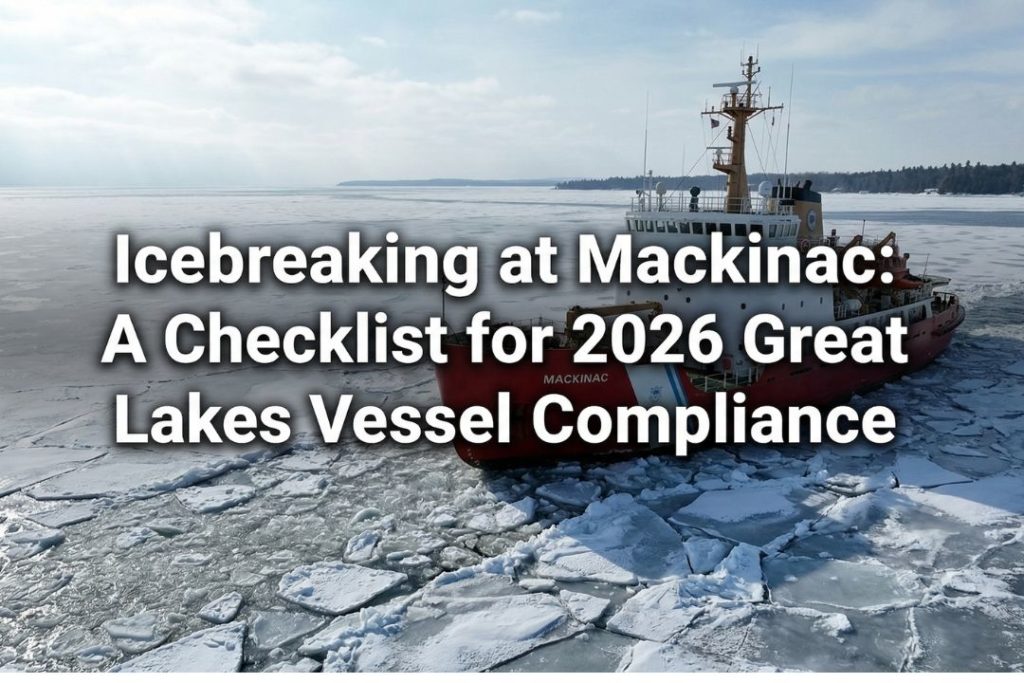
As the U.S. Coast Guard Cutter Mobile Bay officially opens the icebreaking path to Mackinac Island, signaling the beginning of the 2026 Great Lakes shipping season. For commercial mariners and recreational boaters waiting for the spring thaw, this route opening is the starting gun for Great Lakes vessel compliance. While the Coast Guard focuses on clearing the physical channels, it’s the responsibility of every captain to ensure their documentation status is current before they can legally sail through the newly opened lanes.
The physical pathway may be opening, but administrative readiness is what determines whether your vessel can legally and efficiently enter it.
Clearing More Than Ice: The Administrative Path to Launch
With the reopening of routes like these, ferries resume, commercial vessels begin scheduling routes, and private operators prepare to get underway. However, while the Coast Guard handles the ice, vessel owners are responsible for clearing their own administrative path.
That means ensuring all federal documentation is valid, current, and properly filed before your first voyage. A vessel that is physically ready but administratively incomplete risks delays, penalties, or even being held back from operation.
At our portal, we simplify that process. Instead of navigating multiple steps across different systems, you can handle your documentation efficiently in one place, ensuring your compliance aligns with the opening of the waterways.
The “Diagram” of Readiness for Great Lakes Vessel Compliance
Preparing a vessel for the Great Lakes season requires more than any single item. It involves several interconnected steps that ensure both operational safety and legal eligibility.
Think of readiness as a layered process:
- Mechanical preparation
- Structural inspection
- Documentation verification
- Regulatory compliance
- Filing and renewal actions
Each of these components plays a role in achieving full Great Lakes vessel compliance before departure.
A Pre-Voyage Check for Great Lakes Vessel Compliance
Before any vessel enters open water, there should be a structured review similar to a pre-flight checklist. The Coast Guard evaluates ice thickness and navigability before clearing a route. Vessel owners should apply the same diligence to their paperwork.
These administrative checks include:
- Confirming your Certificate of Documentation (COD) is valid and unexpired
- Verifying ownership details match current records
- Ensuring endorsements align with intended vessel use
- Checking for any outstanding filings or updates required
- Using a vessel documentation search tool to confirm status accuracy
A valid COD is a legal requirement for documented vessels operating in U.S. waters, including the Great Lakes. Without it, the first voyage of the season cannot legally proceed.
The Icebreaker Checklist: Five Essential Steps Before the Thaw
As the ice begins to recede, preparation must already be underway. Waiting until waterways are fully open can create unnecessary delays, particularly when documentation processing is involved.
Here is a practical checklist to follow before the season begins:
- Engine inspection
- Check fuel systems, oil levels, and battery condition
- Ensure all mechanical systems are operational after winter storage
- Hull evaluation
- Inspect for cracks, corrosion, or damage caused by ice or freezing temperatures
- Confirm watertight integrity before launch
- Safety equipment review
- Verify life-saving equipment is present and functional
- Ensure compliance with current Coast Guard safety standards
- Vessel documentation renewal
- Confirm your COD has not expired during the off-season
- Submit renewal applications early to avoid processing delays
- Operational readiness
- Align your vessel’s documentation with its intended use
- Confirm endorsements are accurate for commercial or recreational activity
Completing these steps early ensures your vessel is not only seaworthy but also compliant with all regulatory expectations tied to Great Lakes vessel compliance.
Avoiding the “Ice Jam” in Paperwork
Just as ice accumulation can halt movement through critical waterways, expired or incomplete documentation can stop a vessel’s season before it starts.
Paperwork delays often occur when:
- Renewal deadlines are missed
- Ownership changes are not properly recorded
- Required filings are incomplete or inaccurate
- Documentation status is not verified ahead of time
These issues can create bottlenecks similar to ice jams, preventing vessels from entering active routes like the St. Ignace to Mackinac Island shipping lanes at the start of the season.
By using our portal, vessel owners can submit required forms efficiently, reducing the likelihood of delays caused by administrative backlog.
Timing Matters: The Start of the Season as a Compliance Deadline
The clearing of the Mackinac route acts as a natural “starting gun” for vessel operations across the region. For those who acquired vessels during the off-season, this moment is particularly critical.
Filing initial documentation promptly ensures:
- Your vessel is eligible for immediate operation
- There are no interruptions during peak early-season demand
- Compliance requirements are met before entering active waterways
Delays in filing can result in missed opportunities during the busiest weeks of the Great Lakes season.
Addressing Special Cases in Great Lakes Vessel Compliance
Certain vessels may require additional considerations when preparing for operation.
These include:
- Vessels needing a MARAD waiver to operate under specific conditions
- Previously documented vessels requiring reinstatement after expiration
- Ownership transfers completed during winter months that require updated filings
Each of these scenarios involves documentation steps that must be completed before the vessel can legally operate.
The Importance of Accurate Records Before Departure
Accuracy in documentation is just as important as having documentation in the first place. Errors in filings can lead to complications that delay approval or create compliance issues.
Before submitting or renewing documentation, confirm:
- Vessel name and hailing port are correct
- Ownership information reflects current records
- Endorsements match intended vessel use (and updated appropriately)
- All required fields are completed accurately
Using a vessel documentation search can help verify that your records are current and consistent before filing any updates.
St. Ignace to Mackinac Island Shipping Lanes
The reopening of the St. Ignace to Mackinac Island shipping lanes is not just a regional event; it is a focal point for Great Lakes maritime activity. These routes depend on timely access, coordinated operations, and strict adherence to regulatory requirements.
For vessel owners operating in this area, compliance is essential to:
- Maintain operational schedules
- Avoid interruptions during peak traffic periods
- Ensure eligibility for commercial or passenger transport
A valid Certificate of Documentation supports lawful navigation through these lanes, reinforcing the importance of early preparation.
Preparing for a Smooth Season Start
The transition from winter to active navigation is one of the most critical periods for vessel owners. It is when physical readiness and administrative compliance must align.
Steps to ensure a smooth start include:
- Reviewing documentation status before ice clearance announcements
- Submitting necessary applications well in advance
- Confirming all regulatory requirements are met prior to launch
- Ensuring no outstanding issues remain unresolved
How Our Portal Supports Great Lakes Vessel Compliance
Our service is designed to simplify the documentation process, making it easier to meet federal requirements without unnecessary complications.
Through our platform, vessel owners can:
- Apply for initial Coast Guard documentation
- Complete renewals efficiently
- Submit updates related to ownership or vessel details
- Access necessary forms in one place
By centralizing these functions, we help reduce the administrative burden associated with maintaining compliance.
Staying Ahead of Seasonal Demand
As the Great Lakes reopen, demand for vessel operations increases rapidly. This surge can create pressure on documentation systems, particularly for those who wait until the last moment.
Planning ahead allows you to:
- Avoid processing delays during peak periods
- Ensure documentation is approved before your first voyage
- Maintain uninterrupted operations throughout the season
Early action supports consistent compliance and helps prevent avoidable disruptions.
Breaking the Ice on a Great Spring
The opening of the Mackinac route is a clear signal that the season has begun. While the icebreaker clears the way physically, compliance ensures that vessels can legally follow.
By approaching readiness as both a mechanical and administrative process, vessel owners can align with all requirements tied to Great Lakes vessel compliance.
From verifying documentation status to submitting necessary filings, each step contributes to a successful start on the water.