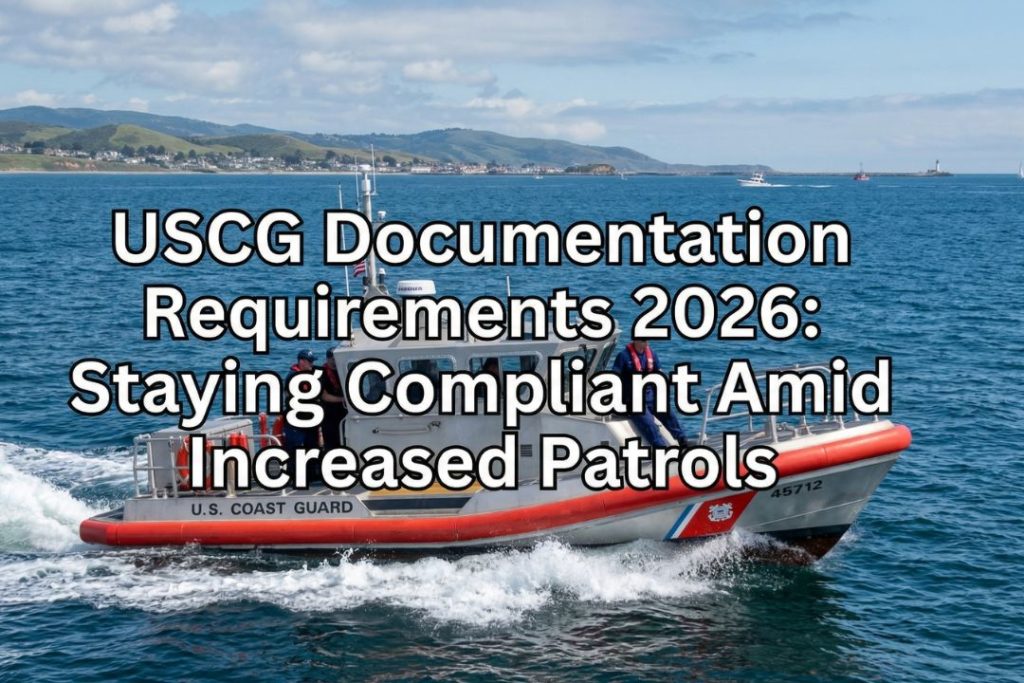
Recent activity from the United States Coast Guard underscores a clear reality for vessel owners: enforcement is intensifying, and compliance is more important than ever. This moment serves as a timely reminder that 2026 USCG Documentation Requirements can be both administrative as well as essential for lawful and uninterrupted operation on U.S. waters.
The San Diego Event and What It Signals
In one widely reported incident, the Coast Guard interdicted 12 individuals off the coast of San Diego, highlighting the agency’s increased vigilance in monitoring vessels operating in high-traffic coastal waters.
The San Diego interdiction event demonstrates how frequently Coast Guard patrols are identifying vessels that raise compliance concerns. You can review the official report here:
While this specific situation involved suspected illegal activity, it reflects a broader trend:
- Increased patrol frequency along both coastal and inland waterways
- More routine vessel boardings for documentation verification
- Heightened scrutiny of vessel ownership and registration status
- Greater reliance on federal records to confirm vessel legitimacy
For vessel owners, the takeaway is straightforward. Even if your operations are entirely lawful, your vessel must be properly documented and current in federal systems.
Before heading into high-traffic coastal zones, it is vital to verify your vessel’s legal standing. You can quickly confirm your status using our vessel documentation search tool to ensure your data matches federal records.
2026 USCG Documentation Requirements in Practice
As enforcement increases, being aware of the entire scope of current USCG Documentation Requirements becomes critical. These requirements apply broadly, but they are especially relevant for vessels operating commercially or traveling in regulated waterways.
In 2026, the foundational rule remains unchanged but is being more actively enforced:
- Vessels measuring five net tons or more must maintain a valid Certificate of Documentation (COD)
- Documentation must reflect current ownership and vessel status
- Any changes in ownership, structure, or use must be recorded promptly
- Federal documentation supersedes state registration for qualifying vessels
This is where many vessel owners encounter issues. A lapse in documentation—even if unintentional—can lead to citations, delays, or further investigation during a boarding.
If you have recently acquired a boat or your vessel is newly eligible, you must file for initial vessel documentation to avoid the legal complications seen in recent interdiction reports.
How 2026 USCG Documentation Requirements Affect New Owners
For new vessel owners, compliance begins immediately upon acquisition. The Coast Guard does not allow extended grace periods for undocumented vessels that meet federal thresholds.
Important considerations include:
- Ownership must be properly recorded with the National Vessel Documentation Center
- Any prior documentation must be transferred or replaced
- The vessel’s eligibility must be confirmed based on tonnage and use
- Documentation must be active before operating in applicable waters
Failure to complete these steps can result in:
- Delays in lawful operation
- Complications during Coast Guard inspections
- Questions about ownership legitimacy
Our service simplifies the filing process so that your documentation aligns with federal expectations from the outset.
Compliance and Maintenance Under 2026 USCG Documentation Requirements
Once your vessel is documented, maintaining compliance becomes an ongoing responsibility. The Coast Guard uses several identifiers during boardings to confirm that vessels meet federal standards.
These include:
- Official Number permanently affixed to the vessel
- Hailing port displayed correctly
- Matching records within federal databases
- Valid and unexpired Certificate of Documentation
Among these, the most common issue encountered during inspections is expired documentation.
To stay compliant throughout 2026, owners should utilize our streamlined portal for vessel documentation renewal.
Regular maintenance of your documentation ensures:
- Your vessel remains legally operable
- Your ownership records remain accurate
- You avoid penalties or citations during inspections
Avoiding Gaps That Lead to Reinstatement
If documentation expires, vessel owners may need to pursue reinstatement rather than a standard renewal. This process can be more complex and may require additional documentation.
Situations that often lead to reinstatement include:
- Missing renewal deadlines
- Changes in ownership that were not properly recorded
- Administrative lapses in filing
Maintaining active documentation is always the more efficient path. Our portal allows you to complete filings efficiently, helping you avoid unnecessary complications.
Buying, Selling, and Transparency in 2026
The San Diego incident also highlights another critical issue: vessels without clear ownership records often attract scrutiny. Whether buying or selling, maintaining a transparent paper trail is essential.
When evaluating a vessel, documentation provides insight into:
- Ownership history
- Existing liens or encumbrances
- Recorded changes over time
- Legal standing within federal systems
When purchasing a used vessel, don’t rely on the seller’s word alone. For a complete history of a boat’s ownership and any recorded liens, applying for an Abstract of Title is a non-negotiable step for a safe investment.
The Role of Documentation in Ownership Transfers
Ownership transfers must be handled with precision to ensure compliance with 2026 USCG Documentation Requirements.
Important elements include:
- Accurate transfer of ownership records
- Filing appropriate documentation forms
- Ensuring no gaps between ownership periods
- Verifying that all prior liens are addressed
In some cases, vessel owners may encounter unique circumstances, such as eligibility issues requiring a MARAD waiver. While not common, these situations reinforce the importance of handling documentation correctly from the beginning.
Our service provides access to the necessary forms and filing pathways so that ownership transitions remain aligned with federal expectations.
Financing and Security in 2026
For high-value vessels, financing introduces another layer of documentation requirements. Lenders rely on federal systems to secure their interests, making compliance essential not just for owners but also for financial institutions.
The preferred ship mortgage remains the gold standard for vessel financing.
This type of mortgage:
- Is recorded with the National Vessel Documentation Center
- Establishes priority over other claims
- Provides legal protection for lenders
- Requires accurate and active vessel documentation
For those looking to finance a high-value vessel, lenders will typically require a preferred ship mortgage to be filed with the NVDC, providing federal-level security for the loan.
How Financing Connects to 2026 USCG Documentation Requirements
Financing cannot proceed smoothly without proper documentation. Lenders evaluate several factors before approving a loan:
- Verification of active documentation status
- Confirmation of ownership records
- Absence of unresolved liens
- Alignment with federal compliance standards
This makes documentation a foundational component of vessel ownership, not just a regulatory requirement.
By maintaining compliance with 2026 USCG Documentation Requirements, vessel owners position themselves for:
- Easier access to financing
- Reduced risk during inspections
- Greater operational flexibility
Staying Aligned with 2026 USCG Documentation Requirements
As Coast Guard enforcement continues to expand, vessel documentation is no longer something that can be delayed or overlooked. The San Diego event serves as a clear example of how quickly non-compliance can come under scrutiny.
Across all aspects of ownership, the expectations remain consistent:
- Documentation must be current
- Records must be accurate
- Ownership must be transparent
- Filings must be completed properly
Our service exists to make these processes accessible, allowing vessel owners to complete necessary filings without unnecessary complications.
From initial documentation to renewal and ownership transfers, maintaining compliance with 2026 USCG Documentation Requirements ensures that your vessel remains aligned with federal law, even as enforcement efforts continue to grow.