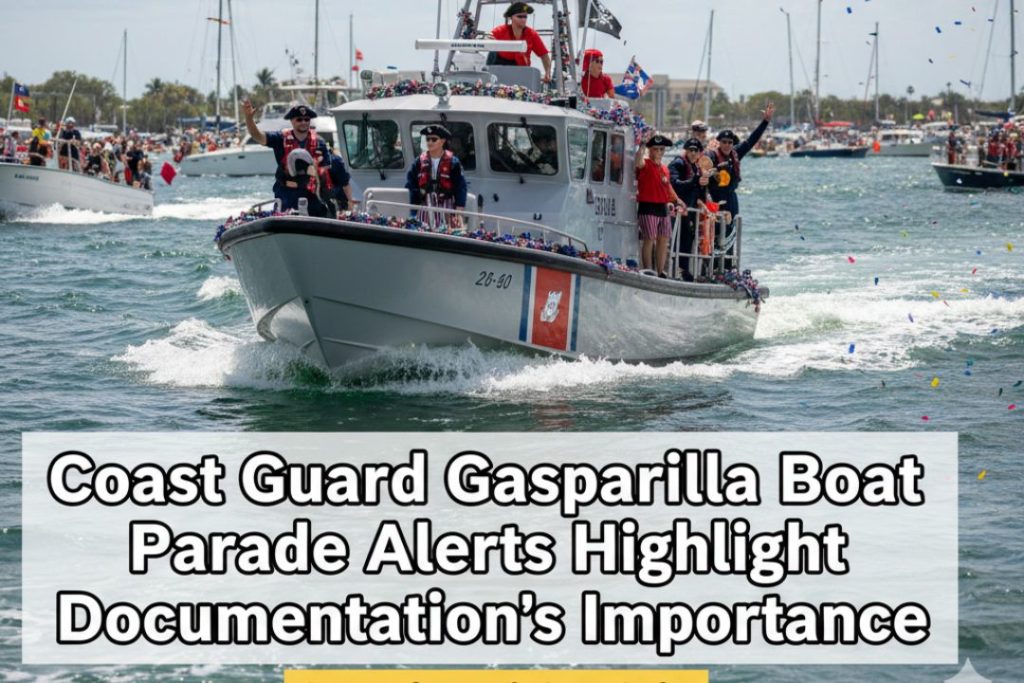
The Coast Guard’s recent alert regarding Gasparilla outlines strict safety zones, enhanced boarding authority, and targeted checks for commercial compliance. Each of these elements connects directly to federal boat documentation standards.
Every year, the Gasparilla Boat Parade transforms Tampa Bay into one of the most crowded and closely monitored waterways in the country. With thousands of vessels converging around a single route, the Coast Guard and partner agencies shift into heightened enforcement mode.
There are lessons to be learned from how the Coast Guard handled their business that day for documented vessel owners across the country.
Safety Zones and Boat Documentation During Gasparilla
The Coast Guard announced in a press release the enforcement of a safety zone surrounding the Jose Gaspar and the full parade route, with active participation from partner agencies including the Hillsborough County Sheriff’s Office and the Florida Fish and Wildlife Conservation Commission.
This means vessels operating in or near the zone should expect more frequent boardings and questions related to compliance.
When an officer boards a vessel during a safety zone enforcement action, the interaction typically begins with verification of ownership and authority to operate in that area. Federal documentation plays a central role in this process.
Boaters should understand that:
- Safety zones allow officers to stop and board vessels without the usual thresholds.
- Proof of ownership is requested immediately during these checks.
- Clear federal records allow officers to confirm status quickly.
- Delays or confusion during verification can escalate routine stops.
Our portal exists to streamline access to Coast Guard boat documentation forms and filings so owners can ensure their paperwork is accurate and current before events like Gasparilla begin.
Why Federal Documentation Carries Weight in Crowded Waters
During high-traffic events, enforcement agencies rely on records that can be confirmed quickly and consistently across jurisdictions. A Coast Guard Certificate of Documentation operates at the federal level, allowing multiple agencies to rely on the same system of record.
Federal documentation supports:
- Immediate verification across state and federal partners.
- Clear identification of ownership without relying on varying state formats.
- Reduced ambiguity during rapid safety checks.
Unlike state titling alone, a documented vessel is tied to a centralized federal database. This becomes especially important during events where officers may be processing dozens of vessels in a short period of time.
How Boat Documentation Supports Faster Boardings
When officers are tasked with maintaining safety in dense traffic, efficiency matters. Federal documentation provides standardized information that can be confirmed without delay. Our service focuses on helping owners submit accurate boat documentation filings so this information is available when it matters most.
Benefits during boarding situations include:
- Faster confirmation of ownership details.
- Reduced need for supplemental explanations.
- Consistent presentation regardless of home state.
Illegal Charter Enforcement and Documentation Standards
One of the most direct warnings in the Coast Guard’s Gasparilla alert addresses illegal charter operations. The Coast Guard specifically cautioned the public not to pay for charters without confirming the operator holds a valid Coast Guard-issued captain’s license.
This warning ties directly to vessel documentation requirements for commercial use.
Important distinctions include:
- Vessels carrying paying passengers must hold a Commercial Endorsement.
- Recreational documentation does not authorize charter activity.
- Enforcement actions during events are targeted and proactive.
If a vessel documented solely for recreational use is found carrying passengers for hire, consequences can include immediate termination of the voyage and significant financial penalties.
Commercial Endorsements and Boat Documentation Compliance
For owners considering or already engaged in charter activity, documentation status is not optional. Federal documentation must match the vessel’s actual use.
Commercial endorsement compliance involves:
- Properly filed federal documentation reflecting commercial use.
- Alignment between operator licensing and vessel status.
- Ongoing accuracy in federal records.
Our portal assists with accessing the correct application pathways for commercial endorsements so owners can file accurately based on their intended use.
The Financial and Operational Risks of Misdocumentation
Operating outside of documented authority exposes owners to risks that go beyond fines.
Potential impacts include:
- Voyage termination during peak events.
- Loss of charter revenue.
- Increased scrutiny in future enforcement actions.
Accurate boat documentation helps reduce these risks by ensuring the vessel’s status aligns with its activity.
Hazardous Weather, EPIRBs, and Federal Records
The Gasparilla alert also references the importance of properly registered Emergency Position Indicating Radio Beacons (EPIRBs), particularly in the context of changing weather conditions.
When an EPIRB is activated, search and rescue teams rely on federal documentation data to identify the vessel involved. Federal records provide:
- Vessel size and type.
- Hull color and identifying characteristics.
- Ownership details linked to emergency contacts.
This information can significantly affect the speed and effectiveness of rescue operations.
Documentation Data in Search and Rescue Operations
In emergency scenarios, seconds matter. Federal documentation ensures SAR teams are not starting from scratch when an alert is received.
This connection highlights why maintaining accurate records is more than a compliance issue—it is a safety consideration.
Our service helps owners file and update documentation so federal records accurately reflect the vessel’s current specifications.
Identification and Hailing Ports in Congested Channels
Gasparilla’s enforcement plan includes alternate routing through Sparkman Channel to manage traffic flow. In crowded basins, clear vessel identification becomes critical.
Documented vessels are required to display their vessel name and hailing port. You can use that link to change them.
These markings serve as visible extensions of federal records, allowing authorities to manage traffic and communicate with specific vessels efficiently.
How Boat Documentation Supports Orderly Traffic Management
Clear identification assists authorities in maintaining order during large-scale events.
Benefits include:
- Faster visual identification by patrol units.
- Reduced radio confusion in dense traffic.
- Alignment with professional standards set by the NVDC.
While our service does not advise on physical markings, we help owners understand the documentation requirements that make these identifications meaningful.
Long-Term Advantages Beyond Event Enforcement
Gasparilla highlights the immediate benefits of federal documentation, but those benefits extend well beyond parade day.
Federal documentation supports:
- Access to a vessel documentation search for confirming status.
- Eligibility for a preferred ship mortgage.
- Creation of an abstract of title reflecting ownership history.
These elements are foundational for financing, resale, and long-term ownership planning.
Keeping Documentation Accurate Over Time
Federal documentation is not a one-time filing. Owners must ensure records remain current to preserve these benefits.
Ongoing considerations include:
- Changes in ownership structure.
- Updates to vessel information.
- Timely documented vessel renewal filings.
Our portal is designed to simplify access to renewal and application forms so owners can submit filings accurately when required.
Our Role in Supporting Compliance
As an online portal focused on boat documentation, our role is to make federal forms and filings easier to access and complete. We help owners navigate the documentation process so their vessels are properly recorded at the federal level.
Through our service, owners can:
- Access documentation applications.
- Submit renewal filings.
- Ensure endorsements align with vessel use.
Gasparilla serves as a reminder that federal documentation is not just paperwork—it is a practical tool that supports safety, compliance, and clarity when it matters most.