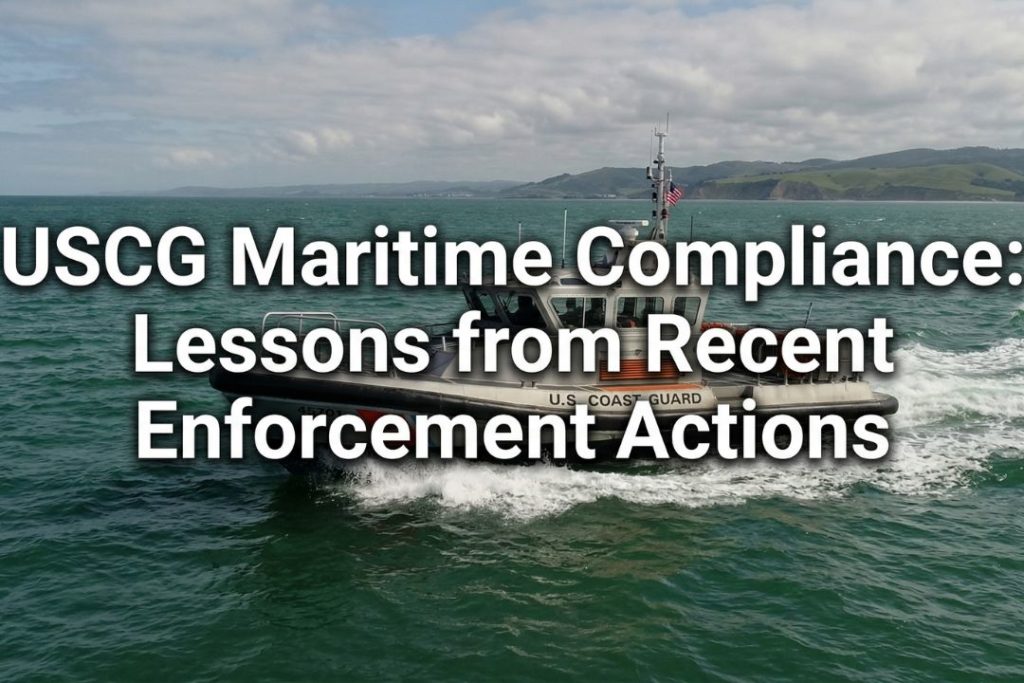
Recent enforcement actions on the water have highlighted a clear distinction between lawful and unlawful maritime activity. For legitimate boat owners, this underscores the importance of maintaining proper documentation and operating within established regulations. At the core of this responsibility is USCG maritime compliance, which ensures that your vessel is recognized as lawful, properly registered, and authorized to operate in U.S. waters.
Vessels involved in unauthorized operations, including unlawful migration attempts, are quickly identified and intercepted.
Operating lawfully is not simply about avoiding penalties. It is about clearly establishing your vessel’s identity, ownership, and eligibility under federal law.
Lawful Operation on U.S. Waters Explained
Lawful operation refers to a vessel’s compliance with all applicable federal regulations, including proper registration, documentation, and adherence to maritime laws. Enforcement actions often target vessels that lack verifiable ownership or proper authorization.
When a vessel is stopped during a Coast Guard patrol, documentation is one of the first elements reviewed. A valid Certificate of Documentation (COD) immediately signals that the vessel is federally recognized.
Lawful operation includes:
- Maintaining a valid and current Certificate of Documentation
- Ensuring ownership records are accurate and up to date
- Operating within the scope of the vessel’s endorsed use
- Displaying proper identification as required by federal standards
Without these elements, a vessel may be subject to inspection, delay, or enforcement action. Our platform is designed to make the process of applying for and maintaining documentation straightforward, helping vessel owners align with federal expectations.
How Enforcement Actions Highlight Compliance
Recent enforcement efforts (such as what’s described in this Coast Guard press release) demonstrate how quickly authorities can identify vessels that are not operating within legal parameters. These situations often involve vessels that lack proper identification, documentation, or authorization.
For compliant vessel owners, this reinforces the importance of maintaining proper records at all times. USCG maritime compliance is not something to address only when an issue arises. It is an ongoing responsibility.
Takeaways from enforcement actions include:
- Undocumented vessels are more likely to be stopped and investigated
- Inconsistent ownership records can trigger additional scrutiny
- Expired documentation may be treated similarly to no documentation
- Clear identification reduces the likelihood of prolonged inspections
By ensuring that your documentation is current and accurate, you position your vessel as compliant from the outset. Our service helps facilitate this process by providing access to the necessary applications for Coast Guard documentation.
The Role of Documentation in Proving Compliance
Documentation serves as the official record of a vessel’s legitimacy. It connects the vessel to its owner and confirms that it meets federal requirements for operation.
When documentation is missing or outdated, the vessel may appear indistinguishable from those involved in unlawful activities. This is where maintaining proper records becomes critical.
Documentation provides:
- Proof of ownership recognized at the federal level
- A clear link between the vessel and its legal operator
- Evidence of eligibility for specific maritime activities
- A standardized record that can be verified during inspections
Without this, even lawful operators may face unnecessary delays or complications. Ensuring that your documentation is properly filed and maintained supports uninterrupted operation.
Maintaining USCG Maritime Compliance Through Timely Updates
Keeping your documentation current is one of the most important aspects of compliance. A Certificate of Documentation is not permanent; it must be maintained through regular updates.
USCG maritime compliance depends on accuracy and timeliness. Allowing documentation to lapse can create avoidable risks.
Important considerations include:
- Monitoring expiration dates for your Certificate of Documentation
- Updating ownership information when changes occur
- Ensuring that vessel details remain accurate
- Submitting required forms in a timely manner
Our platform provides access to the forms necessary for vessel documentation renewal, helping vessel owners maintain compliance without unnecessary delays.
Avoiding Lapses That Can Lead to Enforcement Issues
A lapse in documentation can place a vessel in a vulnerable position. Even a short gap can result in complications if the vessel is inspected during that time.
Common issues that lead to lapses include:
- Overlooking renewal deadlines
- Failing to update ownership transfers
- Not submitting required documentation changes
- Assuming that prior approval remains indefinitely valid
Maintaining continuous compliance reduces the likelihood of enforcement action and helps ensure that your vessel is always recognized as lawful.
The Importance of Accurate Ownership Records
Ownership records play a central role in maritime compliance. They establish who is legally responsible for the vessel and ensure that all documentation aligns with federal requirements.
An abstract of title provides a detailed record of a vessel’s ownership history. This document is often used to verify that ownership has been properly transferred and recorded.
Accurate ownership records help:
- Confirm legal ownership during inspections
- Prevent disputes related to vessel title
- Support documentation applications and updates
- Ensure alignment with federal databases
Our service provides access to the documentation processes needed to maintain accurate ownership records, helping vessel owners stay aligned with regulatory expectations.
Using Vessel Documentation Search to Verify Status
Verifying your vessel’s documentation status is an important step in maintaining compliance. A vessel documentation search allows you to confirm that your records are accurate and properly recorded.
This process can help identify potential issues before they become problems during an inspection.
Benefits of verifying documentation status include:
- Ensuring that ownership information is correctly listed
- Confirming that the vessel is properly documented
- Identifying discrepancies that may need correction
- Supporting compliance with federal requirements
By staying informed about your vessel’s status, you can take proactive steps to maintain compliance and avoid complications.
Addressing Documentation Gaps Through Reinstatement
If documentation has lapsed, it may be possible to restore compliance through reinstatement. This process allows vessel owners to bring their documentation back into good standing.
Reinstatement is often necessary when:
- Documentation has expired
- Ownership changes were not properly recorded
- Required updates were not submitted in time
- Records are no longer active in the system
Taking action promptly helps minimize disruptions and ensures that your vessel can return to lawful operation as quickly as possible.
Practical Steps to Strengthen Compliance
Maintaining compliance does not require complex procedures, but it does require consistency. By focusing on certain areas, vessel owners can reduce the risk of enforcement issues.
Practical steps include:
- Keeping all documentation current and accessible
- Reviewing ownership records regularly
- Submitting updates promptly when changes occur
- Verifying documentation status periodically
- Ensuring that all records align with federal requirements
How Our Service Supports USCG Maritime Compliance
Our platform is designed to simplify the process of applying for and maintaining Coast Guard documentation. By providing access to the necessary forms and processes, we help vessel owners meet federal requirements more efficiently.
We focus on:
- Streamlining the application process for documentation
- Providing access to renewal and update forms
- Supporting accurate record submission
- Helping vessel owners maintain compliance with federal standards
USCG maritime compliance is easier to maintain when the process is clear and accessible. Our service is built to support that goal by making documentation management more straightforward.
Staying Prepared for Coast Guard Inspections
Preparation plays a role in ensuring smooth interactions during Coast Guard patrols. When your documentation is in order, inspections are typically brief and routine.
To stay prepared:
- Keep documentation readily available on board
- Ensure that all information is current and accurate
- Confirm that ownership records match federal filings
- Address any discrepancies before operating the vessel
These steps help reinforce your vessel’s status as a lawful operator and reduce the likelihood of complications during inspections.
The Broader Impact of Compliance on Maritime Safety
Compliance is not only about individual vessels. In fact, it contributes to the overall safety and integrity of maritime operations. When vessels are properly documented, authorities can more effectively monitor activity and respond to potential issues.
USCG maritime compliance supports:
- Improved identification of vessels on the water
- More efficient enforcement of maritime laws
- Enhanced safety for all operators
- Greater accountability across the maritime community
By maintaining proper documentation, vessel owners play a role in supporting these broader objectives.
Keeping Your Vessel Clearly Identified as Lawful
The distinction between lawful and unlawful operation is often determined by documentation. In enforcement scenarios, vessels without proper records may face immediate scrutiny.
Ensuring that your Certificate of Documentation is current and accurate helps establish your vessel’s legitimacy at a glance.
Elements of lawful identification include:
- A valid and active Certificate of Documentation
- Accurate ownership records
- Properly recorded vessel details
- Compliance with all applicable regulations
USCG maritime compliance ensures that your vessel is recognized as operating within the law, reducing the likelihood of enforcement issues and supporting smooth operation on the water.
By maintaining proper documentation and staying aligned with federal requirements, vessel owners can navigate with confidence, knowing that their vessel is clearly identified as lawful and compliant.