Yes. In practical use, the Hull Identification Number (HIN number) serves as the boat’s unique marker, performing the same role that a serial number would on other manufactured products.
Every legally compliant vessel built or imported after federal requirements went into effect must display this identifier, and it plays a central role in everything from title research to vessel documentation.
How Does a HIN Number Identify a Vessel?
The HIN number provides a consistent reference point used throughout the vessel’s lifespan for ownership, recordkeeping, compliance, and transactions. That consistency protects buyers, manufacturers, lenders, insurers, and anyone who needs to confirm the identity of a specific boat.
Because each HIN number is unique, it functions as the vessel’s fingerprint. No two boats receive the same identifier, and the sequence assigned to a particular hull stays associated with it throughout its existence unless corrected under federal regulations.
For owners who want to keep their records complete for matters such as vessel documentation or USCG documentation renewal, having a clear and legible HIN is essential.
How Closely Does the HIN Resemble a Serial Number?
The comparison to vehicle VINs is helpful because the HIN number follows a similarly structured system. The identifier generally measures 12–14 characters and includes details that reveal specific facts about the vessel.
Placement in Production
The HIN includes:
• A code showing who manufactured the vessel
• A sequence indicating its serial placement in production
• A marker showing when construction began
• A number reflecting the vessel’s construction year
• A model year designation
This sequence ensures consistency across the manufacturing process. It also allows agencies, lenders, buyers, and owners to verify the accuracy of a vessel’s information.
What Does Each Section of the HIN Number Represent?
The first series of characters is the Manufacturer Identification Code. This three-character sequence denotes the company that produced the vessel. Examples include familiar manufacturers across the industry, each with their assigned codes.
After the manufacturer code, the next section includes the serial number chosen by the builder. This assigned sequence may contain letters or numbers, but the characters “I,” “O,” and “Q” are excluded because they can be mistaken for numerals. This standard reduces errors during inspection, verification, and record entry.
The letter following the serial sequence represents the month construction started. Each letter corresponds to a particular month, and interpreting it provides a straightforward way to verify the vessel’s manufacturing timeline.
The number placed after the month code shows the last digit of the construction year. A vessel built in 2017, for instance, would include the digit “7.”
The final two digits represent the model year. For many buyers, this detail matters just as much as the build date because the model year often dictates valuation, resale potential, and classification.
Which Vessels Must Display a HIN?
Federal standards require that every vessel manufactured or imported after November 1, 1972, must carry a compliant HIN. Vessels built before that date are not required to have one unless later modified or reconstructed in a way that triggers additional compliance requirements.
For boats built after August 1, 1984, the current standardized HIN format applies. As a result, most modern vessels feature the same recognizable sequence structure. Any deviation may require correction to meet legal requirements.
Where Is the HIN Located on a Vessel?
Builders typically affix the identifier on the exterior of the transom, generally on the upper right-hand side. If the vessel lacks a transom, the marking appears in a comparable location that satisfies federal placement rules.
While many owners already know where to look, manufacturers follow the placement rules to ensure consistency across all vessels subject to the regulations.
What Does the HIN Reveal About a Vessel’s History?
Because the HIN includes information related to the manufacturer and the vessel’s age, anyone performing research or confirming vessel identity can rely on this sequence as a starting point. A clear, accurate identifier can be one of the most important components of ownership transitions, loan evaluations, and other administrative processes.
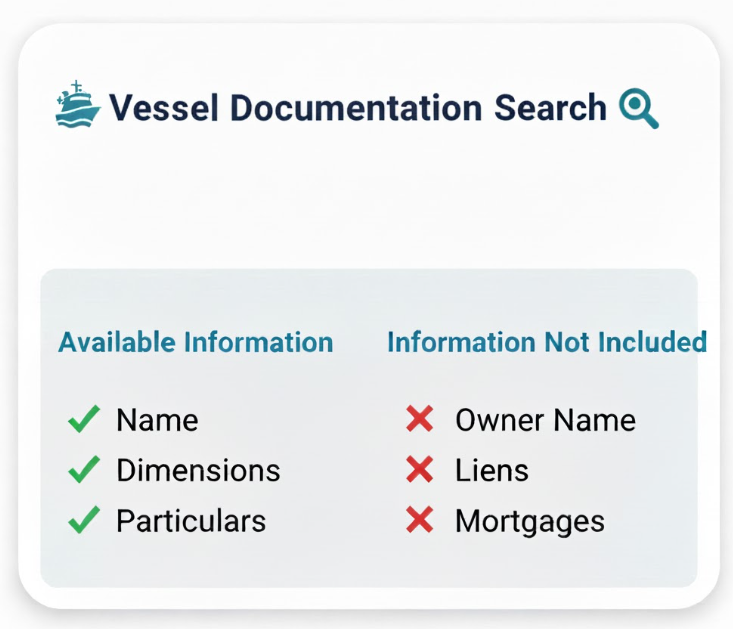
Using our platform, you can search Coast Guard records by HIN or by Official Number to review details such as:
- Vessel name
• Flag
• Service classification
• Dimensions and tonnage
• Documentation issuance dates
• Expiration dates
• Available Coast Guard records
These details help owners keep track of their vessel’s standing and ensure that they have current information for transactions that require official verification.
How Does the HIN Assist With Ownership Research?
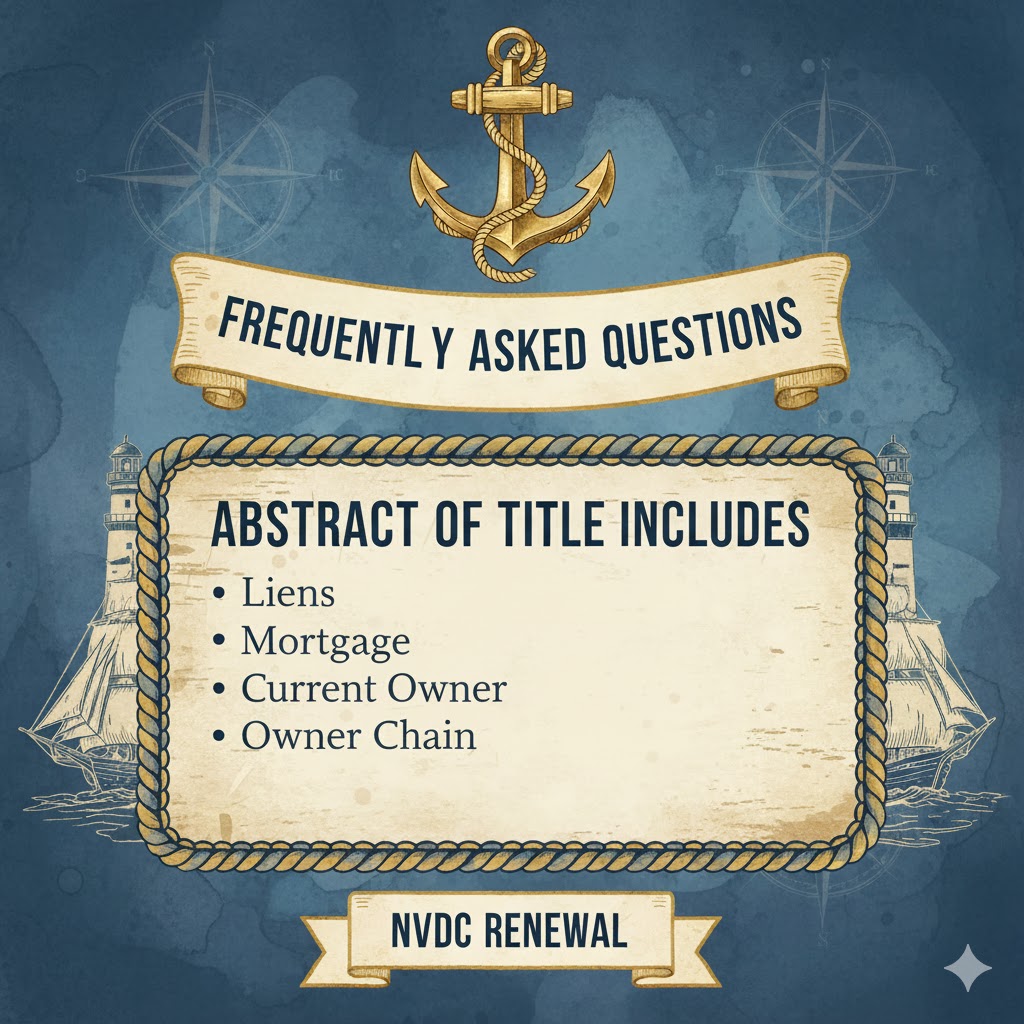
When prospective buyers or current owners need ownership information, they may request an Abstract of Title through our portal. This record outlines past and present ownership, along with recorded liens, claims, and notices. The HIN number often appears in these records, giving parties an additional data point to confirm the vessel’s identity.
An Abstract of Title is often used when evaluating the status of:
Mortgages associated with the vessel
• Ownership transfers
• Recorded liens
• Past claims
Owners obtaining or releasing a preferred ship mortgage frequently rely on accurate identifiers because lenders require thoroughly verified documentation.
How Does Our Portal Assist With HIN-Based Searches?
Our online service offers a convenient way to perform a vessel documentation search using the details associated with your vessel. This includes the ability to locate information using either the Official Number or the HIN.
Owners use our site when they need to:
• Review vessel documentation records
• Check status information
• Confirm recorded data
• Access Coast Guard forms
• Begin processes such as updating documentation
For situations requiring corrections, changes, or updates—such as a vessel change of address—owners can submit the appropriate Coast Guard forms through our portal using the options available on our service.
How Does the HIN Affect Compliance With Documentation Requirements?
Because the HIN functions as a primary identifier, it must match the information submitted on Coast Guard forms. Discrepancies can slow down processing or create complications during ownership transfers. Ensuring that the HIN remains readable and accurate helps maintain consistency across all federal records.
For those preparing to verify ownership, apply for documentation, or renew their existing status, the identifier ensures the accuracy of the information used throughout the process. Accurate identifiers also help maintain reliability for long-term recordkeeping.
How Can Owners Use Our Platform to Handle HIN-Related Tasks?
Our portal provides access to Coast Guard forms and tools used in documenting and maintaining accurate vessel records. While we do not evaluate HINs or recommend corrective actions, we provide the online environment necessary to submit the forms associated with documentation, renewal, transfers, and available research records.
Through our service, you can manage essential filings associated with:
• Documentation status
• Renewals permitted under federal rules
• Available Coast Guard forms
• Title research records
Owners using these tools often find the process straightforward because our portal is structured to present each required form in an easy-to-use online format.