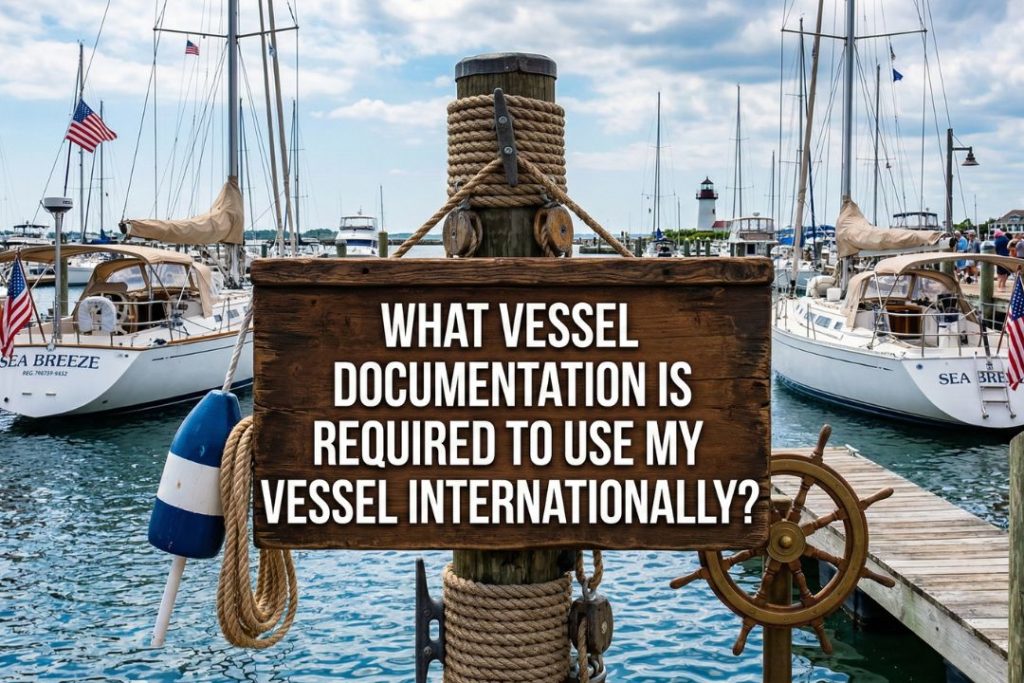
A valid Certificate of Documentation issued by the United States Coast Guard can serve as official proof of nationality, ownership, and endorsement. Without this vessel documentation, entry into foreign ports can become complicated, delayed, or even denied.
Through our service at the National Documentation E-Portal, we help ensure your federal paperwork is properly filed and maintained so your time abroad begins with confidence rather than confusion.
Is State Registration Enough for International Travel?
Many owners assume that state registration works everywhere because it satisfies domestic requirements. Within your home state, registration functions much like a driver’s license: it confirms compliance with local rules and identifies the boat for in-state use.
Once you cross international boundaries, however, expectations change significantly.
Foreign authorities do not treat state registration as definitive proof of nationality. Instead, they look for federal documentation that confirms the vessel sails under the authority and protection of the United States.
Federal vessel documentation functions as a “passport” for your boat:
- It establishes nationality under international maritime law
- It confirms that the vessel is recognized by the U.S. government
- It signals to foreign customs officials that the boat meets federal standards
- It provides consistency across jurisdictions
Under international law, every vessel must possess a nationality. A Certificate of Documentation (COD) satisfies this requirement by demonstrating that your vessel is documented with the U.S. Coast Guard. State-issued decals do not carry that same legal authority abroad.
If you plan to enter foreign waters, federal vessel documentation is the recognized standard.
How Does a Certificate of Documentation Prove Nationality?
A Certificate of Documentation is issued by the U.S. Coast Guard’s National Vessel Documentation Center under the authority of federal maritime law. The applicable regulation governing eligibility can be found in 46 CFR § 67.17.
This certificate provides:
- Official evidence that the vessel is documented under U.S. law
- Identification of the vessel’s endorsement
- The managing owner’s name and address
- A unique official number
Foreign customs officials are trained to recognize the U.S. Coast Guard seal and formatting. When they see a valid Certificate of Documentation, they understand immediately that the vessel is entitled to fly the U.S. flag.
By contrast, state registration varies widely in format and appearance. Some foreign port authorities may question its authenticity or request additional verification. That can lead to delays, requests for security bonds, or prolonged dockside inspections.
Through our portal, we help boat owners apply for and maintain Coast Guard documentation so that their certificate remains valid and ready for presentation when entering international waters.
What Role Does the U.S. Flag Play in Foreign Ports?
When you sail into a foreign harbor, you are subject to the local laws of that country. Customs, immigration, environmental, and maritime safety regulations all apply. However, your vessel’s nationality continues to matter.
Under the “flag state” principle:
- The vessel’s ownership and registration remain governed by U.S. law
- Mortgages recorded against the vessel remain subject to U.S. jurisdiction
- Internal matters of the vessel are tied to its flag state
This framework provides stability and predictability. It ensures that ownership records remain anchored in the United States rather than becoming subject to shifting foreign administrative systems.
Additionally, documentation provides a layer of diplomatic protection. If a dispute arises involving ownership, liens, or registration status, documented vessels have clearer standing when seeking assistance from U.S. consular officials.
Our role is limited to helping you secure and maintain the federal documentation that establishes that status.
Does Digital Port Clearance Make Federal Documentation More Important?
In 2026, many Caribbean and international ports rely on digital clearance systems. These electronic platforms streamline customs declarations, crew manifests, and vessel entry information.
These systems are built around federal registries.
When your boat is federally documented:
- Ownership data can be verified directly through Coast Guard records
- Officials can confirm status without contacting state agencies
- Processing times at customs counters are reduced
A documented vessel’s information is centralized and standardized. That consistency helps foreign authorities complete verification efficiently.
If your certificate is expired, however, the digital system will reflect that lapse. That can slow your clearance or trigger additional review.
We assist owners with vessel documentation renewal through our online filing system so that their status remains current before departure.
What Physical Documents Must Be On Board?
Even in an era of digital records, physical paperwork remains critical. When entering foreign waters, you must carry original documentation.
A photocopy of the COD is not sufficient. The original certificate includes security features and a watermark that confirm authenticity.
It is also essential that the endorsement shown on the certificate matches the vessel’s intended use. Recreational endorsements apply to pleasure use only. Registry endorsements are required for certain commercial operations abroad.
If your intended activity changes, you may need to file a change of endorsement/trade indicator before departure to ensure your certificate reflects the proper status.
Our service allows eligible owners to submit the necessary filings electronically.
What Happens If Ownership or Lien Information Is Questioned Abroad?
Foreign customs officers may occasionally request confirmation of ownership or inquire about recorded liens. In those situations, documented vessels benefit from centralized federal records.
An abstract of title provides:
- A history of ownership transfers
- A record of mortgages or liens filed against the vessel
- Documentation of satisfaction of previous encumbrances
This record can clarify misunderstandings and confirm that no undisclosed claims exist. While not required in every port, having clear documentation status reduces the likelihood of complications.
Maintaining accurate vessel documentation ensures that federal records align with your current ownership structure before traveling internationally.
How Can Owners Confirm Their Documentation Status Before Departure?
Before crossing international boundaries, it is prudent to confirm that your records are current. A vessel documentation search can verify:
- That the certificate remains active
- The endorsement classification
Verifying these details before departure reduces the risk of discovering an issue at a foreign dock.
Through our online portal, eligible applicants can complete filings needed to correct discrepancies or update records.
Does International Cruising Change Eligibility Requirements?
Eligibility for Coast Guard documentation remains governed by federal law, even when the vessel operates abroad. To qualify:
- The vessel must measure at least five net tons
- The owner must meet U.S. citizenship requirements
- The vessel must not already be documented under another nation
If any of these factors change, documentation status may be affected. Maintaining compliance with federal eligibility standards is essential before international travel.
Our service is designed to facilitate the application and filing process for qualifying vessels.
What Should You Do Before Departing U.S. Waters?
Preparation reduces stress at the first foreign port of call. Before departure:
- Confirm your Certificate of Documentation is valid and unexpired
- Verify endorsement matches intended use
- Ensure managing owner details are accurate
- Carry the original certificate on board
- Confirm that any recent transfers have been properly recorded
Addressing these items before leaving the United States allows smoother entry abroad.
Federal vessel documentation provides the structure that foreign authorities expect to see. It communicates legitimacy, confirms nationality, and supports recognition under international maritime law.
At the National Documentation E-Portal, we provide an accessible online method for eligible boat owners to file applications, renewals, and updates with the Coast Guard. By ensuring your paperwork is in order before departure, you position your vessel for straightforward processing when entering foreign ports.