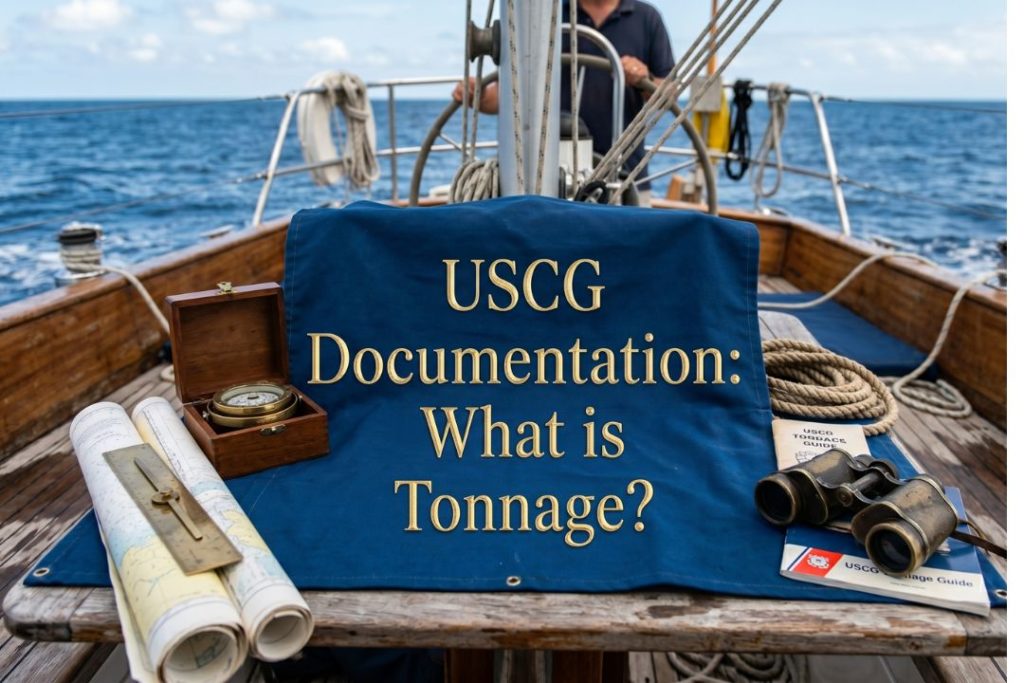
Tonnage, in the context of USCG documentation, refers to a standardized measurement of a vessel’s internal volume rather than its weight, and it plays a central role in how eligibility, endorsements, and regulatory requirements are determined.
Tonnage is used by the United States Coast Guard to classify vessels for official purposes, including determining how they are registered, what endorsements they may qualify for, and how they are regulated.
How is Tonnage Defined in Vessel Documentation?
Tonnage is not a measure of how heavy a vessel is. Instead, it reflects the calculated volume of all enclosed spaces within a vessel. This measurement is expressed in gross tons and net tons, each serving a specific regulatory purpose.
Gross tonnage represents the total internal volume of the vessel. Net tonnage, on the other hand, accounts for usable or cargo-carrying space by subtracting certain non-revenue areas such as engine rooms.
These measurements are determined using formulas outlined in federal regulations.
Why Does Tonnage Matter for Vessel Owners?
Tonnage directly impacts several aspects of vessel documentation and compliance. It is not simply a technical detail; it influences eligibility and operational authority.
Reasons tonnage matters include:
- Determining whether a vessel qualifies for federal documentation
- Establishing eligibility for specific endorsements, such as recreational or coastwise
- Affecting manning and safety requirements under federal law
- Influencing regulatory thresholds for inspections and compliance
How is Tonnage Calculated?
Tonnage calculations are based on formulas that consider the dimensions and enclosed spaces of a vessel. These formulas vary depending on the vessel’s size, design, and purpose.
The Coast Guard may calculate tonnage using:
- Simplified measurement systems for smaller vessels
- Standard measurement systems for larger or commercial vessels
- Regulatory formulas that factor in length, breadth, and depth
While the formulas themselves are defined in federal regulations, vessel owners must ensure that the measurements they submit are accurate and consistent with official standards when completing USCG documentation.
What is Gross Tonnage vs. Net Tonnage?
Gross and net tonnage serve different roles in vessel classification. Both figures may be required when submitting forms for USCG documentation, depending on the vessel’s use and endorsement.
Gross tonnage includes:
- All enclosed internal spaces
- Areas used for machinery, crew, and storage
- Total volumetric capacity of the vessel
Net tonnage focuses on:
- Revenue-generating or usable cargo space
- Areas available for passengers or goods
- Exclusion of non-operational spaces
Does Tonnage Affect Eligibility for Documentation?
Yes, tonnage is a determining factor in whether a vessel qualifies for federal documentation. In general, vessels must measure at least five net tons to be eligible. When submitting forms through our service, vessel owners must ensure their tonnage meets eligibility requirements for USCG documentation.
This threshold is critical because:
- Vessels under five net tons are typically registered at the state level instead
- Vessels meeting or exceeding this requirement may qualify for federal documentation
- Certain endorsements depend on tonnage classification
How Does Tonnage Relate to Endorsements?
Endorsements indicate how a vessel is authorized to operate. Tonnage plays a role in determining which endorsements are available.
Accurate tonnage reporting ensures that applications for USCG documentation are aligned with the intended use of the vessel.
Common endorsements include:
- Recreational endorsement for personal use
- Coastwise endorsement for transporting goods or passengers domestically
- Fishery endorsement for commercial fishing operations
Tonnage can influence:
- Whether a vessel qualifies for a specific endorsement
- Operational limitations placed on the vessel
- Regulatory requirements tied to its use
What Documents Include Tonnage Information?
Tonnage is recorded on official documentation issued by the Coast Guard. This includes the Certificate of Documentation, which serves as proof of federal registration.
A certified copy of certificate of documentation may also include tonnage details, making it an important reference for vessel owners who need to verify their vessel’s specifications.
Maintaining accurate records is essential when updating or replacing documentation through our service, especially when tonnage information is required for USCG documentation.
Can Tonnage Change Over Time?
Yes, tonnage can change if a vessel undergoes modifications that affect its internal volume. Structural changes such as extensions, enclosures, or redesigns may alter the calculated tonnage.
Situations where tonnage may change include:
- Adding enclosed spaces
- Modifying hull dimensions
- Converting the vessel for a different use
How Does Tonnage Impact Boat Documentation Renewal?
During boat documentation renewal, tonnage information typically remains the same unless the vessel has been modified. However, it is still an important component of the documentation record.
Renewal applications may require:
- Confirmation of existing vessel details
- Verification of previously recorded tonnage
- Updates if structural changes have occurred
What is the Role of Tonnage in Special Cases?
In certain situations, tonnage may interact with additional regulatory requirements. For example, vessels seeking specific approvals or exemptions may need to provide detailed tonnage information.
Accurate tonnage reporting supports compliance with these requirements and ensures that applications for USCG documentation are properly completed.
A MARAD waiver, which allows certain foreign-built vessels to operate commercially in U.S. waters, may involve considerations related to tonnage and vessel classification.
How Can Vessel Owners Verify Their Tonnage?
Vessel owners can confirm their tonnage through official records or by reviewing their Certificate of Documentation. If documentation is unavailable, a vessel documentation search may help locate relevant information.
Verification methods include:
- Reviewing existing Coast Guard-issued documents
- Accessing official records through authorized channels
- Confirming measurements provided during previous applications
What Should You Keep in Mind About Tonnage?
Tonnage is a foundational element of vessel documentation that affects eligibility, classification, and regulatory compliance. It is not a static figure in every case, and it must be accurately reported whenever documentation is submitted or updated.
Important considerations include:
- Tonnage measures volume, not weight
- It determines eligibility for federal documentation
- It influences endorsements and operational authority
- It must be updated if the vessel is modified
A simple rule of thumb: if your vessel is 25 feet or longer, then it almost inevitably has an appropriate net tonnage.
Our service provides access to the necessary forms and resources so vessel owners can properly address tonnage requirements when completing USCG documentation.